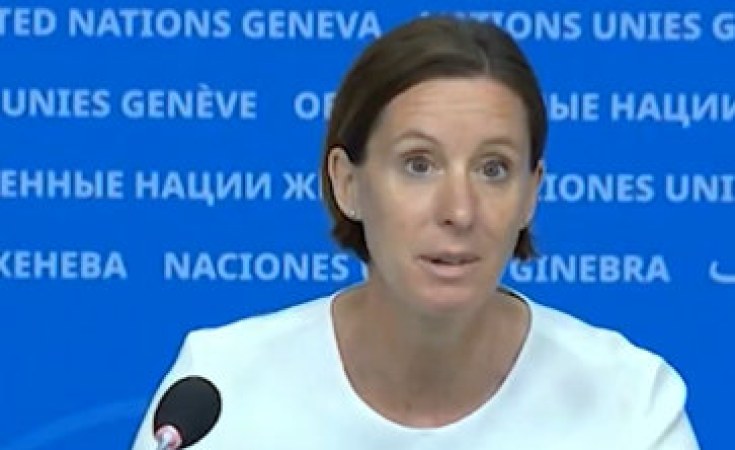
Geneva — History has repeatedly shown us that women are more likely than men to die during an Ebola outbreak, the chief of humanitarian action of UN Women has said in Geneva.
"This is not because the disease is more deadly for women once they are infected," Sofia Calltorp addressed journalists at a UN press conference during the 2026 session of the World Health Assembly (WHA), taking place in Geneva. "It is because women are more likely to be infected in the first place."
Virus hits women as caregivers
Calltorp said this was evident during the 2018–2019 Ebola outbreak in the Democratic Republic of the Congo (DRC), where women and girls accounted for around two-thirds of reported cases. "We saw it in Liberia in 2014 where, in some communities, women accounted for up to three-quarters of Ebola deaths; and 50 years ago in the DRC, where women accounted for 56 per cent of those who died." She said that was because Ebola transmission follows social realities.
RELATED: Ebola Risk 'Very High' in Eastern DR Congo As UN Intensifies Response
"The virus spreads along the lines of caregiving, domestic labour, front-line health work, and burial practices," said Calltorp. "Because when people are sick, women look after them."
World Health Assembly debates continue
During debates on several issues, some delegates said the annual management meeting of the World Health Organisation, the WHA, should not be politicised.
Still, political issues were prevalent in several debates, including an annual debate on Taiwan's presence at the assembly that was not accepted by a majority of those voting.
The United States withdrew from the WHO on January 22, so it was not present at the proceedings.
Among countries that voted on a WHA motion condemning Iranian attacks in the Gulf region, amid global health supply disruptions, Tunisia voted in favour, while Angola, DRC, Ghana, Mali, Namibia and South Africa abstained.
Tom Fletcher, the UN Humanitarian Affairs and Emergency Relief Coordinator, said on Friday (May 22) his section was allocating up to $60 million from the UN Central Emergency Response Fund to accelerate the response in the DRC and the wider region.
Taiwan makes case with HealthTech Expo
Taiwan was absent from the May 18-23 WHA Assembly for the tenth consecutive year due to China's powerful lobbying influence.
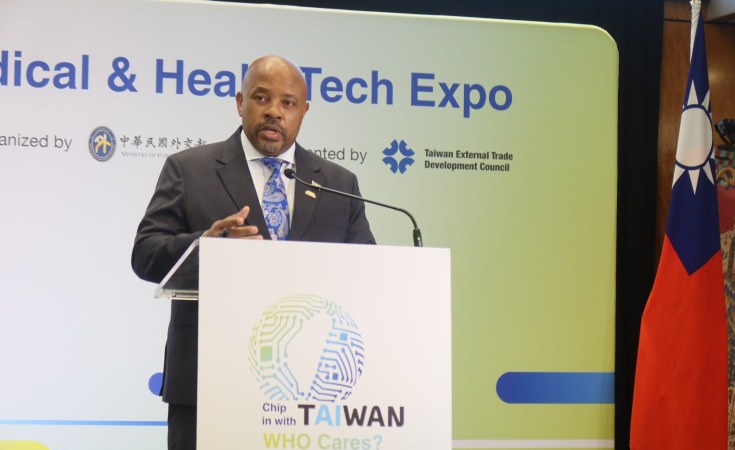
So, Taiwan made its case in Geneva with the 2026 Taiwan Smart Medical and HealthTech Expo as a mini assembly of its own at the Geneva hotel.
The only African country to support Taiwan's presence at the WHA held at the UN in Geneva was Eswatini. The landlocked southern African country, which borders South Africa, also took part in an event showcasing innovations from 9 Taiwanese hospitals and 21 companies across the medtech, biotech, and life sciences sectors. Eswatini's health minister, Mduduzi Matsebula, thanked Taiwan for its support.
Taiwan's health minister Shih Chung-liang said at a press conference before the WHA that Chinese pressure may have impacted attendance at events organized by his country. Shih said, "Taiwan has submitted an official letter of protest to WHO director-general Tedros Adhanom Ghebreyesus, urging the organization to allow Taiwan to participate in the WHA as an observer."


