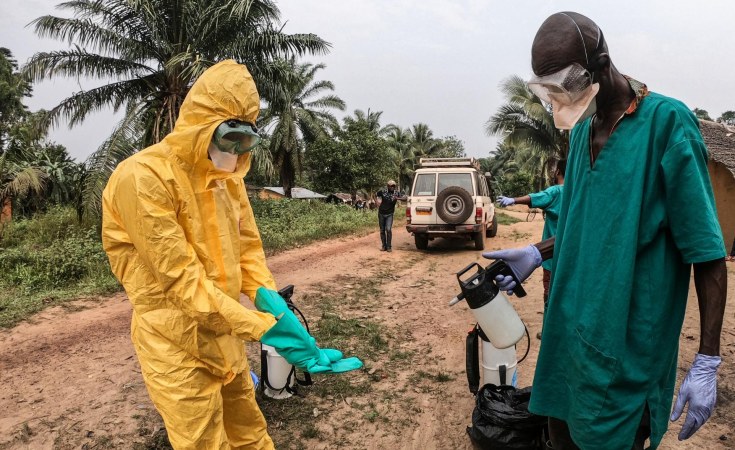
The Ministry of Health has suspended specific non-structured activities considered high-risk for Ebola transmission such as music concerts, entertainment shows, cultural festivals, political rallies, marathons, walkathons, and public recreational events.
The suspension also covers certain border-related social and commercial activities likely to attract uncontrolled crowds in Kampala Metropolitan Area and several high-risk districts as Uganda intensifies efforts to contain the ongoing Ebola Virus Disease (EVD) outbreak.
The measures were announced in a statement on Wendesday by the Permanent Secretary at the Ministry of Health, Dr. Diana Atwine, who said the directives are aimed at minimizing opportunities for Ebola transmission linked to large crowds, uncontrolled movement, and close physical interaction.
Keep up with the latest headlines on WhatsApp | LinkedIn
According to the Ministry, the directives follow resolutions reached during a National Task Force meeting held on May 21, 2026, chaired by Vice President Jessica Alupo, amid heightened concern over the spread of Ebola within Kampala Metropolitan Area and identified high-risk border districts.
"These measures are intended to minimize opportunities for person-to-person contact that may increase the risk of transmission of Ebola infection in the event of exposure to an infected individual," she wrote.
The Ministry clarified that the restrictions do not amount to a total ban on all gatherings.
Structured official, institutional, and essential gatherings will still be permitted, provided organizers strictly comply with Ministry of Health Standard Operating Procedures.
The Ministry directed that permitted meetings must be held in controlled venues with organized seating arrangements, adequate spacing, proper ventilation, mandatory temperature screening, and handwashing or sanitization facilities.
Organizers have also been instructed to avoid overcrowding, discourage unnecessary mingling, and ensure routine cleaning and disinfection of venues and sanitation facilities.
Participants attending approved gatherings are required to avoid physical greetings such as handshakes and hugging, frequently wash or sanitize their hands, avoid sharing personal items, and remain alert for Ebola symptoms including fever, weakness, vomiting, diarrhea, severe headache, or unexplained bleeding.
Authorities further instructed organizers to designate focal persons responsible for ensuring strict compliance with infection prevention and control measures throughout events and meetings.
Security agencies, Resident District Commissioners, District Health Teams, and local governments have been directed to enforce the measures, particularly within high-risk districts and border areas.
The Ministry warned that individuals or institutions found violating the directives would face enforcement action under the National Public Health Act and Regulations.
The guidelines apply to Kampala, Wakiso, Mpigi, Mukono, Yumbe, Koboko, Maracha, Arua, Obongi, Madi-Okollo, Zombo, Pakwach, Nebbi, Lamwo, Buliisa, Hoima, Kikuube, Kagadi, Ntoroko, Kyegegwa, Kyenjojo, Kamwenge, Bunyangabu, Kabarole, Fort Portal City, Bundibugyo, Kasese, Kanungu, Kisoro, and Kiryandongo.
The announcement comes as Uganda's confirmed Ebola caseload rises to seven.
According to the Ministry of Health, the two latest confirmed cases are Ugandan health workers attached to a private health facility in Kampala.
Both patients have been admitted to a designated Ebola treatment unit where they are receiving specialized medical care.
Health officials said response teams immediately launched comprehensive contact tracing and follow-up monitoring for all individuals linked to the confirmed cases.
Other confirmed infections involve two Ugandan nationals and one Congolese citizen connected to Uganda's earlier transmission chain.
They include a Ugandan driver who transported the country's first confirmed Ebola patient and a Ugandan health worker exposed while caring for the same patient.
The Ministry said both Ugandan patients were identified through ongoing contact tracing among known contacts already under close surveillance and were immediately isolated for treatment.
Authorities also disclosed that a Congolese woman resident in the Democratic Republic of Congo entered Uganda while experiencing mild abdominal symptoms and travelled from Arua to Entebbe aboard a chartered flight before seeking treatment at a private hospital in Kampala on May 10.
She was discharged in stable condition on May 14 before returning to the DRC.
Health officials said the patient was later traced following a tip-off from the pilot who transported her.
Samples subsequently collected confirmed she had tested positive for Ebola Virus Disease.
In response to the evolving outbreak, Uganda has introduced additional precautionary interventions aimed at limiting cross-border transmission and community spread.
Authorities have suspended flights, border transport activities, and weekly markets in high-risk border districts following confirmation of imported Ebola cases linked to eastern DRC.

Sign up for free AllAfrica Newsletters
Get the latest in African news delivered straight to your inbox
Uganda Airlines also announced the temporary suspension of Entebbe-Kinshasa flights effective May 23, 2026, citing ongoing public health interventions and safety concerns.
Officials referenced the country's initial imported Ebola case involving a Congolese national who later died at Kibuli Hospital after entering Uganda. Another patient linked to the same transmission chain reportedly recovered and later tested negative.
The escalating outbreak has drawn increasing international attention, with the World Health Organization declaring the situation an international public health emergency.
The United States Embassy in Kampala has also temporarily suspended visa operations in Uganda as a precautionary measure.
President Museveni has since announced additional public health measures aimed at reducing large gatherings, including the cancellation of this year's Martyrs Day celebrations, in a bid to minimize the risk of transmission.
"The Ministry of Health will continue to monitor the situation and issue further guidance as necessary," Dr. Atwine wrote, urging the public and all stakeholders to cooperate fully with health authorities as surveillance, testing, contact tracing, and public sensitization campaigns continue across affected and high-risk districts.
