
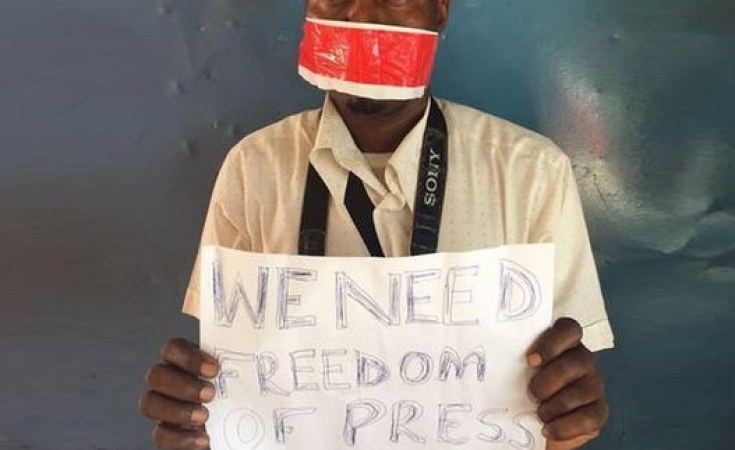
"Dozens of opposition members and journalists have been abducted or killed in Mozambique since the 2024 general elections. While authorities have largely failed to investigate the violence, exclusive reporting reveals the involvement of figures linked to the ruling party Frelimo and Mozambican security forces in identifying and targeting government critics," reports a consortium of 30 journalists in 10 countries coordinated by Forbidden Stories.
It is an international network of journalists whose mission is to continue the investigations of other reporters who have been silenced. And government has imposed an almost total media blackout on Cabo Delgado and the war, Forbidden Stories reported in two articles yesterday and today (9, 10 June). They were published by the Mozambican consortium member Zitamar.
Since the 2023 elections five journalists have been killed and there have been two non-fatal poisonings. A complaint filed by opposition party ANAMOLA with the Attorney General's Office documents six cases in which "death squads" targeted opposition members.
One of the highest-profile killings occurred on 19 October 2024 when a hit squad gunned down Elvino Dias, opposition leader and lawyer of presidential candidate Venancio Mondlane, and Paulo Guambe, an official with Podemos, an opposition party that supported Mondlane's candidacy for president. In another incident, on December 22, 2024, unidentified gunmen shot Eugenio Raúl Madeira, a mobilization secretary for Podemos in Zambezia province.
Follow us on WhatsApp | LinkedIn for the latest headlines
Other cases involve members of special police units allegedly abducting and beating political opponents. According to a 2025 Human Rights Watch report, "Mozambican authorities have failed to conduct credible investigations into the wave of political killings following the October 2024 general elections."
Short video - https://www.youtube.com/shorts/cmv53Zux7QU
Part 1 - In Mozambique, the Regime Imposes a Blackout on Journalists - https://www.zitamar.com/in-mozambique-the-regime-imposes-a-blackout-on-journalists/
Part 2 - A Campaign of Disappearances: Inside the Killings, Abductions and Surveillance of Mozambique's Government Critics - https://www.zitamar.com/a-campaign-of-disappearances-inside-the-killings-abductions-and-surveillance-of-mozambiques-government-critics/
The report highlights the kidnapping of Arlindo Chissale, a 46-year-old reporter and editor of Pinnacle News, an online community newspaper with over 70,000 followers. An expert on his home region of Cabo Delgado, he was one of the most important journalists documenting the war there. Chissale also documented electoral fraud and was a vocal member of the new opposition.
On the morning of 7 January 2025, on a hot and muggy in day in Pemba, Chissale boarded a bus bound for Nacala. During his journey, a white unmarked car suddenly blocked the road. Five men, two reportedly wearing police uniforms, dragged Chissale out of the bus, beat him, shoved him into the car, and drove away, according to a UN report. Nearly a year and a half after his abduction, Chissale's fate remains unknown, but he is assumed dead.

Sign up for free AllAfrica Newsletters
Get the latest in African news delivered straight to your inbox
The "Mozambique Exposed" project found that the use of block leaders called chefes de quarteirao "is one of the state's methods for crushing dissent. According to several sources interviewed by the consortium, block leaders are local operatives affiliated with the ruling party to monitor the population at a neighbourhood level. Though they don't have formal administrative status, they remain deeply embedded in the daily lives of Mozambicans [and function] as the neighbourhood's eyes and ears."
"According to a diplomatic source, block chiefs were used to monitor opposition members, including lower-ranking activists who had organized or participated in post-election demonstrations, and would then send their names up the Frelimo ranks. A block chief, who spoke to the consortium on the condition of anonymity, confirmed that in some cases, information circulated between local structures and the authorities," the report said.
