In May, the district of Ancuabe in northern Mozambique was repeatedly hit by armed attacks carried out by the Islamic State Mozambique (ISM). Combined with widespread fear of further violence, these attacks forced thousands of people to flee their homes.
Over 5,000 people sought safety in pre-existing resettlement sites and host communities in Nanjua. In response to the surge in humanitarian needs linked to insecurity and displacement, Doctors Without Borders (MSF) launched an emergency intervention, providing primary healthcare through mobile clinics, mental health support, as well as water and sanitation services.
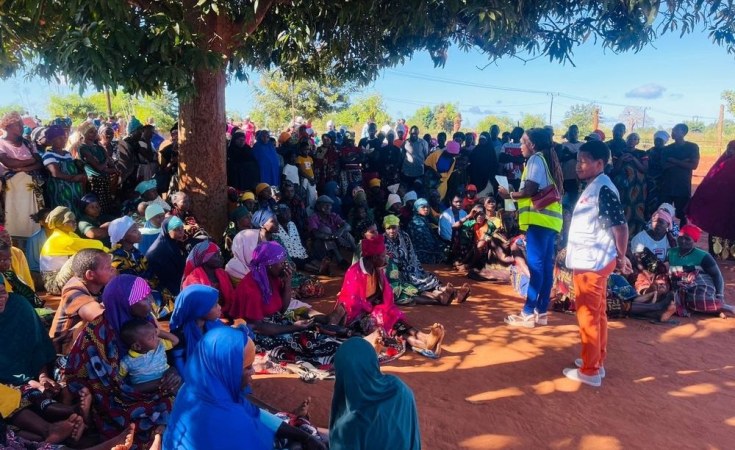
MSF team facilitates a group psychoeducation session in Nanjua, Ancuabe district, northern Mozambique. Photographer: MSF | Date: 21/05/2026 | Locations: Mozambique
Keep up with the latest headlines on WhatsApp | LinkedIn
"In Cabo Delgado, recurring violence is forcing thousands of people to be displaced repeatedly, deepening a protracted humanitarian crisis," says Jacinta Francisco, MSF emergency team leader in Ancuabe. "People who arrived in Nanjua carry the trauma of fleeing and losing loved ones. They live with constant fear of the unknown. At the same time, both residents and displaced people struggle to access essential healthcare services and treatment."
In just a few weeks, MSF teams carried out over 1,500 consultations, treating an average of more than 150 patients per day. The most common conditions were upper respiratory tract infections, skin diseases and malaria – which is prevalent in children under five.
Alongside medical care, MSF teams observed a growing need for mental health care. Many people reported sleep disturbances, stress-related symptoms, body pain and palpitations, often linked to uncertainty about the future, repeated displacement, difficult living conditions, lack of necessities, and concerns for the safety and wellbeing of their children. Currently, there are no mental health professionals at the local health centre.
Newly displaced families also lack shelter and food, having fled with little or nothing to areas that were already struggling to meet basic needs. More than 15,000 people were displaced across Ancuabe district and neighbouring areas1, many of whom have already been uprooted multiple times during the protracted conflict in Cabo Delgado.
Access to healthcare in northern Mozambique remains severely constrained. In Nanjua, residents and displaced people face an approximate four-kilometre journey to reach the nearest health facility, where they are required to pay for treatment despite frequent shortages of essential medicines. Distance, insecurity and the unavailability of prescribed treatments continue to delay care-seeking and fuel frustration and mistrust within communities. Often, these issues only draw wider attention when an emergency occurs.
MSF is now phasing out support as the main health needs in the emergency have been addressed. As part of this process, we will donate essential medicines to the local Ministry of Health post to help sustain free healthcare services for both residents and displaced people.

Sign up for free AllAfrica Newsletters
Get the latest in African news delivered straight to your inbox
MSF calls for the urgent strengthening of medical supply chains in health facilities and for free access to healthcare, particularly in emergency settings. At the same time, MSF urges a coordinated and sustained humanitarian response to address the health, protection and psychosocial needs of communities affected by repeated displacement and recurring violence in northern Mozambique.
In Cabo Delgado, MSF runs projects in Mocímboa da Praia, Macomia and Palma. We provide general outpatient consultations, emergency care, maternity and paediatric services, sexual and reproductive healthcare, treatment for HIV and tuberculosis, and mental health and psychosocial support.
In 2025, we carried out over 100,000 outpatient consultations, treated nearly 50,000 malaria cases and assisted 7,500 child births. We run mobile clinics and outreach activities, refer patients to health centres, and support medical facilities and hospitals in collaboration with the Ministry of Health.
