

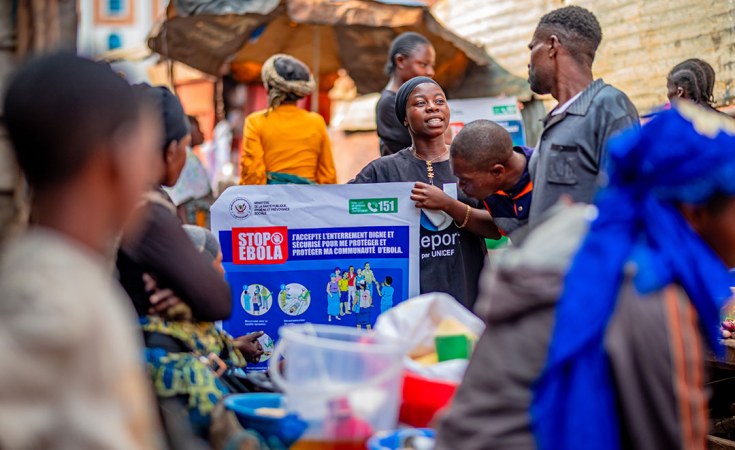
During the 2018-2020 Ebola outbreak in eastern Democratic Republic of the Congo (DRC), attacks on treatment centres, resistance to contact tracing, and widespread distrust of responders repeatedly undermined efforts to contain the virus. A World Health Organization survey found that only around a third of respondents trusted Ebola responders, illustrating how fragile relationships between institutions and communities became part of the outbreak itself.
The latest Ebola outbreak in the DRC is a public-health emergency. But it is also a warning that epidemics spread fastest where institutions are weak, conflict drivers are unresolved, communities feel abandoned, and trust has been damaged. On 15 May, 2026, Congolese authorities confirmed a new Ebola outbreak in the conflict-affected eastern part of the country. On 17 May, 2026, the World Health Organization declared the outbreak a public health emergency of international concern, citing concerns about regional spread and major uncertainties. Within weeks, cases had spread beyond Ituri Province into neighbouring areas, raising concerns about wider regional transmission. As of June 14, 2026, the Ministries of Health of the DRC and Uganda had reported 782 confirmed cases and 178 deaths in the DRC, alongside 19 confirmed cases and 2 deaths in Uganda, while hundreds of suspected cases remained under investigation.
The biological threat is serious. The outbreak is caused by the Bundibugyo species of Ebola virus, for which there is currently no widely available licensed vaccine. But biology alone does not explain why Ebola repeatedly finds fertile ground in eastern Congo. The virus is moving through communities already burdened by armed conflict, displacement, poverty, fear, and fragile public services. At its heart, this is a question of trust. Who do people believe when they are told to report symptoms, isolate from loved ones, or allow health teams into their communities?
The DRC has lived with Ebola longer than any other country. Since the virus was first identified near the Ebola River in 1976, the country has experienced multiple outbreaks. The devastating 2018-2020 epidemic infected thousands of people and claimed more than 2,000 lives. Yet one of its most important lessons was that successful outbreak control depends as much on public trust as on medical expertise.
Keep up with the latest headlines on WhatsApp | LinkedIn
Communities do not reject science simply because they misunderstand it. People interpret health messages through their lived experiences and realities. Where clinics often lack medicines, roads are unsafe, clean water is scarce, and government services are unreliable, emergency interventions can be viewed with suspicion. Rumours in such contexts are often symptoms of distrust rather than ignorance.
This matters because Ebola control relies heavily on cooperation. Early detection, contact tracing, testing, safe burials, infection prevention, and treatment all require people to work with health authorities. Families must believe that reporting illness will lead to care rather than stigma; and that isolation measures are designed to protect families rather than punish them. Also, communities must trust that health responders are there to protect them rather than impose decisions from outside.
Eastern Congo's wider humanitarian crisis makes this challenge even harder. Years of armed violence and repeated displacement have weakened both infrastructure and confidence in public institutions. WHO Director-General Tedros Adhanom Ghebreyesus recently warned that insecurity is constraining Ebola response efforts and called for improved humanitarian access.
For many communities, the arrival of an Ebola response is not taking place in a vacuum. It occurs against a backdrop of insecurity, unmet needs, and longstanding grievances. In such settings, every institution is judged not only by what it says but by what people have experienced over time.
That is why the response cannot focus solely on emergency measures. Laboratories, treatment centres, and surveillance systems remain essential. But if communities do not trust the institutions delivering these services, even the most sophisticated interventions may struggle to achieve their full impact.
A more effective response begins with local leadership. Community health workers, faith leaders, women's groups, youth networks, traditional authorities, and Ebola survivors possess relationships and credibility that outside actors often lack. These groups should not be treated merely as messengers after decisions have been made. They should be partners in shaping and implementing the response from the start.
The outbreak also highlights the need to strengthen basic services beyond emergency periods. Communities without reliable access to clean water, sanitation facilities, functioning clinics, and social protection face greater vulnerability during health crises. Investing in these systems is not only a development priority; it is one of the most effective forms of epidemic preparedness.
There are reasons for optimism. The DRC possesses some of the world's most experienced Ebola experts. Congolese scientists, clinicians, community responders, and survivors have repeatedly helped bring outbreaks under control. Their knowledge and leadership remain among the country's greatest assets.
But there are also lessons that should not be forgotten. Heavy-handed security responses can deepen suspicion. Large emergency budgets that fail to produce visible community benefits can fuel resentment. Communication strategies that lecture rather than listen can increase resistance rather than cooperation.
COVID-19 reinforced a lesson that applies equally to Ebola: trust is not a secondary concern in public health. It is part of social contract that determines whether people follow advice, seek treatment, and support collective action during a crisis.
The choice facing the DRC and its international partners is clear. They can treat Ebola as another temporary emergency and move on once case numbers decline. Or they can recognise that outbreaks expose deeper weaknesses in governance, service delivery, and state-society relations.
Stopping Ebola requires medicine, logistics, and financing. But it also requires something far harder to deliver in an emergency: trust. Until communities trust the institutions asking them to report symptoms, change burial practices, and seek treatment, Ebola will remain not only a viral threat but also a symptom of deeper governance failures. The most durable Ebola response is therefore not only a health intervention. It is an investment in peacebuilding, stronger institutions, resilient communities, and trusted relationships that can help prevent future outbreaks and crises.

Sign up for free AllAfrica Newsletters
Get the latest in African news delivered straight to your inbox
Turnwait Otu Michael is a Senior Postdoctoral Research Fellow in the Faculty of Humanities at the University of Johannesburg. His research focuses on population health, demography, health governance, sexual and reproductive health, and health in conflict-affected settings, with particular interest in the intersections of conflict, development, and public health across Africa. // Erin McCandless is Professor of Politics and International Relations and Director of the Qatar-South Africa Centre for Peace and Intercultural Understanding (CPIU) at the University of Johannesburg. She is also a Non-Resident Fellow at the Centre for Conflict and Humanitarian Studies in Doha. Her research focuses on transformative approaches to peace processes and resilient social contracts, the humanitarian-development-peace-climate nexus, and emerging and non-Western actors in mediation and global governance. Her work bridges rigorous scholarship with high-level policy engagement, including advisory roles to senior UN leadership, political dialogue facilitation, designing and overseeing multi-stakeholder research, and strategic involvement in shaping multilateral peace, development, and governance policy frameworks.

