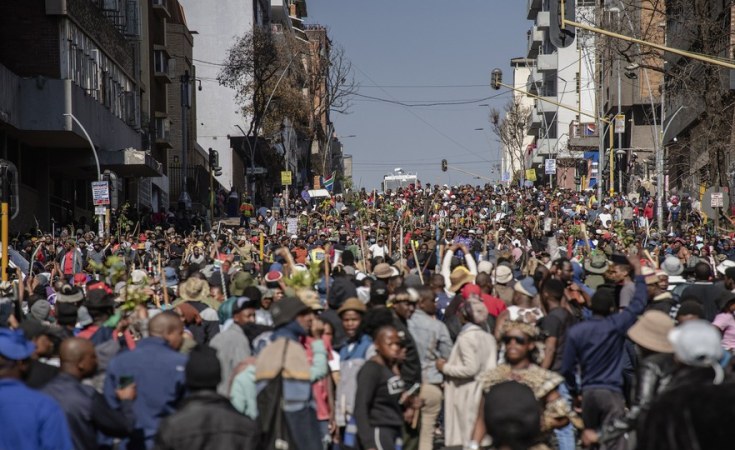
Every relevant number says migrants contribute more than they take. The anger reaches them anyway. Can state stagnation be the cause of the rising exclusion sentiments?
Every wave of anti-immigrant sentiment or discontent around the globe carries an implicit economic claim that foreigners are taking away jobs, committing crimes, draining public services and hollowing out local livelihoods.
In South Africa, those claims were sharpened with a cruel and concrete threat of eviction by 30th June. It might be worth pausing on that claim because the data tells a much more nuanced story. A story where the people most often blamed are, in aggregate, quietly holding up parts of the economy without much acknowledgement.
Take Mpho, a friend of a friend who arrived from Malawi in 2011 with nothing and no papers. He crossed the border illegally due to economic desperation and then did everything that those who fear illegal migrants, and much of the public sentiment in South Africa today, would have expected him not to do.
He built a life for himself with little to no resources at hand. Today, he runs a small business in Cape Town and employs other people. And by every measure, the South African state cannot quite bring itself to record that he is a contributor to the informal economy, to the livelihood of his workers, to the tax he...


