

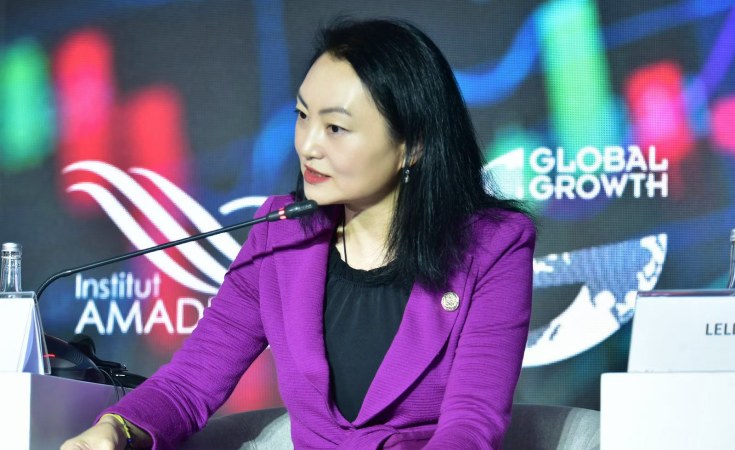
GENEVA — Africa's future in the age of artificial intelligence will depend less on financial assistance than on investments in skills, education and digital infrastructure, according to Maggie Gu, founder and president of Tomorrow Foundation.
Speaking on Challenge TV's Au cœur de l'Éco, Gu said AI presents a historic opportunity for African countries to accelerate development, provided governments and institutions prioritize human capital and technological capacity.
Her commitment to the continent dates back to her first visit to Africa in 2003.
"I was deeply impressed by Africa's extraordinary potential," she said. "I immediately realized there were immense development opportunities that remained largely untapped."
Keep up with the latest headlines on WhatsApp | LinkedIn
After careers in diplomacy, international mediation, the United Nations and technology, Gu established Tomorrow Foundation in Geneva in 2017 with a mission to promote education, digital inclusion, entrepreneurship and leadership across Africa and the Middle East.
Rather than providing short-term assistance, the foundation focuses on building long-term capacity by equipping young people with the skills needed to create their own opportunities.
"We do not believe in short-term aid," Gu said. "We want young people to build their own future."
The organization says it has supported tens of thousands of young people in more than 15 African countries through entrepreneurship and skills-development initiatives.
Among its flagship programs is Her Start, which supports African women entrepreneurs through business training, mentoring, access to finance and seed funding. Tomorrow Foundation also partners with Junior Achievement to strengthen entrepreneurial education for young people across the continent.
Gu argued that Africa's greatest challenge is not a shortage of talent but limited access to technology, infrastructure and global innovation networks.
"My view is not that Africa lacks talent," she said. "It needs greater access to technology, infrastructure, opportunities and interconnected ecosystems to participate fully in the AI era."
She believes Francophone Africa is well positioned to become an important contributor to the global AI ecosystem if investments are made in education, digital skills and technological infrastructure.
To support that vision, Tomorrow Foundation has launched AI for All, a global initiative designed to expand access to artificial intelligence while promoting responsible and inclusive innovation.
The initiative focuses on three priorities : strengthening digital infrastructure and technological sovereignty, expanding access to AI-powered education while preserving the role of teachers, and supporting creative industries, including film, audiovisual production and digital content creation.

Sign up for free AllAfrica Newsletters
Get the latest in African news delivered straight to your inbox
Gu also stressed that continuous learning will be essential as artificial intelligence reshapes economies and labor markets.
"In a world evolving this quickly, learning must become a lifelong process," she said, encouraging young people to remain adaptable while cultivating qualities such as humility, patience and compassion.
Looking ahead, Gu envisions artificial intelligence taking over repetitive tasks and allowing people to devote more time to creativity, culture and innovation.
"The true measure of success," she said, "will be humanity's ability to advance with artificial intelligence without ever losing what makes us human."

