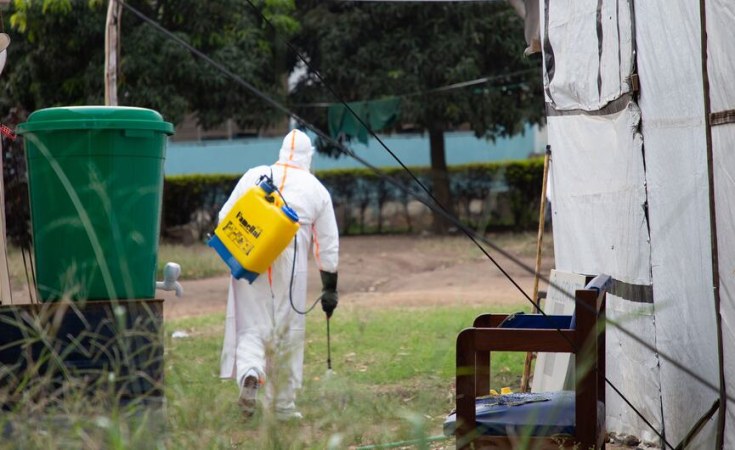
The world must move faster to contain the spread of Ebola in the Democratic Republic of the Congo (DRC), UN relief chief Tom Fletcher said on Thursday.
Mr. Fletcher warned that while Ituri province remains the centre of the outbreak, the virus is spreading to other provinces due to conflict and displacement.
Since the DRC declared the Ebola outbreak on 15 May, the Bundibugyo species has infected more than 1,700 and killed 600 in the DRC. In neighboring Uganda, authorities have confirmed 20 cases.
The effects of the outbreak are compounded by ongoing conflict, hunger, displacement, weak basic services and limited healthcare in the DRC, Mr. Fletcher said, making this one of the most complex humanitarian crises
Keep up with the latest headlines on WhatsApp | LinkedIn
"This is more than a public health emergency," he said.
International response
In response to the outbreak, the UN released up to $60 million in May to accelerate the response in the DRC, helped prepare neighboring countries for the disease's possible spread and worked with local communities to build trust in the public health response.
The World Health Organization has worked with the UN's peacekeeping mission in the DRC, known by its French acronym MONUSCO, to supply medical equipment to affected regions and build isolation and treatment units.
The UN's Inter-Agency Standing Committee - which consists of the leaders of the world's largest aid organizations - has activated a System-Wide Scale-Up to control the disease in the DRC, and the UN has deployed Senior Ebola Coordinator Julien Harneis to support disease containment efforts.
"We know how to stop Ebola and we're implementing our strategy," he said.
Calls for action
Despite these efforts, closures and travel restrictions caused by the conflict disrupt humanitarian operations, health services and essential trade without preventing the spread of the disease.
Therefore, all parties must work together to ensure safe and sustained access for humanitarian and health workers, supplies and response equipment, Mr. Fletcher said.
He called for support for humanitarian assistance programmes and investment in preparedness.
The best defence against Ebola, he said, remains surveillance, laboratory testing, referral systems, infection prevention and control, and community engagement. He further highlighted the need for locally led, community-centred approaches to Ebola containment that are tailored to both men and women.
"Any delay will be measured in Ebola deaths and in lives lost to the wider humanitarian consequences of this outbreak," Mr. Fletcher said.

Sign up for free AllAfrica Newsletters
Get the latest in African news delivered straight to your inbox
