
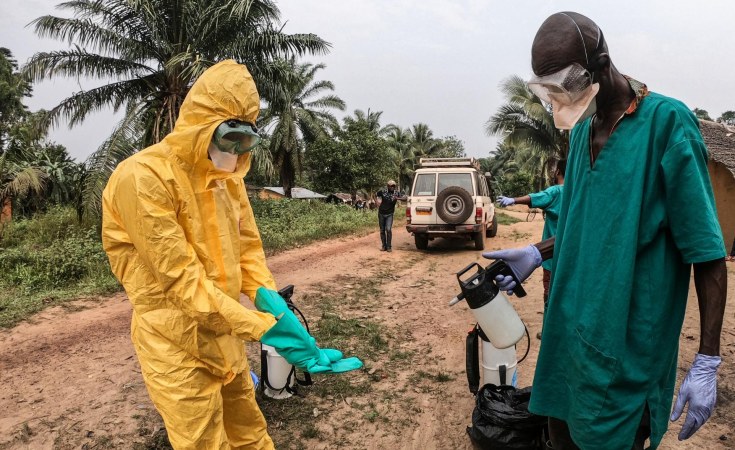
Kampala — Uganda has entered a crucial phase in its latest battle against Ebola after discharging the country's last confirmed patient, beginning the mandatory 42-day period required before the outbreak can officially be declared over.
The countdown, which started on July 16 following the patient's discharge from Mulago National Isolation Centre, is considered one of the most critical stages of the response. During this period, health authorities must prove that the virus is no longer circulating by ensuring no new infections emerge over two consecutive 21-day incubation cycles, as required under World Health Organization (WHO) guidelines.
Although officials have described the discharge as a significant milestone, they stress that the country cannot afford to relax.
Follow us on WhatsApp | LinkedIn for the latest headlines
"The response is not over until Uganda completes the required 42-day surveillance period," said Dr Charles Olaro, Director General of Health Services at the Ministry of Health.
The warning reflects the delicate nature of Ebola outbreaks, where a single undetected infection can restart transmission and reset the countdown.
Health Minister Dr Chris Baryomunsi said surveillance teams, rapid response units and community health workers will remain on high alert across the country throughout the monitoring period.
He said Uganda continues to face a heightened risk because Ebola remains active in neighbouring Democratic Republic of Congo (DRC), where authorities are responding to continuing outbreaks.
To reduce the risk of cross-border transmission, Uganda and the DRC have strengthened cooperation through a memorandum of understanding. Ugandan health workers are supporting response activities in eastern Congo, while treatment centres have been established near the common border.
Communities in border districts are also being encouraged to report suspected Ebola cases immediately. Radio stations continue broadcasting public health messages in local languages commonly spoken on both sides of the border.
The government is now weighing how and when to ease some of the restrictions introduced during the outbreak.
Dr Baryomunsi said the National Task Force will assess measures including controls on markets and public gatherings in high-risk districts before deciding which restrictions can safely be lifted.
Authorities have also begun engaging countries that imposed travel restrictions on Uganda during the outbreak, seeking to restore normal travel and minimise disruption to tourism, trade and cross-border business.
At Mulago National Isolation Centre, Dr David Kaggwa, head of the Ebola Treatment Unit, said the facility treated more than 160 suspected Ebola patients alongside confirmed cases.
He said many people admitted with symptoms similar to Ebola were ultimately diagnosed with other serious illnesses requiring urgent care, underscoring the value of maintaining specialised isolation facilities capable of safely investigating highly infectious diseases.
According to Dr Kaggwa, Uganda's treatment systems have improved through experience gained from successive Ebola outbreaks. Better supportive care, stronger clinical protocols and access to experimental therapies under compassionate-use arrangements have all contributed to improved patient outcomes.
The World Health Organization says Uganda's preparedness has also played a significant role. WHO Representative Dr Kasonde Mwinga said years of investment in emergency medical teams, laboratory capacity, treatment centres and medical supplies enabled the country to respond more rapidly than in previous outbreaks.
She noted that Uganda recorded one of its lowest Ebola case fatality rates, with mortality below 10%.
Dr Mwinga urged anyone experiencing symptoms consistent with Ebola to seek medical attention immediately, saying early diagnosis and treatment significantly improve survival.

Sign up for free AllAfrica Newsletters
Get the latest in African news delivered straight to your inbox
Health officials also highlighted another achievement of the response: no healthcare worker contracted Ebola while caring for patients during the outbreak.
Dr Olaro attributed that outcome to strict infection prevention and control measures adopted across treatment centres and healthcare facilities.
Uganda has experienced several Ebola outbreaks over the past two decades, each contributing to stronger surveillance systems, improved laboratory networks and faster emergency response capacity.
Those investments are now being tested during the 42-day surveillance period. If no new Ebola case is detected, Uganda will once again be declared Ebola-free. But until then, health officials say continued public vigilance, cross-border surveillance and rapid reporting of suspected infections remain essential to ensuring the outbreak has truly ended.
