"Stay together."
That was the advice we were given as we stepped off our minibus and boarded a local bus instead - the kind that locals would recognize, not the kind that would draw attention - to reach Redes da Maré's office in Complexo da Maré, a favela in Rio de Janeiro.
On the surface, Maré looked like any other busy neighbourhood. Children played in the streets while residents escaped the afternoon heat by sitting outside their homes, chatting with neighbours. Shops buzzed with customers, and motorcycles wove through the narrow lanes. Yet beneath that rhythm of everyday life lay a community shaped by decades of poverty, territorial disputes between armed groups and heavily militarised policing.
As journalists visiting Rio during the 26th International AIDS Conference, we found the tour of Maré to be more than an opportunity to understand the community. It reinforced what public health experts have long argued: HIV, health and human rights cannot be separated from the realities people navigate every day, from poverty and violence to housing, education and access to essential services.
That belief - that health is inseparable from human rights and social justice - underpins the work of Redes da Maré, one of the community's best-known civil society organisations. Founded in 1997 by residents and former residents of Maré, it grew out of a grassroots movement demanding better education, healthcare, sanitation, public safety and other essential services. What started as a pre-university programme to help local students access higher education has since evolved into an organisation working across health, education, public security, culture, environmental justice, legal advocacy and women's rights.
Carolina Dias, the Coordinator of the Right to Health Axis programme at Redes da Maré, said defining a favela is far more complex than describing it as an informal settlement.
"What marks these territories," she said, "are the informalities, the vulnerabilities and the lack of access to rights."
As we drove through narrow streets, Dias pointed out invisible boundaries that separate areas controlled by different armed groups. At one intersection stood a memorial bearing the names of residents killed in the violence that has long scarred the community. She said victims are often wrongly portrayed as criminals when they die, when "most times, they are just people who are living their lives."
"We have three different armed groups in this territory," she said.
Dias said that Maré is divided between territories controlled by two armed groups and a militia. Violence has declined from the intense clashes of the 1990s and early 2000s, but residents continue to live with the legacy of territorial disputes.
Despite being home to around 140,000 people, opportunities remain limited.
Maré has 49 schools, but while younger children have relatively good access to education, the number of schools drops sharply for older pupils, leaving only three high schools to serve the entire community. Across one of the city's busiest highways sit two of Brazil's leading institutions - Fiocruz, the country's largest biomedical research centre, and the Federal University of Rio de Janeiro. Yet despite being only minutes away, university remains out of reach for many young people growing up in Maré, making access to higher education one of Redes da Maré's earliest priorities.
For Dias, these inequalities are inseparable from health.
"Our work starts from the understanding that these are fundamental rights for improving people's lives," said Dias. "The right to public safety has not yet been experienced as a human right... especially for the population of the favela.
She said the organisation views health through a much broader lens, arguing that without safety, education, housing and other basic rights, people cannot truly enjoy good health. That philosophy shapes every aspect of Redes da Maré's work, from preparing young people for university to supporting women experiencing violence, people living on the streets and those accessing harm reduction services.
"If you do not have public security, if you do not have education, if you do not have housing, how will this person access health?" she asked.
Violence in Maré is not measured only by the number of people killed. It is also counted in missed school days, cancelled clinic appointments and interrupted childhood vaccinations.
Redes da Maré has spent years documenting how police operations ripple through every aspect of daily life. Raids often begin before dawn, sometimes as early as 4:30 a.m., and can continue for more than 12 hours. Schools shut their doors, health clinics suspend services, public transport is disrupted and families remain confined to their homes until the gunfire subsides.
Between 2016 and 2025, the organisation recorded more than 231 police operations that resulted in at least 163 days of lost access to education, while healthcare services experienced similar disruptions. The effects are felt long after the operations end. Childhood vaccination rates, for example, can fall by as much as 90% during police raids because parents are too frightened to leave their homes.
Children pay another price through their education.
Nearly 20,000 learners attend schools in Maré, yet repeated closures rob many of weeks or even months of learning. For some, missing school also means missing the one reliable meal they receive each day, placing even greater strain on families already living in poverty.
A shared story carried the trauma of children growing up in violence.
During one police operation, teachers gathered pupils into what they believed was the safest room in the school. They turned the music up, hoping to drown out the sound of gunfire outside. Then one child broke the silence. "Do you think we're not hearing the shots? That we don't know you're doing this just so we don't hear?"
For someone based in Cape Town, South Africa, I found much of Maré strikingly familiar.
The geography is different, but the realities are not. Communities on the Cape Flats, including Hanover Park, Manenberg, Mitchells Plain, Khayelitsha and Delft, face many of the same challenges, where gang violence routinely disrupts healthcare, education and everyday life.
Earlier this year, the South African National Defence Force (SANDF) was deployed to the Cape Flats under Operation Prosper, a year-long initiative launched by President Cyril Ramaphosa to support police in tackling escalating gang violence, organised crime and illegal firearms. The deployment followed years of worsening insecurity in communities where violence has become a persistent feature of daily life.
Just as armed groups shape residents' movements in Maré, gang boundaries in parts of Cape Town create invisible "no-go" zones that can prevent people from collecting life-saving antiretroviral medication or attending clinic appointments. Shootings have repeatedly forced clinics to close or reduce operating hours, delayed ambulance responses and disrupted outreach services in some of the Western Cape's most vulnerable communities. For people living with HIV, these interruptions mean missed appointments at clinics, delays in refilling antiretroviral (ART) medication and interruptions in routine viral load monitoring. A survey in Khayelitsha found that almost one in five people on ART missed at least one scheduled clinic appointment over six months due to insecurity and transport problems associated with gang violence.
The consequences are far beyond health care.
Violence destroys education, harms economic prospects and traps communities in cycles of poverty and trauma. In Maré and the Cape Flats, people often find their mobility constrained by invisible territorial borders set by armed groups. Going to a clinic, going to school or simply moving safely within one's own neighbourhood can be a daily calculus of risk.
A community response
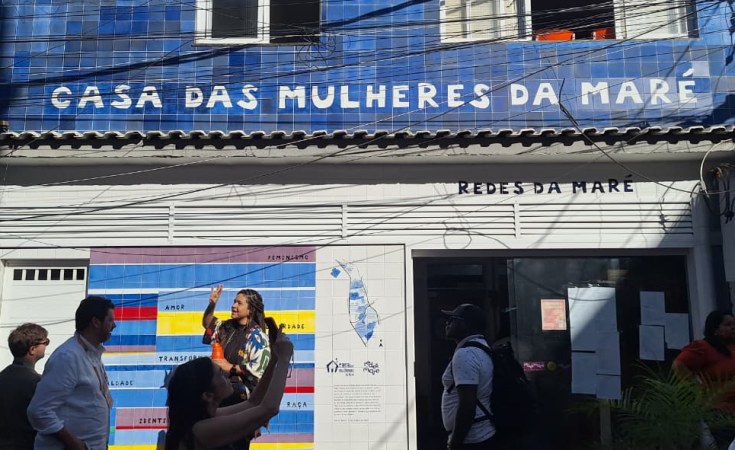
Just a few minutes' walk from the Redes da Maré community centre stands Casa das Mulheres da Maré, a four-storey building created to empower women and improve their quality of life.
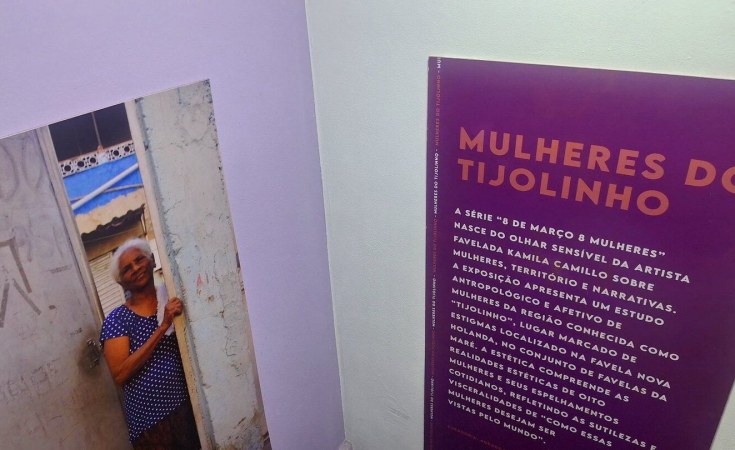
Opened in 2016, the centre recognises the vital role women have played in Maré's social movements for decades - from campaigning for better infrastructure and public services to fighting for equal rights. Today, it is a place where women can access vocational training, psychological and legal support, assistance for survivors of gender-based violence, and speak openly about issues that remain deeply stigmatised, including sexual and reproductive health. Casa das Mulheres also brings together public institutions, civil society organisations and community groups to strengthen policies that respond to the needs of women living in Maré.
One of the researchers working with the centre said many women are unaware of their legal rights because topics such as menstruation, contraception and abortion are rarely discussed openly. "People are simply not taught about their rights," she said, explaining that stigma and misinformation continue to prevent many women from seeking healthcare and support.
To address these gaps, Casa das Mulheres runs workshops for adolescents in local schools, trains community health professionals to identify and respond to violence, and creates safe spaces where women can discuss sexual and reproductive health without fear of judgement. The aim, staff says, is not only to provide information but to ensure women understand and can exercise their rights.
The need is significant.
Brazil records about 90,000 rapes reported to police each year. However, the true figure is likely much higher because many survivors never come forward. Abortion is legal only under limited circumstances, including cases of rape, when the pregnancy threatens the woman's life, or in some instances involving severe fetal abnormalities. Yet only about 2,000 legal abortions are performed annually, while an estimated 400,000 to 500,000 illegal abortions take place each year.
In recent years, other forms of violence against women - including threats, stalking, psychological abuse, bodily injury, rape and attempted femicide - have also continued to rise.
Beyond providing direct support, Casa das Mulheres also produces research on the lived experiences of women in Maré, helping transform their stories into evidence that can inform public policy and improve services.
During the COVID-19 pandemic, the centre's community kitchen took on an additional role. When its catering activities were forced to stop during lockdowns, staff transformed the kitchen into a meal programme, preparing around 300 meals a day for people accessing Redes da Maré's harm reduction centre, Espaço Normal, as well as families facing food insecurity. Although funding for the initiative was recently suspended, staff hope to restart the programme as new support becomes available.
Over the years, more than 1,000 women have passed through Casa das Mulheres, taking part in literacy classes, support groups and other programmes. Some of those activities have since been scaled back because of funding shortages, but the centre remains a cornerstone of support for women across Maré.
A place to begin again
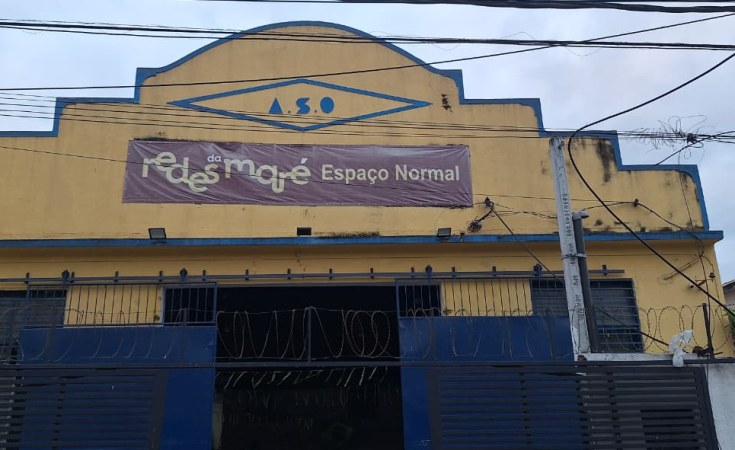
A short drive from Casa das Mulheres is Espaço Normal (Normal Space), a harm reduction and day centre for people experiencing homelessness and those who use drugs. The centre was created to challenge stigma and ensure that some of the community's most marginalised residents can access their basic rights.
The philosophy is simple: people cannot begin rebuilding their lives if they are denied dignity.
Thais Andrade, the centre's harm reduction coordinator, said the programme was developed after researchers and community members identified the barriers faced by people living on the streets. Rather than focusing solely on drug use, she said the centre addresses the broader challenges that prevent people from accessing healthcare and other essential services.
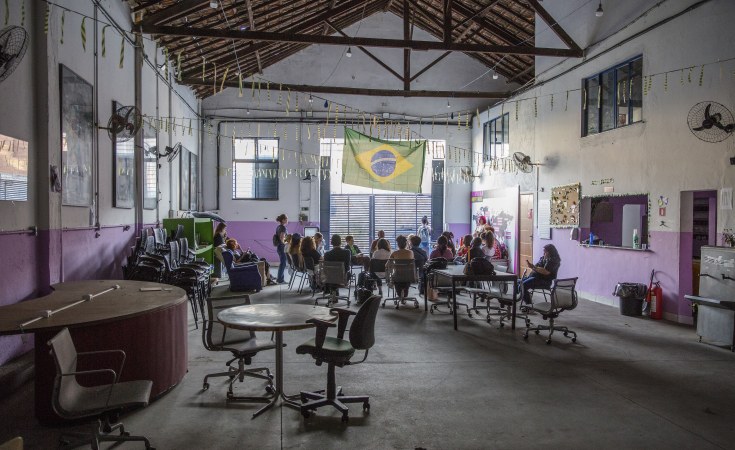
Each day, around 150 people pass through the centre's doors. Some come for a hot breakfast or lunch, others to take a shower, wash their clothes, use a computer, read, attend workshops or simply rest on the sofas before returning to the streets. The centre also holds regular meetings where visitors help organise and care for the space, reinforcing a sense of community and shared responsibility. Wednesdays are dedicated to women, with around 80 women accessing the service. Condoms and contraceptives are available. Staff also encourage people to access HIV testing and primary healthcare through local family clinics.
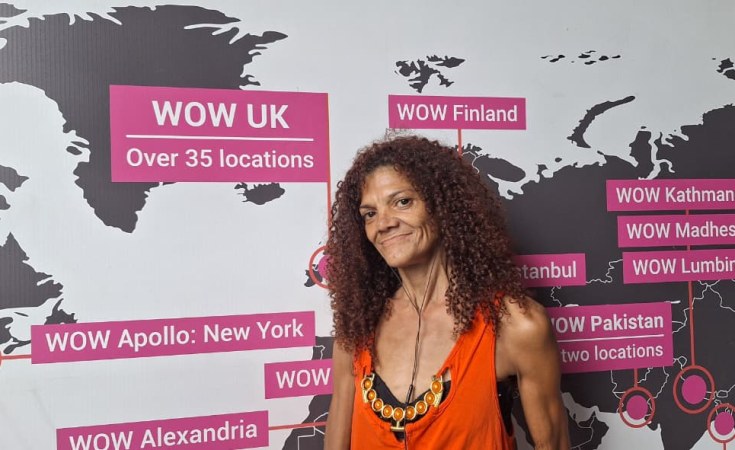
"We talk to people to understand what they want," Andrade said. "Not with judgement."
She said many people face barriers to healthcare not because services do not exist, but because stigma, territorial violence and social exclusion make those services difficult to reach. Redes da Maré, she explained, works to bridge that gap.
Rodrigo Pereira, coordinator of Espaço Normal, said the centre also provides practical harm reduction support for people who use crack cocaine. This includes distributing disposable plastic pipes and cups to reduce lip injuries and lower the risk of transmitting infections, while also providing information on safer drug use practices. Pereira said harm reduction is ultimately about protecting health rather than condemning people.
With greater investment, he believes these services could become more fully integrated into Brazil's public health system.
Among those spending the afternoon at Espaço Normal was 59-year-old Leonel, who now works at the centre as a harm reduction worker after spending a year living on the streets.
Leonel reflected on the journey that brought her there. Homelessness, she said, had pushed her deeper into drug use, but the support she found at Espaço Normal had helped her begin rebuilding her life.
"The work here is to recognise that we are people," she said. "We like to be fed. We like to be clean."
Today, she says her drug use has reduced significantly. Working at the centre has given her structure and purpose, and she now uses drugs only after fulfilling her responsibilities. At 59, she has also returned to school and is determined to keep moving forward.
"I want to be beautiful and gain weight," she said.
Leonel believes many people living on the streets are misunderstood. She said homelessness often comes first, with drug use following later as people struggle to cope with trauma, loneliness or family breakdown.
"People think we use drugs first," she said. "Sometimes it's because of our families. We knew drugs after we were on the streets."
She also questioned why society judges people who use illicit drugs while largely accepting alcohol.
"The government doesn't do anything," she said, recalling how a hotel that once accommodated people experiencing homelessness was closed as part of cost-cutting measures. "We don't have to be hidden. We use drugs in privacy. Why is alcohol not criticised like the use of drugs?"
More than anything, Leonel wants people to see those living on the streets as human beings deserving of the same dignity as everyone else. "We eat the way you eat," she said. "Do you think we like to live this way? It's very hard."
As AIDS 2026 focused on sustaining the global HIV response amid shrinking donor funding, Maré offered a broader lesson that resonates as much in Brazil as it does in South Africa. The goal of ending HIV is not solely about expanding treatment access. It also requires addressing the violence, inequality and social exclusion that prevent people from reaching care in the first place.
allAfrica's Melody Chironda was in Rio de Janeiro, Brazil, reporting from AIDS 2026.


