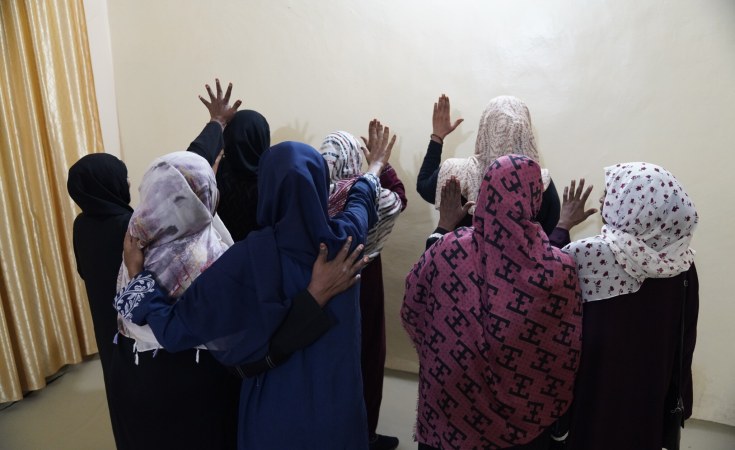
Nairobi / Amsterdam — Sudanese feminist and civil society figures have called for broader participation in any anticipated Sudanese-Sudanese dialogue, demanding genuine guarantees to protect participants and provide a safe space for discussion. They stressed the need for women, young people, and civil society to play an active role in the political process.
In interviews with Radio Dabanga's Kandakas and Miarems programme, the speakers' positions converged on the importance of broadening the base of participation in any Sudanese-Sudanese dialogue, although each placed different emphasis on security and political guarantees, women's participation, and the inclusion of young people and grassroots communities.
Ending the war and protecting women
Keep up with the latest headlines on WhatsApp | LinkedIn
Hala Al-Karib, regional director of the Strategic Initiative for Women in the Horn of Africa (SIHA), told Radio Dabanga that an initiative by a group of independent Sudanese and others interested in starting dialogue among Sudanese political forces represented a positive step. She said holding the dialogue inside Sudan gave it greater importance and legitimacy.
She added that any dialogue inside Sudan among people of different political orientations could be positive if it succeeded in providing citizens with space to participate and express their views. But Al-Karib stressed that the fundamental question was whether there were genuine guarantees to provide participants with safe spaces to discuss different issues without facing violence, punishment, or other consequences because of their positions and opinions.
Al-Karib noted that the return of Sudanese political forces to the country should not be subject to conditions that restricted their participation. Sudan was a country belonging to everyone, she said, and Sudanese people had the right to return and discuss the future of their country.
She called on Sudanese people inside and outside the country to join the dialogue and demanded greater space for civil society, stressing the importance of ensuring that women's voices were strongly represented in any future political process.
Al-Karib linked the future of women's situation in Sudan to developments in the war and said ending the fighting was central to stopping violence against women and girls.
"Any space for dialogue must include genuine commitments to protect women and children," she said, including in areas under the control of the army, amid what she described as rising levels of violence.
Al-Karib pointed to a number of violations and risks facing women, including stereotyping, criminalisation, arbitrary arrests, sexual exploitation, harassment, and child marriage.
She stressed the need for decisive action and enforcement of existing laws, alongside legislative changes to ensure the protection of women in public and private spaces. She also called for women's issues to be placed at the heart of any dialogue agenda, with mechanisms and commitments from the international and regional communities to protect participants, and training for regular forces and others on civilian protection if peace is reached.
On the continuation of the war, Al-Karib said the fighting could not have continued with such ferocity without the external support received by the parties to the war. She stressed the need to neutralise those supporting the war, adding that access to power should not be achieved through violence, but through genuine popular legitimacy based on the will of the Sudanese people.
'Top-down dialogue'
Youth affairs activist Fatima Adam believes Sudanese-Sudanese dialogue is the best option in the Sudanese context, and that external interventions in the peace process may be affected by conflicting national interests.
She pointed to the multiple platforms seeking to resolve Sudan's crisis, saying the situation raised questions about the effectiveness of the different tracks.
"Dialogue requires extensive work among grassroots communities, so that their voices can be heard," she said, stressing the need to discuss justice alongside ending the war.
Adam warned in an interview with Radio Dabanga that this could otherwise lead to a top-down dialogue disconnected from grassroots communities. There needed to be a broad umbrella for dialogue that could accommodate different parties, she said.
She added that young women did not have sufficient space for meaningful participation, and that representation within political parties tended to be dominated by elites and did not necessarily reflect the voices of women at grassroots level.
She criticised the repeated appearance of the same names at different dialogue tables and pointed to the difficulty of bringing the voices of unheard groups, particularly young women, into the discussion.
Adam said she did not see a strong Sudanese-Sudanese dialogue initiative extending beyond events and workshops, and expressed her loss of confidence in political parties.
An integral role
Dr Azza Mustafa, a researcher specialising in democracy and political parties, said women's participation in political dialogue processes was an integral role, and that women were the people most affected by the war and best able to describe the situation of women and what they had experienced during it.
Mustafa told Radio Dabanga that women were committed to achieving peace, and that their participation in dialogue should not be treated as a favour or a concession, but as equal participation.

Sign up for free AllAfrica Newsletters
Get the latest in African news delivered straight to your inbox
The selection of women participants, she said, should take into account their ability to deal with the situation of women during the war, alongside political experience, negotiating skills, and the ability to engage with the issues being discussed at the dialogue table.
"There are large groups of women who possess these capabilities," she said, calling for them to be supported during their participation in the dialogue.
Mustafa warned against current calls for dialogue turning into competition between political parties. Sudanese-Sudanese dialogue, she argued, should be open to everyone, and imposing conditions on the dialogue could lead to its failure before it even began. The proliferation of dialogue platforms could also weaken the cause, she said.
She stressed that determining who participates in the dialogue should not be an exclusive decision for political actors. The Sudanese people should have a role in determining the process that leads to an end to the war.
Their positions highlight demands for a safe space for discussion, guarantees for the participation of women, young people, and civil society, as well as action on ending the war, justice, and civilian protection as part of any future political process.

