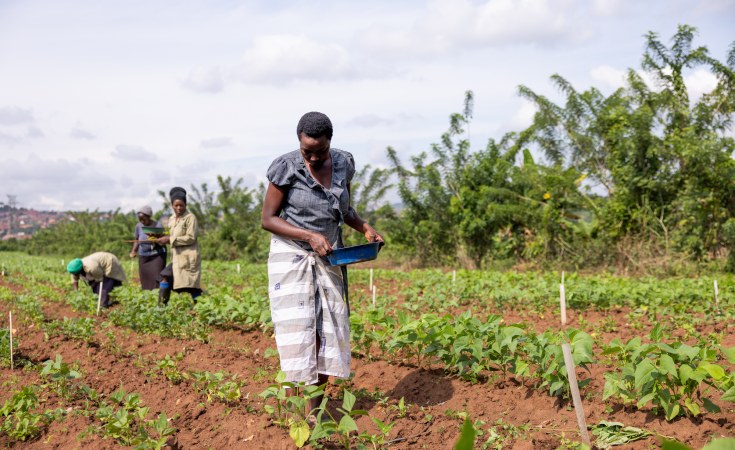
Whether or not the Strait of Hormuz reopens for shipping at pre-war levels following a ceasefire that has repeatedly frayed since June, the damage is already done for millions of African farmers.
The blockade, which cut off around a third of the world's fertilizer exports, set off a severe ripple effect across the continent. Fertilizer, fuel, and transport costs have soared, forcing widespread shifts in farming and planting decisions - as I heard on a recent trip to Ethiopia, where fertilizer and fuel costs dominated conversations.
When combined with an escalating El Niño climate event, this crisis is threatening rural livelihoods and regional food security.
As the United Nations warned recently, the gradual reopening of the Strait offers "no quick fix" for vulnerable economies.
Keep up with the latest headlines on WhatsApp | LinkedIn
This is not a temporary glitch that can be resolved by a Middle East peace deal. The Hormuz blockade is just the latest in a decade of systemic global shocks. It comes after the COVID-19 pandemic, which disrupted farming and supply chains, and the Ukraine war, which spiked global food prices.
These external crises have compounded worsening climate realities. Together, they lay bare African agriculture's enforced dependency on external influences.
Today's crisis must be the ultimate wake-up call. Rather than managing temporary supply chain patches, countries must accelerate the transformation outlined in the 2025 Kampala Declaration. They signed up to a ten-year action plan to scale local production, retain value through processing, and aggressively expand regional trade, including through trade corridors for agricultural produce.
My family's farm in southern Zimbabwe offers proof of concept at the micro-level. For decades they have relied on inter-generational farming wisdom, while also seizing on the latest technological advances. A devastating drought two years ago prompted my mother to shift away from growing maize toward climate-resilient, nutritious crops like millet. Yields and incomes surged.
By reinvesting those profits into processing equipment, my family successfully moved up the value chain—producing animal feed and expanding into poultry. This shift has also led to them eating healthier, more varied, and protein-rich diets.
Even as they face the current crisis, my family is resilient because they've built reserves and diversified their risk. While their fertilizer costs have already risen by $150 per metric tonne as a result of the Middle East crisis, the community is adapting by shifting further to less input-heavy sorghum and groundnuts and continuing to complement conventional fertilizers with organic manure.
To scale this kind of resilience across the continent, governments, regional leaders, and the whole agricultural sector must work together to do what it takes to get innovations quickly into the hands of farmers.
For example, through a range of cutting-edge breeding techniques, it's now possible to double the yields of naturally robust traditional crops like sorghum, millet, teff, and fonio. These crops are also more nutritious than widely consumed staples like maize.
Equally promising are new approaches to improving soil health, including biofertilizers. They use soil microbes to naturally fix nitrogen in the soil in some crops, offering the potential for a 70 percent reduction in cost. The use of fertilizers containing Bradyrhizobium bacteria with soybean crops is estimated to have saved Brazil over $15 billion in nitrogen fertilizer costs, while significantly reducing environmental impact. This approach could potentially work with popular legumes in Africa, including soybeans, groundnuts, and beans.
A second Brazilian success story, with biofertilizer use in maize, is inspiring trials with cereals and legumes in Ethiopia, Kenya, Nigeria, Rwanda, Tanzania, and Zimbabwe.
These innovations will not replace the need for mineral fertilizers overnight, but they are critical pillars of a comprehensive African soil health strategy. They can complement increasing conventional fertilizer production, such as the Dangote Group's planned $7 billion expansion in Nigeria and Ethiopia.
In parallel, AI-powered digital tools like Virtual Agronomist use localized soil mapping to pinpoint which kind of fertilizer a plot needs, how much, and at which points in their growing cycles, thereby making fertilizer use as efficient as possible. These tools are still young but expanding quickly—Virtual Agronomist is already being used on over 1.3 million small farms in seven countries.

Sign up for free AllAfrica Newsletters
Get the latest in African news delivered straight to your inbox
At the Gates Foundation, we believe agriculture is the engine that will fuel Africa's economic growth. We know that innovation is just one part of creating the necessary transformation. In pursuit of the Kampala CAADP vision, countries are already pairing technologies with robust policies, infrastructure investments, and regional market integration. The challenge isn't knowing what to do; it's achieving the speed of change that's required to keep ahead of the vagaries of external shocks.
The chokehold on the Strait of Hormuz should be the ultimate catalyst. For farmers like my mother, Romina, this is not an abstract policy debate. It's a call to action—to African countries to fulfil the Kampala commitments of increasing agrifood output by 45 percent by 2035, and to international development partners, to invest in the farmers, tools, and innovations that will help our countries withstand global shocks and build lasting food security.
* Chikava is the Director, Economic Opportunity, Africa, at the Gates Foundation.
