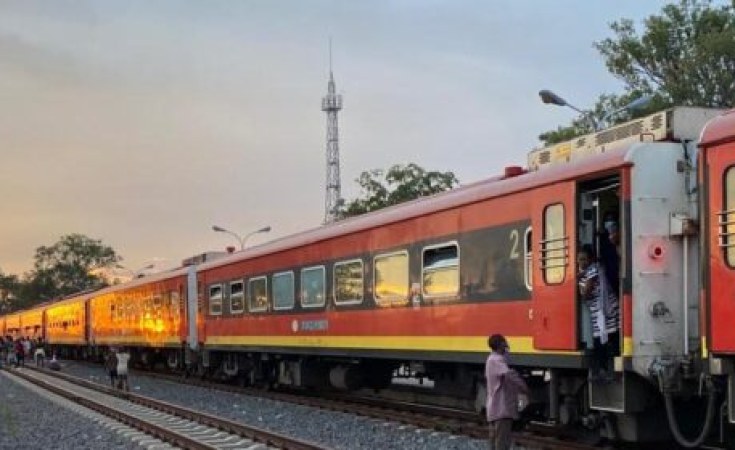
Kinshasa — President Félix Tshisekedi of the Democratic Republic of the Congo (DRC) on Wednesday in Kinshasa called for the Lobito Corridor to be transformed into a tool for economic sovereignty.
Tshisekedi was speaking at a joint press conference with his Angolan counterpart, João Lourenço, after they witnessed the signing of the railway concession agreement for the development of the Lobito Corridor in the DRC.
"Together, let us make the Lobito Corridor a concrete instrument of African integration, economic sovereignty and lasting improvement in the living conditions of our populations," he said.
The Congolese statesman stated that the signing ceremony was not a final destination but the beginning of a shared responsibility in which "we must now move from intentions to achievements, from agreements to infrastructure, and from commitments to results".
Follow us on WhatsApp | LinkedIn for the latest headlines
He explained that the railway concession agreement signed between the DRC and Portuguese construction company Mota-Engil Africa relates to the Dilolo-Sakania railway line, an essential component of the Congolese section of this strategic corridor.
Stretching approximately 1,004.5 kilometres, the railway will serve, among others, the cities of Kolwezi, Tenke and Lubumbashi, at the heart of the country's mining, industrial and agricultural region. The project is expected to mobilise an indicative investment of nearly US$1.258 billion.
He said the funds would be allocated to feasibility studies, rehabilitation, modernisation, extension, operation and maintenance of the railway line, with the operating period set at 30 years.
At the end of that period, he added, the infrastructure will be transferred to the Congolese State under the conditions established in the contract.
He stressed, however, that the agreement does not privatise the National Railways Company of the Congo (SNCC), nor does it create a railway monopoly, as the line will remain open to qualified operators under transparent, fair and non-discriminatory conditions.
The SNCC will retain exclusive rights to passenger transport and will continue to exercise its right to transport freight, he said. IZ/SC/DOJ

