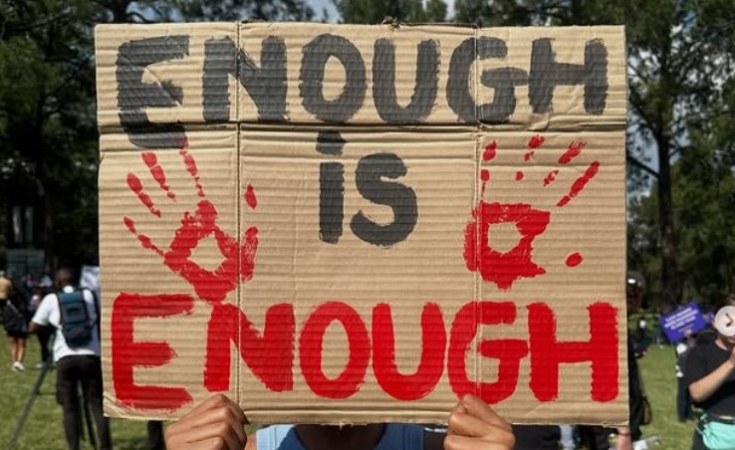
South Africa has laws, strategies and institutions to combat gender-based violence and femicide. What is missing is a sufficiently funded frontline system that protects women where they live, travel and work; responds quickly to threats and supports survivors from their first report through to justice.
The discovery of women's bodies across Ekurhuleni again exposes the gap between policy and protection. The women's families deserve answers and justice. The wider public deserves to know whether police personnel and public money are being directed to the communities facing the greatest danger.
Visible policing is a critical measure of that protection. South Africa has roughly one police officer for every 412 people, or 243 per 100,000 residents. The frequently cited figure of 300 officers per 100,000 is a historical survey median, not a universal United Nations standard, so population ratios alone cannot determine the required establishment.
The more relevant test is policing demand. The SAPS recorded 27,494 murders in 2023/24, about 76 murders a day, while the Human Sciences Research Council found that about one in three women aged 18 and older had experienced physical violence in her lifetime. A police service confronting this level of violent crime and gender-based violence and femicide (GBVF) requires greater operational capacity than one serving a substantially safer population.
The national ratio also overstates what communities experience because it counts personnel who may not be available for patrols and masks vacancies, uneven deployment, administrative duties and vehicle shortages....