

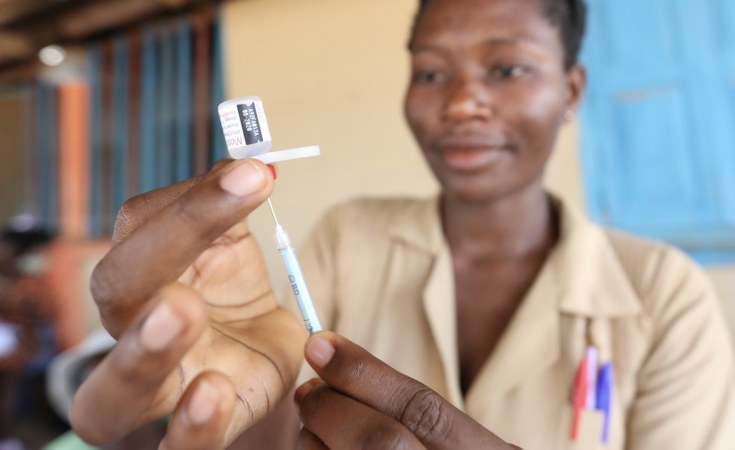
Malaria remains one of Kenya's greatest public health challenges, with children under five bearing the heaviest burden. The country has been at the forefront of malaria vaccine trials and was among the first three African nations to pilot the RTS,S vaccine under the Malaria Vaccine Implementation Program (MVIP). However, Kenya now finds itself lagging behind in adopting the R21/Matrix-M vaccine, a more cost-effective and scalable alternative to RTS,S, while neighboring countries forge ahead. The delay is both unjustified and dangerous.
The R21 Advantage
The introduction of malaria vaccines was a groundbreaking moment in the fight against the disease. RTS,S, the first malaria vaccine to receive WHO approval, was a historic step, but it has limitations, including a complex four-dose regimen and moderate efficacy. R21, developed by Oxford University and manufactured by the Serum Institute of India, surpasses RTS,S in key areas:
Higher Efficacy : Clinical trials show that R21 achieves over 75% efficacy, compared to the approximately 56% efficacy of RTS,S.
Keep up with the latest headlines on WhatsApp | LinkedIn
Lower Cost : R21 is priced at around $3 per dose, significantly lower than RTS,S, which costs between $9 and $10 per dose.
Easier Storage and Scalability : R21 is more physically stable, making it easier to transport and store, particularly in rural health facilities with limited cold chain infrastructure.
Proven Implementation in Other African Nations : Countries such as Nigeria, Ghana, and Burkina Faso have already begun rolling out R21, demonstrating its viability and effectiveness in real-world settings.
Despite these advantages, Kenya has yet to make the transition.
Financial and Logistical Edge
Kenya has faced challenges in securing vaccines from GAVI, the Vaccine Alliance, due to nonpayment, underscoring the urgent need for cost-efficient healthcare policies. The government's hesitancy to adopt R21 represents a failure to prioritize long-term financial sustainability in immunization programs. The cheaper and more effective R21 vaccine provides an opportunity to cut costs while saving more lives. A policy that prefers RTS,S over R21 is economically unsound and medically indefensible.
The Risk of Delay: Lives on the Line
Every day that Kenya delays R21 implementation, children continue to die from malaria. With climate change increasing mosquito populations and malaria transmission, Kenya cannot afford inertia. Malaria cases remain high, particularly in endemic regions such as western Kenya and the lake basin. A faster transition to R21 could prevent thousands of deaths annually, yet bureaucracy and unexplained hesitations keep the vaccine out of reach.
Lessons from COVID-19: The Power of Multiple Options
Kenya demonstrated remarkable agility during the COVID-19 pandemic by rolling out multiple vaccine options simultaneously, allowing for better coverage and accessibility. There is no reason why a similar approach cannot be adopted for malaria vaccines. RTS,S and R21 can coexist in a phased transition, ensuring that children continue receiving protection while Kenya moves toward a cost-effective and more efficacious alternative.
Time for Accountability and Action
Kenya has long been a regional leader in healthcare innovation, yet on malaria vaccination, it is falling behind. The Ministry of Health must provide a clear roadmap for R21 rollout, ensuring that financial and logistical barriers are addressed with urgency. The silence surrounding this delay is unacceptable. The government owes it to its people to make decisions based on scientific evidence and financial prudence, rather than bureaucratic inertia.
R21 is not just another vaccine; it is a lifeline for millions of Kenyan children at risk of malaria. Every moment of delay is a moment where preventable deaths occur. The government must act—and act now.
References
1DaySooner. (2024). How cost-effective is the new R21 vaccine compared to existing malaria interventions? [Online] Available at: https://www.1daysooner.org/how-cost-effective-is-the-new-r21-vaccine-compared-to-existing-malaria-interventions/ [Accessed 7 Feb. 2025].
The Lancet. (2025). Malaria vaccine introduction in Africa: progress and challenges. [Online] Available at: https://doi.org/10.1016/S0140-6736(24)02841-1 [Accessed 7 Feb. 2025].
WHO. (2024). World Malaria Report 2024: Addressing inequity in the global malaria response. [Online] Available at: https://www.who.int/teams/global-malaria-programme/reports/world-malaria-report-2024 [Accessed 7 Feb. 2025].
UNICEF. (2024). Malaria vaccine price data. [Online] Available at: https://www.unicef.org/supply/documents/malaria-vaccine-price-data [Accessed 7 Feb. 2025].Impouma B, Adidja A, Mboussou F, Cabore J, Moeti M. Malaria vaccine introduction in Africa: progress and challenges. Lancet Glob Health. 2024 Dec;12(12):e1739-e1742. doi: 10.1016/S2214-109X(24)00507-4. Epub 2024 Dec 11. PMID: 38107061.

Sign up for free AllAfrica Newsletters
Get the latest in African news delivered straight to your inbox
Liu Q, Jing W, Kang L, Liu J, Liu M. Trends of the global, regional and national incidence of malaria in 204 countries from 1990 to 2019 and implications for malaria prevention. J Travel Med. 2021 May 24;28(4):taab046. doi: 10.1093/jtm/taab046. PMID: 33797456; PMCID: PMC8289972.
WHO. World Malaria Report 2023. Geneva: World Health Organization; 2023. Licence: CC BY-NC-SA 3.0 IGO.
Amani A, Mboussou F, Impouma B, Cabore J, Moeti MR. Introduction and roll-out of malaria vaccines in Cameroon and Burkina Faso: early lessons learned. Lancet Glob Health. 2024 Jun;12(6):e740-e741. doi: 10.1016/S2214-109X(24)00183-1. Epub 2024 May 22. PMID: 37234162.
WHO. Accelerated Malaria Vaccines Introduction and Rollout in Africa (AMVIRA). AMVIRA dashboard. Malaria vaccine implementation. 2025. [cited 2025 Jan 17]. Available from: https://worldhealthorg.shinyapps.io/AMVIRA/ .

