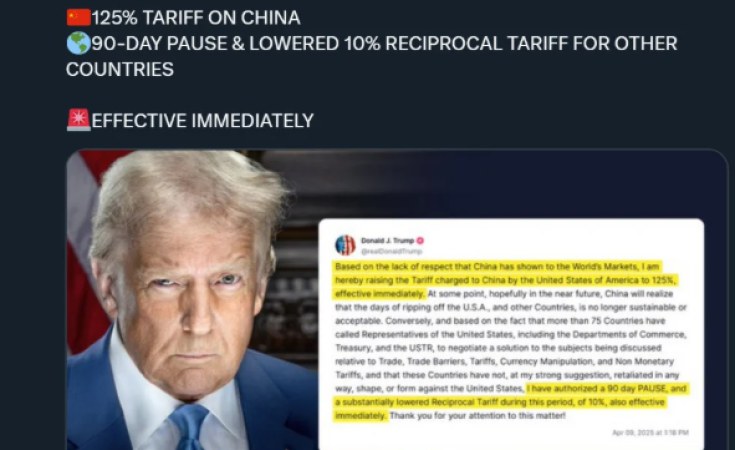
The government has expressed its concern regarding the recent decision by the United States government to impose reciprocal tariffs on several African countries, including a 21% tariff on Namibian goods.
In a statement issued last week on Friday, Amb. Penda Naanda, Executive Director of the Ministry of International Relations and Trade, highlighted the potential negative consequences of this move on Namibia's trade relationship with the U.S.
"The Government has taken note of the US Government's recent reciprocal tariff imposed on African countries, which includes 21% tariffs on Namibia," Naanda said.
Keep up with the latest headlines on WhatsApp | LinkedIn
He emphasized that the U.S. administration's action "has created turbulence in global trade, which undermines the commitment under AGOA, a non-reciprocal agreement designed to support developing countries and least developed countries (LDCs) in Africa by leveraging preferential access to U.S. markets. Unfortunately, this measure could result in unfair market conditions for Namibian products to compete fairly within the U.S. market."
Naanda clarified that the 21% tariffs are not based on the Most Favored Nation (MFN) principle but rather on the U.S. trade deficit with individual countries. He warned that the implementation of these reciprocal tariffs, as outlined in the recent White House statement, "could potentially supersede existing trade agreements, including the African Growth and Opportunity Act (AGOA), and significantly impact trade flows."
While acknowledging Namibia's existing 42% tariff on goods from the USA, Amb. Naanda pointed out that not all U.S. goods entering Namibia attract these duties under the Southern African Customs Union (SACU) tariff structure. He indicated that this situation necessitates a "balanced approach from SACU member states, including Namibia, to find a workable solution based on reciprocity."
Regarding mitigation strategies, Naanda stated that "stakeholder engagement will be imperative to gauge and establish the extent of the effects imposed by the U.S." He added that the Ministry is exploring several strategies to mitigate the impacts of the 21% tariffs, though these could not be revealed at this time.
The Executive Director also warned of the potential for decreased competitiveness of key Namibian exports in the U.S. market. "It is also worth noting that the imposition of tariffs could lead to decreased competitiveness of Namibian beef and fish exports in the U.S. market, potentially reducing sales volume and demand for Namibian products due to price increases attributed to the tariff." He further cautioned that the tariffs could "disrupt established supply chains and negatively affect Namibia's export earnings, impacting broader preferential stability for Namibian products under the Generalised System of Preferences (GSP) regime."

Sign up for free AllAfrica Newsletters
Get the latest in African news delivered straight to your inbox
Naanda concluded by affirming the government's commitment to monitoring the evolving U.S. trade policy. "The Government through the Ministry of International Relations and Trade, will remain vigilant in monitoring the evolving dynamics of the 'America First' policy on trade, as well as its implications for non-reciprocal trade agreements."