

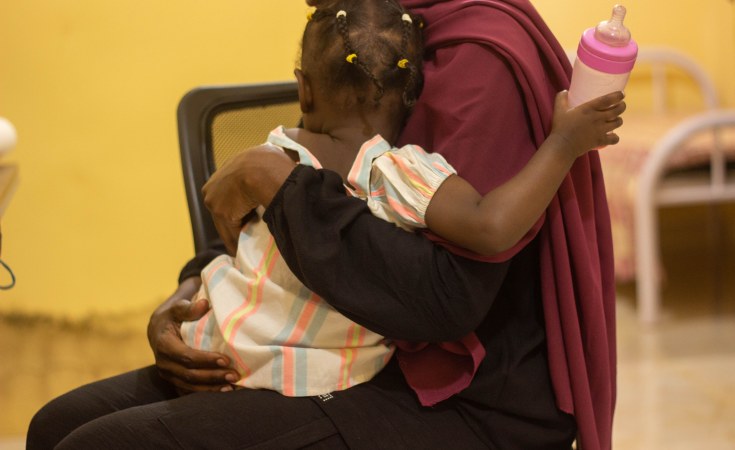
Washington D.C. — The systematic use of gender-based violence (GBV) against women in Sudan, particularly in Darfur, is not an unavoidable byproduct of conflict but "a deliberate genocidal tactic" aimed at destroying communities, experts argued during an online panel discussion hosted last month by the Darfur Women's Action Group (DWAG).
The panel, titled 'Protection, Inclusion, and Empowerment of Sudanese Women', brought together activists, legal scholars, and genocide prevention specialists, who detailed the impact of the ongoing war on Sudanese women and girls.
"Genocide is not just mass murder. It's a calculated attack on women's ability to reproduce and on the very fabric of community life." -Dr Elisa von Joeden-Forgey, executive director of the Lemkin Institute for Genocide Prevention and Human Security
Keep up with the latest headlines on WhatsApp | LinkedIn
A central theme of the discussion was the deliberate targeting of women's bodies as a method of group destruction. Von Joeden-Forgey argued that the observed patterns of violence in Darfur align with established definitions of genocide: "Many of the tactics used to destroy a group, many performed on women's bodies, are recognised in the genocide convention." She pointed to Raphael Lemkin's emphasis on gendered violence in his original framing of the term.
Understanding genocide, she stressed, requires recognising attacks on reproduction in its biological, social, and cultural dimensions. "When you look at the patterns, from the encirclement of villages and systematic rape to brutal mutilations and public humiliation, genocide is not just mass murder. It's a calculated attack on women's ability to reproduce and on the very fabric of community life." By targeting women's reproductive capacity and safety, perpetrators attack a community's fundamental ability to survive and regenerate.
Von Joeden-Forgey drew parallels between the current violence in Sudan, particularly by the paramilitary Rapid Support Forces (RSF), and systematic attacks by their predecessors, the Janjaweed militias* during the 2003 Darfur genocide: "The continuation of similar methods by the RSF, including eviscerating pregnant women, raping women and girls in public and in front of family members, using sharp objects, killing infants, mutilating pregnant women, all while shouting racist epithets," indicates a clear intent to destroy and humiliate targeted groups.
This analysis matches humanitarian reports on Sudan. An Amnesty International report published this month detailed the RSF's systematic use of sexual violence "to humiliate communities, assert control, and displace communities across the country." Last month, the UN children's agency (UNICEF) documented the rape of at least 221 children by armed men, some infants as young as one.
'Doubly vulnerable'
"There are countless historical injustices that leave deep scars with us women. What is our salvation?" Sadya Eisa, Secretary-General of the Usratuna Sudanese Association for Persons with Disabilities.
Sadya Eisa, secretary-general of the Usratuna Sudanese Association for Persons with Disabilities, highlighted the compounded risks facing women and girls with disabilities in conflict. "A lack of clear support mechanisms makes women with disabilities the most vulnerable to all forms of violence." Accessing justice and legal aid, she added, is nearly impossible.
Women with intellectual disabilities face particular risks due to communication barriers and the breakdown of support systems. "In many cases, they die from starvation after their families lose their livelihoods." She called for specialised centres and better data to protect this often-overlooked group.
The panel also addressed the collapse of Sudan's healthcare infrastructure. In January, an RSF bombing of the maternity ward at Saudi Hospital in El Fasher, North Darfur, killed at least 70 people and injured dozens more. The attack destroyed the city's only fully operational hospital. Across the country, many health facilities have been targeted, while humanitarian agencies have suspended operations due to insecurity, leaving expectant mothers and newborns with no access to care.
'An afterthought'
"Who took up on themselves again and brought community together, and stayed and endured unimaginable suffering to give hope to others? Women!" Niemat Ahmadi, Founder and President of DWAG.
Panelists argued that the exclusion of women from decision-making processes is a fundamental part of the problem. "Women are often the first responders in crises And yet they're profoundly underrepresented at all levels of power," von Joeden-Forgey noted.
Former U.S. ambassador-at-large for global women's issues, Kelley Currie, echoed this, lamenting that women are invited to the peace process "not as an integral part but as an afterthought, as an added value to the table." She recalled the resistance she faced when advocating for sanctions on the warring generals: "It is no surprise that men insisted I didn't understand the situation and what I was talking about, saying I'm the one threatening peace with sanctions, somehow I was the problem."
The way forward, panellists urged, requires intentionally centring Sudanese women in all peace, justice, and reconstruction efforts. Von Joeden-Forgey reminded attendees that women offer unique foresight, as they "can see genocide before it reaches mass murder state, because their body is always a subject of contestation".

Sign up for free AllAfrica Newsletters
Get the latest in African news delivered straight to your inbox
DWAG founder Niemat Ahmadi called for the establishment of parallel institutions led by women, inspired by historical models, to forge inclusive and immediate responses. "We can't sit around forming task forces. We need action now."
The ethnic tensions that seem to underpin the current violence in Darfur have a long and bloody history in Sudan, especially during the 2003 Darfur civil war and subsequent genocide.
Many survivors from Darfur describe their attackers as 'Arabs' and compared them to the janjaweed militias who fought for the Sudanese government in Darfur since the war broke out in 2003 and were largely made up of Arab herding tribes.
The janjaweed were recruited from Arab nomadic tribes to repress a revolt over ethnic marginalisation and are held responsible for the genocide against Darfuri farmers and other non-Arab/African groups, to which the Masalit belong, and were also called 'devils on horsebacks'.
The RSF are so contentious in Darfur because they were established by the Al Bashir regime in August 2013 and grew out of the janjaweed. They have in the past been predominantly recruited from the Rizeigat Arab herding tribe, which RSF Commander Mohamed 'Hemedti' Dagalo hails from.

