The test of our progress is not whether we add more to the abundance of those who have much; it is whether we provide enough for those who have too little - late American President, Franklin D. Roosevelt, expressing his usual empathy for the suffering masses during the New Deal era, meant to cushion the effects of the Great Depression. Time heals.
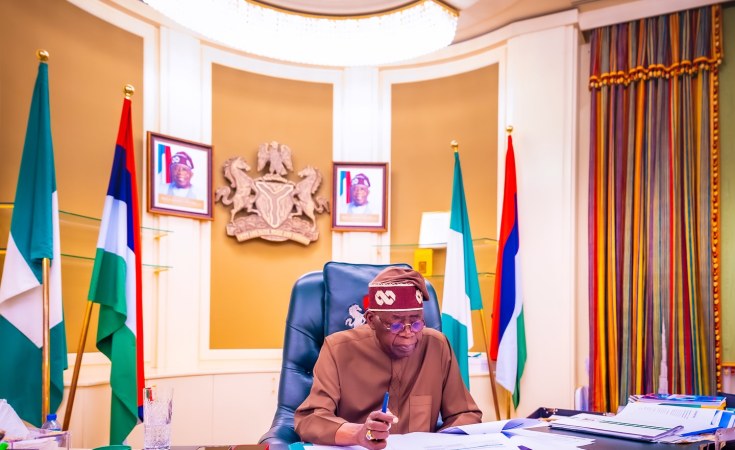
By noon today, it will be exactly 731 days, two years, since President Bola Ahmed Tinubu shook the nation to its very foundations and shocked fellow countrymen with the statement, SUBSIDY IS GONE. In the same fell swoop, Tinubu decreed the flotation of the currency (in real terms, devaluation). These twin policies have since defined his two-year-old administration. Looking back, should he have removed the subsidy on premium motor spirit, pms, the way he did, while also devaluing the currency? Some of his supporters and handlers believe there was no better time to do it.
Others disagree, insisting that it was not only precipitous, it was high on the illusion of amputating a leprous hand without consideration for how to stop the bleeding. Here we are, two years later. A lot has happened. Whatever nay sayers may put up, it is to the credit of President Tinubu and the resilience of Nigerians that the doomsday predicted in the wake of the removal of subsidy and devaluation of the naira has not happened. Yes, it must be admitted that there has been immense suffering in the land, something which the administration also acknowledges.
Keep up with the latest headlines on WhatsApp | LinkedIn
But acknowledging the presence of a problem is not the same as manifestly tackling its debilitating outcomes. Whereas Nigeria and Nigerians have had to go through rough patches over the decades, there is a general consensus that hardship has never been this colourful in its crippling monstrosity - colourful because what has led to this hardship is what has brought more money to the coffers of the government; crippling monstrosity because the masses are the ones whose sweat and toil provide the so called gains.
The real issue for the masses is simple: What has happened to the better life that they were promised? Here lies the problem.
For a leader who promised to turn things around after decades of misplaced priorities by successive administrations, many Nigerians are still asking if this is another regime of unfulfilled promises or a dawn of renewed hope for better days ahead. This administration pitches with the latter, insisting that most of the policies President Tinubu is putting in place are for a better tomorrow. Yet, it was one great writer who said "hope is better served as breakfast but not as dinner".
In terms of leadership style and change, is Tinubu getting it right? His supporters say yes. But history tells us that there was once a leader, Lee Kuan Yew of Singapore, who also faced a fate similar to what Tinubu inherited from former President Muhammadu Buhari, the man he put in office. Chairman Lee cultivated Singapore, dreamt of Singapore and ate Singapore. In fact he had Singapore for appetiser and desert - not literally eating and pillaging it. He was very stern, but he led by example. He, too, sacrificed as he admonished Singaporeans to look to the future. Can we say the same for Tinubu? His admirers and supporters will say yes. But the reality speaks to the opposite, for, even as Nigerians are told to sacrifice, those in power revel in opulence and wasteful endeavours..
For a man who believes in the strategic linkage between ideas, know-how, opportunities and capital, what President Tinubu is attempting to do (or has done in the last two years) presents a cacophony of the good, the bad and the ugly.
The good because there is the masturbatory kick the government is having because of the volume of naira at hand. It has paid off its loan to the International Monetary Fund, IMF. The states have also had higher revenue returns from Federation Accounts and Allocation Committee, FAAC. Projects are being initiated and there are signs, some claim, that the economy is beginning to stabilise.
The bad because the hunger in the land appears not to be about to stop. The World Bank said, recently, that in a couple of years, many more Nigerians would become poorer.
Yet, insecurity persists in its ugliness.
The Nigerian Constitution insists that the security and welfare of the people shall be the primary responsibility of the government. Unfortunately, today, even in the face of mass despair, politics and regime sustenance appear to be the primary concern of the government.
To properly dissect Tinubu's mid-term performance, Vanguard opted to seek the input of experts in various fields of endeavour. They were invited to the Vanguard premises for discussion. The issues for discussion cut across the economy, politics, law and order, security, wellbeing of the citizenry, healthcare, education, infrastructure, amongst others.
Some of the eminent personalities who signed on for and participated in the session included Dr. Muda Yusuf, CEO of the Centre for the Promotion of Private Enterprise and former Director General of the Lagos Chamber of Commerce and Industries; Dr. Mike Okiro, former Inspector General of Police; Dr. Maymunah Kadiri, Consultant Neuro-Psychiatrist and Psychotherapist, Pinnacle Medical Services Ltd; Dr. Dele Sobowale, an eminent economics and columnist in key newspapers; Ebunolu Adegboruwa, SAN, eminent lawyer and human rights activist; Omowunmi Akingbohungbe, Chairman of Women In Business (WinBiz) Group and; Yemi Adamolekun, Executive Director, Enough is Enough and Senior Associate, Centre for Strategic and International Studies of Georgetown University. The session was held on Wednesday, May 14, 2025. They did justice to the issues as would be seen in the following pages. The summary is that whereas you can not fail to attribute some successes to the Tinubu administration, the cost and the human despair pour cold water on them, prompting many to ask if this is another one-chance regime of failed promises or, indeed, this is the dawn of renewed hope.

Sign up for free AllAfrica Newsletters
Get the latest in African news delivered straight to your inbox
This package also took on board ministerial sessions of what the government has achieved. Defence, Petroleum (oil), Works, Water Resources and Sanitation, and Power ministers reeled out the achievements of the administration.
The session was chaired by Ochereome Nnanna, Chairman, Vanguard Editorial Board. In attendance were Emeka Anaeto, Business Editor; Emma Nnadozie, Crime Editor; Femi Ajasa, Online Editor; Babajide Komolafe, Economy Editor; Theodore Okpara, Transport Editor; Morenike Taire, Woman Editor; Shola Ogundipe, Health Editor; Wahab Adeshina, Education Editor; Yetunde Arebi, Dep. Woman Editor; Dapo Akinrefon, Dep. South West Editor. The transcription was done by the team of Ebun Sessou , Providence Ayanfeoluwa , Cynthia Alo, Efe Onadjae and Dickson Omobola.