Geneva — Updated on June 3, 2025
The 2025 World Health Statistics Report reveals the profound health impacts of the COVID-19 pandemic, including loss of life, reduced longevity, and overall decline in health and well-being, which have significantly influenced Africa.
In just two years, between 2019 and 2021, global life expectancy fell by 1.8 years, the most significant drop in recent history, reversing a decade of health gains, according to the World Health Organization (WHO) report.
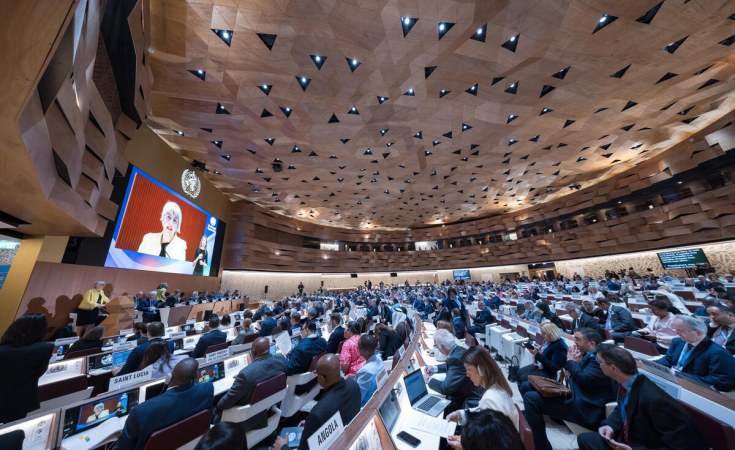
The report was published for the May 19-27 World Health Assembly (WHA) in Geneva.
Keep up with the latest headlines on WhatsApp | LinkedIn
Still, it does not discuss the impact of the United States' withdrawal, the WHO’s biggest financial contributor, which is significantly affecting the organisation’s budget.
For the 2024-2025 period, the US had committed to pay approximately $988 million, representing 14 percent of WHO’s total funding.
Increased levels of anxiety and depression linked to COVID-19 reduced global healthy life expectancy by 6 weeks, according to the WHO report, erasing gains made from lower mortality due to non-communicable diseases during the same period.
The report says recovery in essential health services remains unattained.
“A shortfall of 11.1 million health workers is still projected by 2030, with nearly 70 percent of the gap concentrated in the WHO African and Eastern Mediterranean regions,” Marc Canal Noguer, senior fellow at the McKinsey Global Institute (MGI), said, commenting on the report in Geneva.
A new study released by the MGI at the time of the WHA reveals that the shortage of healthcare workers and the potential for improvement are not evenly distributed globally.
Africa’s 52% shortfall
“Africa has 17 percent of the world’s population, but it accounts for 52 percent of the shortage of healthcare workers, and this needs to be addressed,” the new study by the MGI shows, according to Canal Noguer.
“However, less than 20 percent of the GDP opportunity is concentrated in Africa, highlighting the variation in disease burden averted and GDP gained by closing the shortage,” he notes.
WHO HIV and TB incidence rates are falling, and fewer people need treatment for neglected tropical diseases.
But malaria has been resurging since 2015, and antimicrobial resistance remains a public health challenge, notes the MGI report.
“Further, while eliminating the worker shortage could extend global life expectancy at birth by a year and a half, this improvement pales in comparison to the potential for Africa, where individuals could live seven years longer,” says Canal Noguer.
Furthermore, while global life expectancy at birth could be extended by 18 months by eliminating the worker shortage, this improvement is slight in comparison to the potential for Africa, where individuals could live seven years longer, according to the MGI report.
To achieve this, the healthcare workforce requires attention, investment, and innovation; many healthcare workers leave Africa for countries with higher standards of living.
The WHO projects a shortfall of at least 10 million health workers across all positions and classifications by 2030.
This estimate could be as high as eight times higher, according to the McKinsey Global Institute (MGI).
Another McKinsey report finds that many countries in sub-Saharan Africa face high unemployment rates among healthcare workers while struggling to cope with a severe shortage of healthcare professionals.

Sign up for free AllAfrica Newsletters
Get the latest in African news delivered straight to your inbox
Unpaid healthcare workers
For instance, in sub-Saharan Africa, about 70 percent of community healthcare workers are young women, most of whom are unpaid, with only 43 percent receiving nonmonetary incentives and just 23 percent receiving stipends.
Globally, while women make up 70 percent of the health workforce, they occupy only about 25 percent of senior roles.
“Similarly, in Africa, just 38 percent of ministries of health are led by women, highlighting the persistent gender inequity in leadership positions within the sector,” says the report.
This gap has far-reaching consequences that affect global health, health systems, and economies.
Worker- and job-scarce countries, those with the dual challenge of having insufficient healthcare workers and insufficient available healthcare jobs to meet population health needs, include 42 countries, primarily low- and middle-income countries on the African continent.
