

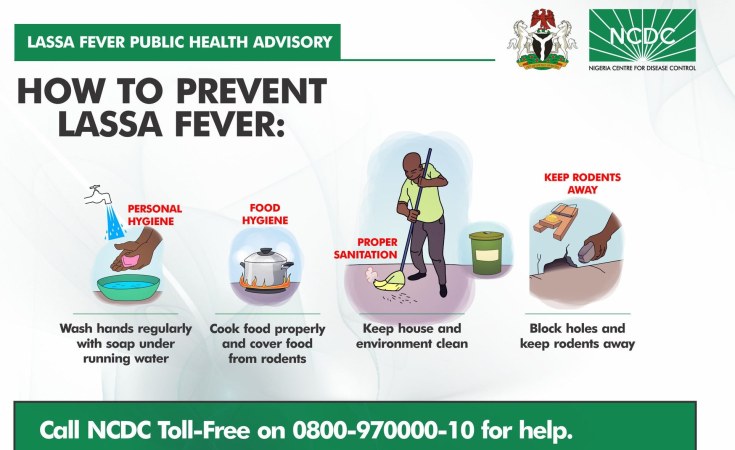
As of epidemiological week 23 in 2025, a total of 143 deaths have been reported, with a CFR of 18.9 per cent- higher than the 17.8 per cent CFR recorded for the same period in 2024
The Nigeria Centre for Disease Control and Prevention (NCDC) has reported a rise in the case fatality rate (CFR) of confirmed Lassa fever infections, surpassing the rate recorded during the same period in 2024.
As of epidemiological week 23 in 2025, a total of 143 deaths have been reported, with a CFR of 18.9 per cent - higher than the 17.8 per cent CFR recorded for the same period in 2024.
So far, 18 states have reported at least one confirmed case across 96 Local Government Areas.
Keep up with the latest headlines on WhatsApp | LinkedIn
According to the latest situation report released by the NCDC, the number of confirmed cases rose to 11 in week 23, up from eight reported in the preceding week.
The new infections were recorded in four states: Ondo, Edo, Bauchi, and Taraba.
The agency noted that 90 per cent of all confirmed cases were concentrated in five states -- Ondo 31 per cent, Bauchi 25 per cent , Edo 16 per cent ,Taraba 15 per cent, and Ebonyi three per cent . The remaining 10 per cent were spread across 13 other states.
The most affected age group is 21-30 years, with a median age of 30. The gender distribution of cases shows a male-to-female ratio of 1:0.8.
While the overall number of suspected and confirmed cases has dropped compared to the same period last year, the virus continues to affect health workers, with one new healthcare worker infected in the reporting week.
Expanded response
In response to the ongoing outbreak, the NCDC said it has activated its multi-partner, multi-sectoral Incident Management System (IMS) to coordinate control efforts at the national level.
The agency said several activities have been implemented across states and communities, with support from partners including the World Health Organisation (WHO), Georgetown University, Breakthrough Action Nigeria (BA-N), and the Global Fund.
According to the NCDC, these activities include the sensitisation of clinicians in six high-risk Local Government Areas in Ondo State, the conduct of a national Lassa fever risk assessment, and the integration of key messages on Lassa into broader viral haemorrhagic fever (VHF) communication strategies.
It also said that 10 Rapid Response Teams were deployed to affected states as part of a One Health approach.
To strengthen infection prevention and control, the agency said it launched an IPC e-learning platform, developed in partnership with Dr Ameyo Stella Adadevoh (DRASA) and funded by the Global Fund.
The NCDC further stated that it distributed essential response commodities, including personal protective equipment (PPE), Ribavirin (injection and tablets), hand sanitisers, thermometers, and health education materials, to treatment centres and state health facilities.
The agency said it conducted several capacity-building activities during the period, including a seven-part clinical management webinar series and training sessions for healthcare workers in Bauchi, Ebonyi, and Benue States.
It also noted that community sensitisation campaigns were implemented in Ondo State through radio outreach, town hall engagements, and environmental response activities.
However, the NCDC said several challenges continue to affect the national response.
These, it said, include late presentation of cases, poor health-seeking behaviour largely attributed to the high cost of treatment and low awareness levels in high-burden communities.
The agency also cited poor environmental sanitation as a recurring concern in many of the affected areas.

Sign up for free AllAfrica Newsletters
Get the latest in African news delivered straight to your inbox
The NCDC stated that it would continue to collaborate with partners to address these gaps and improve early detection, case management, and prevention strategies across the country.
Lassa fever
Lassa fever is an acute viral haemorrhagic illness caused by the Lassa virus, primarily spread through contact with food or household items contaminated by the urine or faeces of infected multimammate rats.
Human-to-human transmission can also occur through contact with the bodily fluids of an infected person, especially in healthcare settings with poor infection control.
Common symptoms include fever, headache, general weakness, sore throat, chest pain, vomiting, diarrhoea, and in severe cases, bleeding from body openings.
Early diagnosis and prompt treatment with Ribavirin significantly improve chances of survival.

