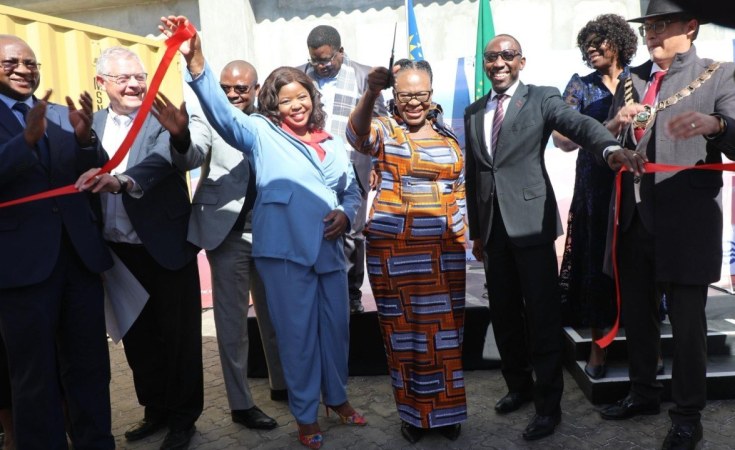
Today marks a truly historic moment for Namibia as we officially launched our participation in the African Continental Free Trade Agreement (AfCFTA). The first consignment departed from the Port of Walvis Bay this morning, signaling our active engagement in Africa’s continental free trade area.
Providing the keynote address, Hon. Amb. Selma Ashipala-Musavyi, the Minister of International Relations and Trade (MIRT), underscored Namibia’s commitment to turning the promise of AfCFTA into real economic opportunities. “The African Continental Free Trade Area is more than an agreement; it is a bold step towards Africa’s economic unity, offering Namibia and the continent a chance to unlock untapped markets and shared prosperity.”
Hon. Amb. Ashipala-Musavyi further emphasised that AfCFTA is not just about goods but also services, including financial and professional sectors, opening new avenues for Namibian businesses and professionals across Africa.
What does this mean for Namibia?
- Expanded Market Access: With AfCFTA, Namibia gains the opportunity to extend its reach far beyond regional borders, accessing markets across West, North, and Central Africa. Namibia is now able to trade with a consumer base of over 1.3 billion people and a combined GDP of approximately US$3 trillion.
- Economic Diversification: This launch is a clear call to action for our businesses to explore new markets, focusing on the diversification of both markets and products. It encourages increased production through enhanced economies of scale in existing sectors, enabling Namibia to strengthen its industrial base and reduce dependence on traditional markets and commodities.
- Job Creation and Youth & Women Empowerment: This launch also calls on our women and youth in trade to innovate increasingly, through initiatives such as African Continental Free Trade Area (AfCFTA) Protocol on Women and Youth in Trade. Adopted in February 2024, the protocol aims to ensure the full, equal, and meaningful participation of women and youth in the AfCFTA's economic landscape by addressing trade-related barriers and creating supportive policy environments
- Empowering Namibian Businesses: Namibian businesses of all sizes are essential for the successful implementation of AfCFTA. Entrepreneurs, manufacturers, service providers and MSMEs form the backbone of this effort, driving trade, innovation, and job creation. Government support is thus critical in tracking performance to be followed by necessary policy reforms, avail manufacturing incentives, implement special economic zones policy, and localisation. Additionally, identifying and integrating into regional value chains will strengthen the private sector’s capacity to compete and grow. Together, these measures will enable Namibia’s private sector to lead economic transformation and build a more resilient, diversified economy.
- National resilience: By trading more within the continent through the AfCFTA, Namibia can reduce dependence on distant or traditional markets and build better resilience against external shocks.
This launch is the culmination of years of dedication, including Namibia’s early ratification of AfCFTA and the gazetting of its tariff offer in December 2024, positioning the country for seamless intra-African trade.
Namibian companies are encouraged to seize this historic opportunity by leveraging AfCFTA to expand their exports and enter new African markets.


