

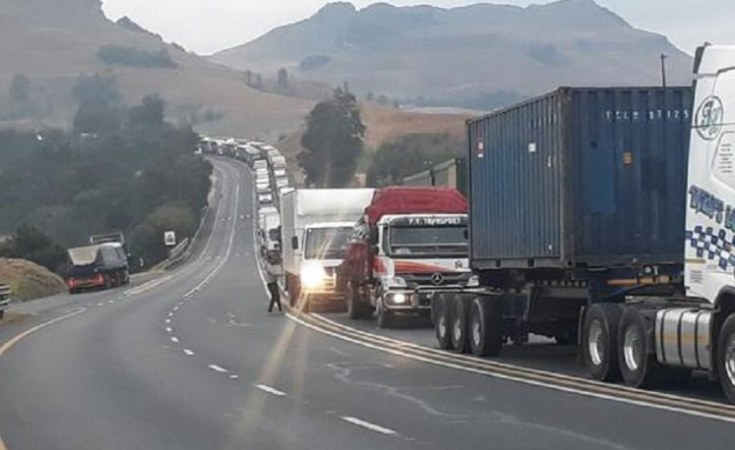
Uganda and Burundi are falling far behind their East African neighbours in tackling vehicle emissions, with a shocking average truck age of 37 years, a new study has revealed. Experts warn this trend is fuelling air pollution, road fatalities, and rising health crises.
"Last year, the average age of heavy-duty vehicles being imported into Uganda was about 37 years. These are vehicles that should be ending their life wherever they're being imported from, but they are instead starting their life here," said Jane Akumu, a program coordinator with the United Nations Environment Programme (UNEP) in Nairobi.
The Real Urban Emissions (TRUE) Initiative findings presented in a dissemination workshop in Kampala, painted a bleak picture.
Keep up with the latest headlines on WhatsApp | LinkedIn
While Kenya enforces an eight-year age limit for vehicle imports, and Tanzania imposes high taxes on cars older than 10 years, Uganda lacks an age limit for heavy-duty vehicles although some policy laps the age limit of old vehicles at 15 years in Kampala, Rwanda has taken an even more aggressive stance, implementing strict emission standards and actively considering age restrictions.
"In Kenya, the average age of heavy-duty vehicles is around four years. In Tanzania, they have a 10-year limit and punitive taxes on older vehicles," Akumu explained. "Rwanda is quite ahead, already having emission standards and planning stricter controls."
Uganda's outdated fleet is contributing heavily to air pollution, which is now the second leading cause of death in children after malnutrition, according to Dr. Alex Ndyabakira from Kampala Capital City Authority (KCCA).
"Air pollution is killing about 7,200 people every year in Uganda," Dr. Ndyabakira emphasised. "The sources are many, but old trucks and mini-buses are major culprits."
Eng. Immaculate Nyamaizi, Senior Inspector of Vehicles at Uganda's Ministry of Works and Transport, acknowledged the gravity of the situation. "We have included vehicle age control measures in the National Transport and Logistics Policy 2021. By 2030, we target to cut transport emissions to reduce 2.8 megatonnes of carbon dioxide," she said.
Nyamaizi also highlighted other interventions such as mandatory vehicle inspections and the promotion of non-motorized transport. However, without strict enforcement, experts fear Uganda's air quality crisis will deepen.
Jennifer Kisakwe from the National Environment Management Authority (NEMA) echoed the urgency. "These old vehicles lack emission control technologies and safety features, increasing not only pollution but also road accidents," Kisakwe noted.
Meanwhile, mini-buses -- with an average age of 25 years -- continue to flood Kampala streets, exacerbating the problem. "If business continues as usual, we will see more deaths, more asthma cases, more strokes," Akumu warned.

Sign up for free AllAfrica Newsletters
Get the latest in African news delivered straight to your inbox
Solutions exist, and some are already on the table. "Uganda is considering electric buses, dedicated bus corridors, and more efficient public transport," Akumu said. "But if we don't act now, we'll pay with more lives lost and a choking city."
As Uganda and Burundi continue to struggle, regional leaders urge immediate reforms to curb imports of aging vehicles and accelerate cleaner transport solutions. Otherwise, the region risks driving itself deeper into a public health and environmental catastrophe -- with each coughing exhaust and each fatal crash marking a step backward.

