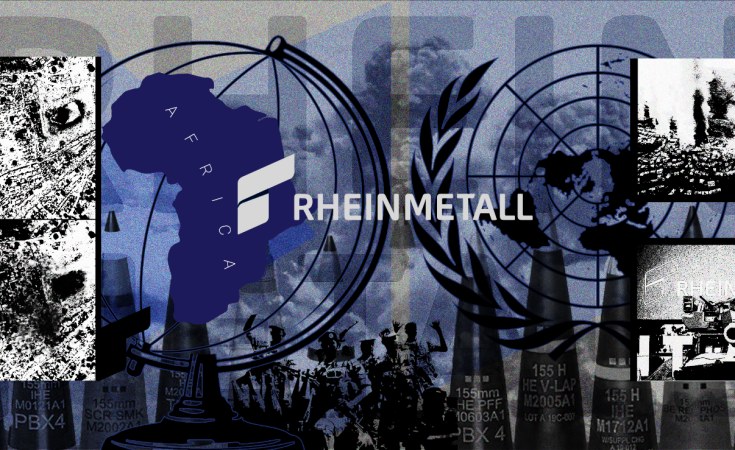
As global conflicts intensify, demand for weapons and ammunition is surging—bringing unprecedented scrutiny to the defense industry. Arms manufacturers now find themselves in the crosshairs of journalists, legal watchdogs, and human rights organizations. One of the key players at the center of this global debate is Rheinmetall, a leading German defense company with a legacy that stretches back to supplying arms to Nazi Germany during World War II.
Over the decades, Rheinmetall has grown into one of Europe’s largest weapons manufacturers, expanding its reach far beyond Germany through an extensive global network of subsidiaries and partnerships. But this international footprint has also drawn criticism, particularly for how the company sidesteps strict arms export laws in Germany and the broader European Union.
An investigation by the team at Investigate Europe revealed that Rheinmetall has deliberately established production facilities in countries where export controls are weaker—countries like Indonesia, Malaysia, Saudi Arabia, and most notably, South Africa. This strategic global positioning allows the company to legally manufacture weapons that would otherwise face significant regulatory barriers at home. By producing components abroad, Rheinmetall operates in a legal gray zone beyond the effective reach of German or EU regulators raising serious concerns about transparency and arms control accountability.
Nowhere is this strategy more evident than in Rheinmetall’s joint venture with the South African state-owned company Denel. The resulting entity, Rheinmetall Denel Munition (RDM), has become a cornerstone of the company’s global manufacturing base. For Rheinmetall, South Africa offered not just a skilled defense workforce and advanced infrastructure—but also something arguably more valuable: a more permissive legal framework for weapons exports.
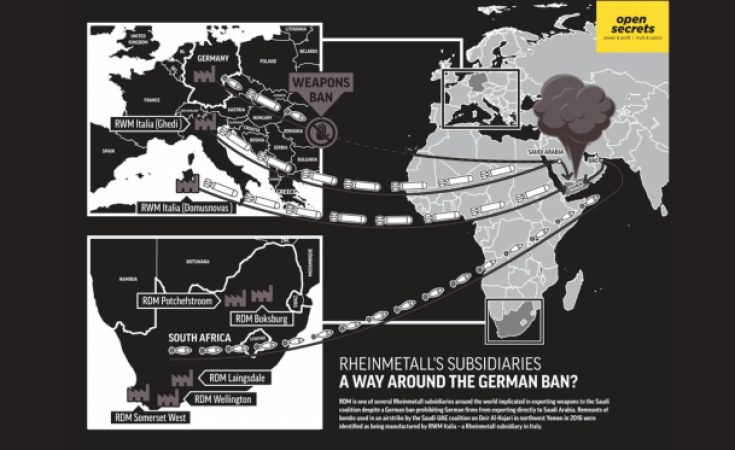
Within a few years, RDM significantly ramped up its production of artillery shells, explosives, and ammunition—materials that soon began surfacing in some of the world’s most controversial war zones. A turning point came during the Saudi-led intervention in Yemen, which began in 2015 and has since caused one of the worst humanitarian crises in modern history. Investigations revealed that weapons manufactured by RDM in South Africa were allegedly used by Saudi and Emirati forces involved in the conflict. These revelations sparked outrage, not only over the use of South African-made munitions in Yemen but also over how such exports had been approved in the first place.
This led a coalition of South African civil society organizations to take legal action against the government. They demanded transparency and accountability over arms sales to Saudi Arabia and the UAE, arguing that the weapons risked violating international humanitarian law. After years of advocacy and courtroom battles, the South African High Court ruled in favor of public disclosure in 2021, compelling the government to release export records. Those documents confirmed that RDM was indeed among the suppliers of munitions to Gulf states implicated in the Yemen war.
Shortly after the court ruling, new reports emerged suggesting that RDM ammunition may have found its way to Israel—despite South Africa’s official arms embargo on the country due to its stance on the Israeli-Palestinian conflict. Investigators pointed to the likelihood that weapons produced in South Africa were being re-exported to Israel through third-party nations allied with Tel Aviv. While no direct evidence of deliberate wrongdoing was uncovered, the case underscored the murky nature of international arms transfers and the difficulty of tracing a weapon’s true destination once it leaves the factory floor.
Opposition parties, civil rights groups, and citizens alike have intensified their calls for action. The Economic Freedom Fighters (EFF), one of the country’s most vocal opposition parties, has demanded the closure of RDM facilities and an immediate suspension of all arms exports until a full investigation is conducted. The EFF and other critics argue that South Africa must align its defense industry with its professed commitment to human rights and international law—especially given its post-apartheid identity as a champion of justice.
Members of Parliament have also taken aim at the National Conventional Arms Control Committee (NCACC), the government body tasked with approving and monitoring arms exports. Under pressure, NCACC officials acknowledged troubling gaps in oversight. For over a decade, the committee failed to conduct end-user inspections or maintain systems to track where exported ammunition ultimately ends up. These admissions have fueled suspicions that South African weapons—including those manufactured by RDM—may be reaching war zones or embargoed nations through unofficial or third-party routes.
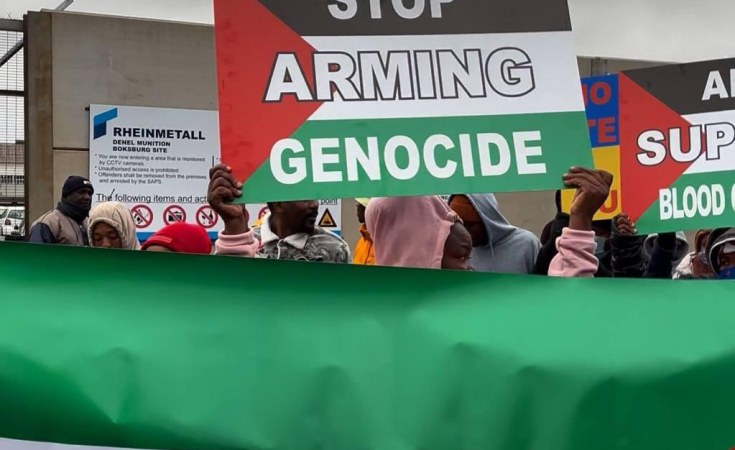
Protests have erupted in response. Demonstrators from peace organizations and local communities have picketed RDM’s plants, accusing Rheinmetall of turning South Africa into a base for what they call "black re-exports"—indirect arms transfers to conflict regions in defiance of embargoes and human rights standards. While largely peaceful, these protests reflect deepening frustration with the government's failure to regulate a sector that many believe is compromising South Africa’s global image.
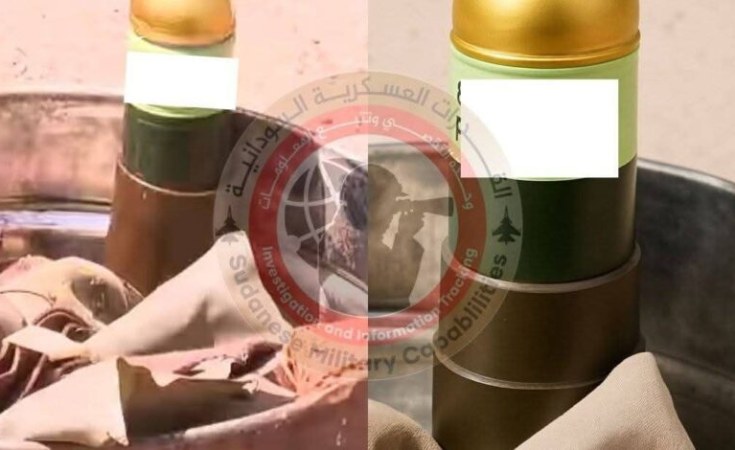
Also, more recently, Sudan has become another potential destination for weapons linked to Rheinmetall. A pro-government military platform in Sudan reported that 40mm phosphorus grenades were used by the Rapid Support Forces (RSF) during clashes in Khartoum. The RSF is a paramilitary group accused of war crimes and atrocities in the ongoing civil conflict in the country. Reports suggest the grenades were manufactured at Rheinmetall's international network of factories – officially, they are only produced by Rheinmetall’s subsidiaries in the USA and South Africa. The situation in Sudan underscores concerns that, once produced and exported, ammunition can easily find its way into some of the world’s most unstable and violence-prone regions, regardless of official intentions.
The case of Rheinmetall and RDM reveals how gaps in global export regulations can be exploited by multinational defense firms. It also forces uncomfortable questions: How do governments balance economic interests with ethical obligations? How should nations hold foreign corporations accountable when they operate beyond domestic oversight? And what happens when weapons built within legal boundaries fuel illegal or immoral wars abroad?
For South Africa, the issue touches on national integrity. For Europe, it exposes how some of its companies may be undermining the very rules designed to prevent arms proliferation. Whether through tougher legislation, enhanced monitoring, or sustained civic pressure, the calls for reform and accountability are only growing louder.

