

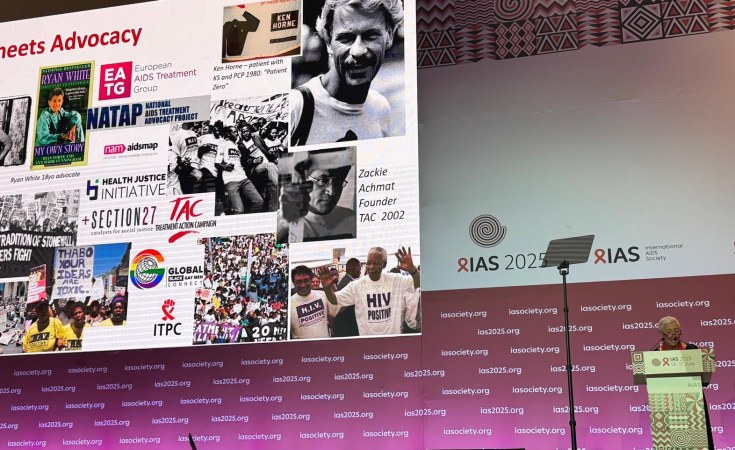
Findings from Kenya by CEMA at the International AIDS Society Conference on HIV Science
Rwanda, July 15, 2025-- The University of Nairobi, Center for Epidemiological Modelling and Analysis (CEMA), has released results of three critical studies that could significantly transform treatment of older adults living with HIV across Africa. The findings were presented at the International AIDS Society Conference on HIV Science in Rwanda and shed light on overlooked health risks, new treatment approaches, and a path to safer, more personalised HIV care for ageing populations.
The studies—B/F/TAF, Sungura, and Twiga—focused particularly on people aged 60 years and above, a population that is often left out of HIV research despite facing greater risk of comorbidities such as kidney disease, diabetes, hypertension, and osteoporosis. Researchers found that the standard HIV treatment may cause more harm than good in this demographic, particularly to bone and kidney health, and that more age-appropriate options are both needed and feasible.
“Older people with HIV are a neglected population,” said Dr. Loice Ombajo, an infectious disease specialist and Co-Director at CEMA. “The B/F/TAF is a study focused on people aged 60 and above living with HIV. It helps us understand how ageing, HIV, and chronic illnesses intersect in African settings. With the right partnerships and investment in research and development, we can deliver HIV treatment that is not only effective, but also safe, acceptable, and better suited for older adults.”
Follow us on WhatsApp | LinkedIn for the latest headlines
The B/F/TAF study (short for Bictegravir/Emtricitabine/Tenofovir Alafenamide for the Elderly) involved 520 people living with HIV who were 60 years and older and had been on antiretroviral treatment for over 10 years. These participants were randomly assigned to continue with the national standard regimen (TLD – Tenofovir disoproxil fumarate, Lamivudine, and Dolutegravir) or switch to a newer combination called B/F/TAF (Bictegravir, Emtricitabine, and Tenofovir alafenamide). Over 96 weeks of follow-up, those on B/F/TAF showed strong viral suppression along with improved bone and kidney health outcomes.
However, researchers faced a new dilemma at the end of the study. Since B/F/TAF was not yet available in Kenya’s national program, returning participants to TLD—now shown to pose potential harm to bone and kidney function—would have been medically problematic. This challenge led to two follow-up studies: Sungura and Twiga.
The Sungura study followed up on 197 participants from the BFTAF study who continued on a simplified two-drug regimen—Dolutegravir and Lamivudine (DTG/3TC). In this study, the researchers examined whether dual therapy can be just as effective as traditional three-drug treatments, especially for older adults dealing with multiple chronic illnesses.
Preliminary results from Sungura at 24 weeks were promising. There were no cases of virologic failure or participant drop-out, and all participants maintained viral suppression. These findings support growing global evidence that dual therapy can be effective and safer for select populations.
However, the Sungura study also uncovered significant observations about managing hepatitis B (HBV) in older adults. During the enrollment screening of 227 individuals, many were found to have been exposed to HBV, therefore were not eligible for dual therapy, which lacks sufficient HBV coverage. Although no liver complications or HBV reactivations were observed in the 24-week period, the study underlines the importance of HBV screening before switching older adults to two-drug regimens and puts emphasis on the need to improve access to HBV vaccination for adults. Unfortunately, access to HBV serology testing remains limited across much of sub-Saharan Africa.
The third study, Twiga , is an ongoing five-year observational study tracking comorbidities in both HIV-positive and HIV-negative individuals aged 60 and above. It was initiated to better understand how HIV influences ageing, especially in relation to comorbidities, medication burden, and long-term organ function.
Researchers enrolled participants from the original BFTAF study and matched them with 108 HIV-negative individuals of similar age and gender. The study measures a wide range of health indicators—including body mass index (BMI), blood pressure (BP), kidney function, bone mineral density (BMD), vertebral fractures, and frailty markers—to compare health trajectories over time.
Findings to date reveal that older people living with HIV (PLWH) had more comorbidities, more use of medication, and higher rates of kidney impairment and osteoporosis compared to their HIV-negative peers. These insights provide compelling evidence for revising treatment guidelines to better address the specific needs of the older population.
“We plan to follow this cohort for five years to track new health developments such as co-infections, comorbidities, and mortality,” said Dr. Ombajo. “By comparing HIV-positive and HIV-negative individuals over time, we aim to understand the true impact of HIV on ageing.”
Together, the BFTAF, Sungura, and Twiga studies offer a comprehensive view of how HIV treatment can—and must—evolve to meet the needs of ageing populations in Africa. The results call for greater investment in age-appropriate care, reevaluation of tenofovir use in older patients, and expanded access to dual therapy, especially for those without HBV. The studies also emphasise the need for HBV screening capacity as a prerequisite for safe regimen adjustments and highlight the need for improved access to HBV vaccination.

Sign up for free AllAfrica Newsletters
Get the latest in African news delivered straight to your inbox
These studies were made possible through partnerships between the University of Nairobi’s Department of Clinical Medicine and Therapeutics, the ministry of Health in Kenya through the National AIDS & STI Control Programme (NASCOP), and key healthcare facilities in Kenya, including the Kenyatta National Hospital and Jaramogi Oginga Odinga Teaching and Referral Hospital. The work was also supported by Gilead Sciences and ViiV Healthcare.
CEMA and its collaborators will continue to analyse long-term data and work with policymakers to ensure findings from these studies help shape national and regional HIV treatment guidelines.
About CEMA
The Centre for Epidemiological Modelling and Analysis (CEMA) is a research centre at the University of Nairobi dedicated to improving health outcomes in Kenya and across Africa through data-driven decision-making. It was established as a multidisciplinary consortium of infectious disease specialists, epidemiologists, computer scientists, and data analysts to rapidly gather and analyse clinical, mobility, and epidemiological data, guiding Kenya’s pandemic response. In our work, we recognise the vital interconnectedness of human, animal, and environmental health– essential for safeguarding public health and maintaining the balance of our planet’s ecosystems. For more information, visit https://cema-africa.uonbi.ac.ke/

