

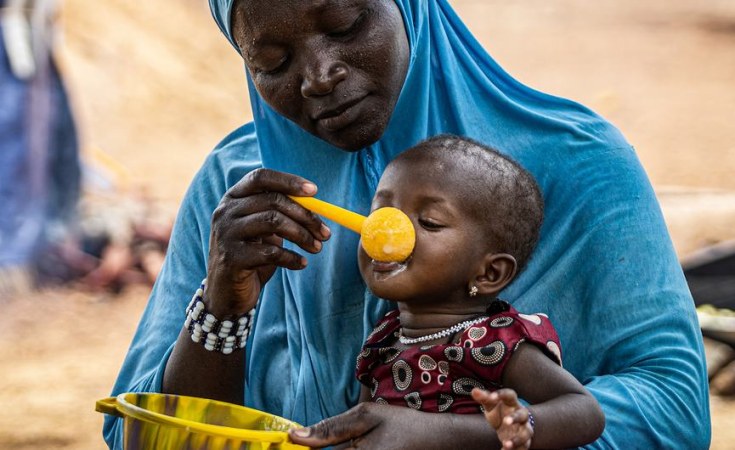
The International Committee of the Red Cross (ICRC) has raised the alarm over deepening hunger in northeast Nigeria, where more than 3.7 million people are currently facing food insecurity.
In a statement on Monday, the organisation said many of those affected are farmers who once fed their communities but are now struggling to survive.
Years of conflict have displaced families, limited access to farmland, and disrupted local food production.
Since the outbreak of insurgency and banditry in the northeast and northwest, many farmers have been forced to abandon their farmland and rural communities.
Keep up with the latest headlines on WhatsApp | LinkedIn
Insecurity has also caused a sharp decline in fishing activities, particularly around Lake Chad and major rivers.
Traditional pastoralist routes and grazing lands have been severely disrupted, affecting the livelihoods of those dependent on livestock.
As a result, a significant number of farmers in the affected states now rely heavily on humanitarian aid.
This worsening situation has contributed to a rise in child labour, school dropouts, and early marriages in the northeast, especially in conflict-hit areas.
The ICRC statement quoted Modu Umar, a community leader in Dikwa, saying, "Right now, we face severe food shortages; some families are forced to walk long distances every day to collect firewood to sell, just to afford food. Farming is the only solution to hunger."
The organisation also said insecurity has made it even harder for farmers to work.
It quoted Churi Ibrahim, a 70-year-old from Gajibo, who said, "Some people trek three hours to reach their farms. By the time you reach your farm, you are already exhausted, and when you return home, it's late."
The statement also noted that despite the dangers, farmers are determined to continue cultivating their land.
Bintu Konto, a mother of five, according to the statement, said, "Even when you're afraid, you have to go; if you don't farm during the rainy season, you will have nothing to eat."
Diana Japaridze, Head of the ICRC office in Maiduguri, quoted in the statement, said the onset of the lean season is adding more pressure as food stocks dwindle.
"This is when households must start purchasing food, but many conflict-affected families can't afford much. They are forced to drastically limit their intake," Japaridze said, adding that the crisis has led to rising malnutrition, especially among children under five and pregnant or breastfeeding women.
Similarly, the Cadre Harmonisé report, released months ago by the Food and Agriculture Organisation (FAO) of the United Nations and food security sector partners, projected a critical food and nutrition crisis across Nigeria.
According to the report, an estimated 30.6 million people in 26 states and the Federal Capital Territory (FCT) may face severe food and nutrition insecurity during the June-August 2025 lean season.
Food supplies typically hit their lowest levels during the lean season, also known as the pre-harvest period, leading to heightened hunger and malnutrition, especially in rural areas.
In Nigeria, the lean season usually spans from May to September, with states like Borno, Adamawa, and Yobe being the most affected.
'Cut in relief funds worsening malnutrition'
The United Nations had earlier raised concerns about the high likelihood of a worsening humanitarian situation, particularly in light of recent reductions in relief funding.
During the release of the Cadre Harmonisé report in Abuja, Dominique Koffy Kouacou, the FAO Representative in Nigeria and ECOWAS, urged the Nigerian government, donors, and stakeholders to take urgent action, commit resources, and implement policies to prevent further deterioration.
He said there was a need for immediate multi-sectoral support across the country, with particular focus on the northeast and northwest regions, which are experiencing high levels of food and nutrition insecurity.
Similarly, Cristian Munduate, UNICEF Nigeria Country Representative, recently described the situation as "alarming" and highlighted the "urgent need for collective action to address the escalating food and nutrition insecurity affecting millions of vulnerable children and families across Nigeria."
'What we're doing to tackle hunger'
The ICRC said it is supporting malnutrition stabilisation centres and community education to help families care for vulnerable children.
The organisation, in its statement, said it has started an agricultural assistance programme supporting both rainy and dry season farming, noting that this year, more than 21,000 farming households have received seeds adapted to local conditions, along with seed planting tools to reduce labour burdens and improve efficiency.

Sign up for free AllAfrica Newsletters
Get the latest in African news delivered straight to your inbox
"The support includes both field crops and vegetables, such as rice, maize, tomato and okra, contributing to greater dietary diversity and nutritional value. Farmers are also trained in sustainable farming practices, helping to build local capacity and ensure they can continue even when the ICRC leaves," the statement said.
In partnership with the National Agricultural Seed Council (NASC), the ICRC said it has completed repairs to a key water source to ensure continuous water access for the council's seed testing and greenhouse facilities.
'We need time to review report'
When contacted for a reaction to the latest ICRC report, the Director-General of the Northeast Governors' Forum, Umar Musa Gulani, said he needed time to obtain and review the report before responding to the questions posed by our correspondent.
"We are working hand in hand with the ICRC, and I have a way of obtaining the report directly from them to confirm its authenticity.
"It hasn't been officially received by the forum, so we need time to review and discuss it. Once that is done, we will get back to you," he said.

