

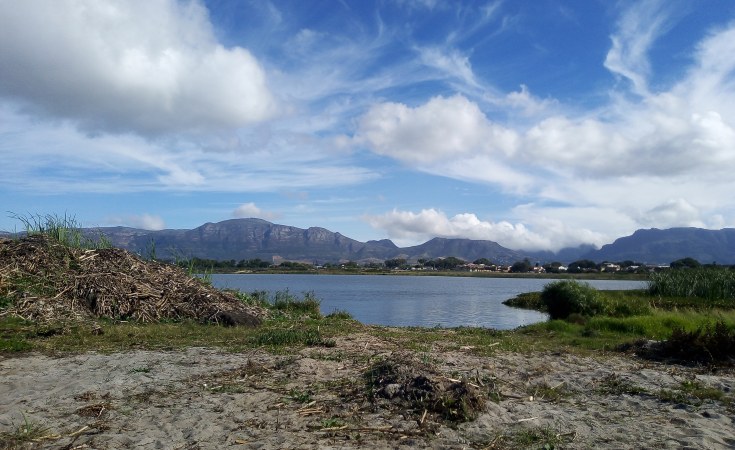
In our world of big names, curiously, our true heroes tend to be anonymous, goes a quote by the American historian Daniel Joseph Boorstin. Like these anonymous true heroes, wetlands play vital overlooked roles including provision of essential ecosystem services like flood control and water regulation, carbon sequestration, and climate regulation among others. Although they cover about 6% of the earth's land surface area, they are home to about 40% of all plants and animal species, including birds which rely on these sites for breeding, feeding and resting during migration.
Further, these critical ecosystems support livelihoods of billions across the world. However, wetlands are disappearing at an alarming rate, world over. According to the just-released 2025 Global Wetland Outlook (GWO) Report, the world has lost about 22% of these critical ecosystems, equivalent to more than half a billion football pitches, since the 1970s. Various factors including pollution, agricultural and developments in addition to climate change are driving this loss. In the Sahel region, for example, Lake Chad, bordering Chad, Nigeria, Niger, and Cameroon has shrunk from 26,000 square kilometres in the 1960s, to less than 1500 square kilometres today.
In Zimbabwe, wetlands cover about 3% of the country's area or about 11, 717 km2. Some key wetlands include Lake Chivero, Victoria Falls, Mana Pools, Cleveland Dam, and Driefontein Grasslands among others. However, more than 70% of these wetlands are degraded, due to various factors including urbanization. agriculture, mining, and pollution.
Follow us on WhatsApp | LinkedIn for the latest headlines
Protecting and restoring wetlands and securing the livelihoods of communities that depend on these areas is paramount. This is why BirdLife International, the world's largest Nature Partnership, is working in 27 countries across Africa to protect key habitats including wetlands. This approach is underpinned by identifying and protecting wetlands along key migratory bird flyways. Africa is home to key flyways including the African Eurasian Flyway, East Atlantic Flyway, major migration route for waterbirds, encompassing a network of wetlands across countries, which include Ramsar-listed Wetlands of International Importance. Through collaboration with national BirdLife Partners, efforts are focused on implementing national conservation strategies.
An example of this is in Asia's East Asian Australasian Flyway stretching from Siberia and Alaska to New Zealand and Australia. BirdLife in collaboration with the Asian Development Bank and the East Asian Australasian Flyway Partnership Secretariat launched a $3-billion Regional Flyway Initiative in 2021. This initiative aims at the protection and restoration of more than 50 key wetlands sites along the Flyway which are important sites for millions of migratory birds, in addition to supporting livelihoods of millions of people through fisheries and agriculture, among others. Such models can be replicated across flyways, benefitting nature and people. Closer home, BirdLife Zimbabwe is working with local communities to protect the 201,194 hectares Driefontein Grasslands, home to 85% of Zimbabwe's Wattled Crane population in addition to significant populations of the Endangered Grey Crowned Crane.

Sign up for free AllAfrica Newsletters
Get the latest in African news delivered straight to your inbox
Financing is yet another critical component of wetlands' conservation. According to the GWO Report, it is estimated that biodiversity conservation funding accounts for just 0.25% of global GDP, which is only approximately one-fifth of funds needed to address biodiversity loss, highlighting significant underinvestment. Consequently, there is need to increase investments in nature protection, including wetlands. Luckily, there are several innovative financing tools that can be leveraged. These include debt for nature swaps where debt relief can be provided in exchange for wetlands conservation commitments, green and blue bonds, carbon finance, Payments for Ecosystem Services (PES) schemes, and biodiversity credits among others.
Partnerships and collaborations with various stakeholders is paramount for protecting these critical ecosystems. Local communities who are custodians of wetlands, should be empowered to identify and implement relevant solutions to conserve wetlands. Equally important, is the need for policies and regulations which protect wetlands. Like migratory birds, wetlands connect countries, and their conservation necessitates, co-operation across boundaries. From 23rd- 31st July 2025, the world will convene in Zimbabwe for the Conference on Wetlands of International Importance (Ramsar COP 15). This is an opportunity for policymakers to articulate and adopt resolutions to enhance the protection of these delicate ecosystems. Every action counts, and together, let us protect these 'anonymous heroes' for present and future generations.
Julia Pierini is the Chief Executive Officer, BirdLife Zimbabwe. Kariuki Ndang'áng'a is the Regional Director for Africa, BirdLife International.

