

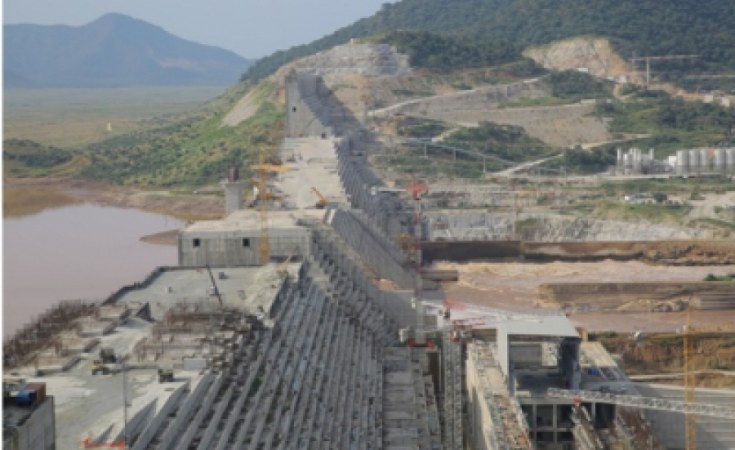
The Grand Ethiopian Renaissance Dam (GERD) stands complete, its colossal concrete structure now holding the full might of the Blue Nile. For Ethiopia, it is a monumental symbol of sovereignty and a beacon for national development, poised to electrify millions and fuel a growing economy (assuming Prime Minister Abiy Ahmed's administration will reprioritize rural electrification over the sale and rent of power to foreign countries and crypto miners). For Egypt, it remains a source of profound existential anxiety, its very completed state amplifying fears for the nation's lifeblood: the Nile.
Against this backdrop, the recent re-entry of President Donald Trump into the GERD discourse, seemingly spurred by Egyptian lobbying, marks a fascinating and potentially important shift in a protracted regional saga. While Trump's previous attempts at mediation in 2020 through his Treasury Secretary ultimately floundered, the current landscape is vastly different, and his renewed interest, however idiosyncratic, cannot be ignored.
The Shifting Ground Since 2020
Four years ago, Trump's intervention sought to mediate a deal on the dam's filling and operation when the GERD was still under construction. Ethiopia ultimately walked away from that US-brokered agreement, deeming it biased towards Egypt. Fast forward to today, lots and lots of things have changed.
Follow us on WhatsApp | LinkedIn for the latest headlines
The most significant change is the GERD's physical completion and full impoundment. This moves the dispute from preventing construction and initial filling to managing its long-term operation. Another change, Ethiopia's position! Ethiopia is now focused on maximizing the dam's hydropower generation for domestic consumption and export. Its stance has hardened on operational flexibility, viewing strict, legally binding agreements as an infringement on its sovereign right to utilize its resources. Ethiopians emphasize the dam's benefits for downstream nations, such as flood control and regulated flow.
Another change is Egypt's desperation. Egypt's urgency has intensified. With the dam filled, their demand is for a legally binding agreement that guarantees minimum water releases, particularly during droughts, and establishes robust dispute resolution mechanisms. They view Ethiopia's unilateral actions as a violation of international water law and an existential threat.
The African Union's role has also changed if it had any. The African Union has been the primary mediator since the collapse of the US-led talks. While lauded for its principle of "African solutions to African problems," it has struggled to achieve a breakthrough, leading to repeated stalemates and Egypt's declaration that talks have reached a "dead end."
Trump's Re-Entry: A Double-Edged Sword?
Trump's recent statements, including the false claim of US funding for the GERD and his strong support for Egypt's water security, inject a new, unpredictable element. Egyptian officials have reportedly welcomed his remarks, viewing them as a potential lever to pressure Ethiopia.
However, the efficacy of such intervention is debatable for many reasons. To start with, Ethiopians have consistently shown strong resistance to perceived external diktats, especially those that they believe undermine their sovereignty or disproportionately favor Egypt's historical claims. Trump's past rhetoric, including suggesting Egypt might "blow up" the dam, has only served to solidify Ethiopian resolve.
Secondly, some wonder if the US holds any leverage after the Trump administration disassembled the country's tools of soft power. The US previously attempted to cut aid to Ethiopia as leverage, a move that proved largely ineffective and counterproductive, alienating Addis Ababa and pushing it further into its self-reliance narrative.
Thirdly, the Horn of Africa is a region of intricate geopolitical dynamics. Unilateral US pressure, particularly when perceived as favoring one party, risks further destabilizing an already volatile region and potentially pushing Ethiopia farther toward other global powers.
Finally, Trump's history of inconsistent foreign policy and transactional approach could undermine his credibility as an impartial mediator, especially in a dispute demanding nuance and long-term commitment.
The Path Forward: A Tightrope Walk
For Egypt, the hope is that high-level international attention, especially from a powerful figure like Trump, can re-energize negotiations and force Ethiopia to the table for a binding agreement. Their strategy will likely involve continued diplomatic pressure, emphasizing the humanitarian and stability risks of an uncontrolled GERD. A hint of possible and plausible limited strike on the structure is also likely in their playbook.
For Ethiopia, the strategy will be to press ahead with full power generation, demonstrate the dam's benefits, and continue to resist any agreement that significantly curbs its operational freedom. Ethiopia will likely reiterate its commitment to "equitable and reasonable utilization" and continue to prefer African Union-led processes. In the end, however, Ethiopians can only resist as much as they resolve their internal political strife, civil conflicts, and the violence of inequalities and poverty.

Sign up for free AllAfrica Newsletters
Get the latest in African news delivered straight to your inbox
The GERD, now a physical reality, necessitates a new paradigm for Nile cooperation. The fundamental issue is no longer if the dam will exist, but how it will be managed to ensure sustainable water security for all riparian states. While external voices can certainly highlight the issue, a sustainable resolution ultimately requires genuine political will and a spirit of compromise from Cairo, Addis Ababa, and Khartoum. Trump's renewed interest, while signaling a potential shift in international spotlight, may prove to be a fleeting headline rather than a transformative solution to the Nile's enduring challenges. The pulse of the river, and the fate of millions, hinges on more than just pronouncements; it demands a collaborative blueprint for a shared future.
Kassahun Addis is a long-time observer of Horn of Africa and Northeast African politics, geopolitics, and society.
Contributed by Kassahun Addis

