

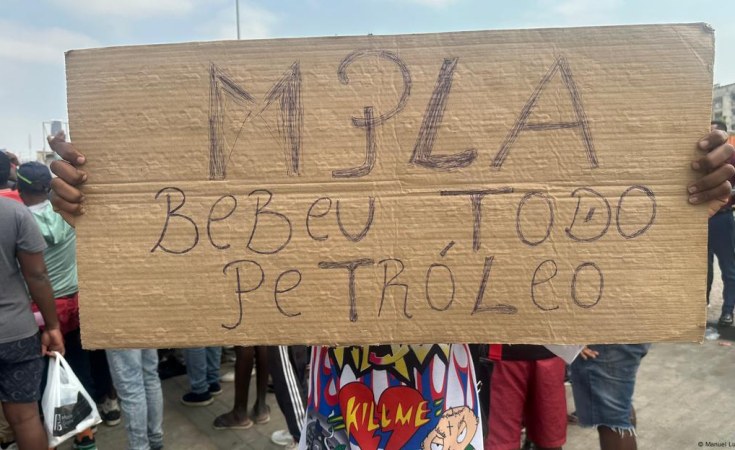
Looting and vandalism have occurred in Angola as demonstrators are angered by the government's decision to increase fuel prices. Angola is one of the top African oil producers but faces severe economic challenges.
Angolan police said Tuesday that over 500 arrests were made and four people died amid disorder in the African country's capital, Luanda. No details were available from the police on the circumstances of the fatalities.
Demonstrations on Monday against the Angolan government's decision to remove fuel subsidies and hike the price of diesel turned violent, with Angolan authorities reporting looting and vandalism in the capital.
'Pockets of disorder' persist in Luanda after crackdown, police say
Keep up with the latest headlines on WhatsApp | LinkedIn
Angolan police spokesperson Mateus Rodrigues said shops, banks and cars were targeted by vandals. Despite the mass arrests by police on Monday, Rodrigues reported that there still exist "pockets of disorder" in Luanda.
Earliler this month, the Angolan government announced it would increase the price of diesel by one third, drawing public backlash.
In response, the ANATA taxi association called for a three-day strike starting on Monday, with taxi drivers increasing their fares by half. Blue and white minibus taxis, known as "candongueiros," are a common means of transport for Angolans.
ANATA has condemned the vandalism and violence, but said the ongoing taxi strike would continue through Monday.
Angolans angered by inflation: 'How will we feed our children?'
Demonstrations have taken place throughout the month against the planned fuel hike.
The protesters are frustrated not only by the fuel hike, but also the increasing cost of living in Angola and the perceived indifference of the government to the struggles of everyday Angolans. The demonstrators have voiced their anger toward Angolan President Joao Lourenco, whose MPLA party has ruled the country since its independence from Portugal in 1975.
"Why do you make us suffer like this? How will we feed our children? The prices have to go down," an Angolan woman said in a pointed message to Lourenco, according to the AFP news agency.
Angola's political establishment committing 'vandalism,' sociologist tells DW
Angola faces severe economic challenges, despite being one of the top oil-producing countries in Africa. One Angolan voice says this is due to mismanagement by Angola's government.
Angolan sociologist Luzia Moniz told DW's Portuguese for Africa service that in regards to vandalism, "Vandalism begins with the political establishment, which abandons its citizens."

Sign up for free AllAfrica Newsletters
Get the latest in African news delivered straight to your inbox
Moniz blamed the Angolan state for the poor economic condition of the country, where 46 children die of malnutrition each day and youth unemployment is close to 60%.
Moniz urged the Angolan government to commit to dialogue rather than a violent crackdown on the demonstrators. She called for a change of government in Angola before 2027, when President Lourenco's term ends.
Corruption: The reason behind Angola's woes?
One major political and economic challenge in Angola is corruption.
Watchdog Transparency International puts Angola at 32 out of 100 on its corruption perceptions index when it comes to corruption, with its scale labeling 0 as "highly corrupt" and 100 as "very clean." For reference, Germany has a score of 75 on the index.
In 2020, the International Consortium of Investigative Journalists released a report called the "Luanda Leaks" revealing how Isabel dos Santos, the daughter of an Angolan former president, built a $2 billion (€1.7 billion) fortune from embezzling Angolan public money.
Edited by: Sean Sinico
Wesley Dockery with AP, AFP, LUSA, Angolan media and DW sources

