

The point of America's trade war is not to reach a final settlement or achieve a new, stable system.
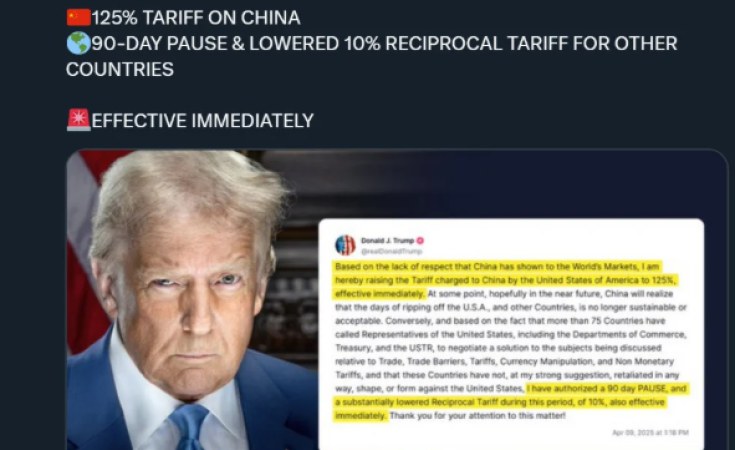
Listen to this article 7 min Listen to this article 7 min This week, on Friday, 1 August, US President Donald Trump's so-called reciprocal tariffs are due to take effect (barring any admittedly typical last-minute changes). With his "Liberation Day" on 9 April feeling like a distant memory, the world now appears to be entering a new chapter of trade protectionism. As this shift takes place, five key dynamics offer clues as to how this new phase of US trade policy is likely to play out.
First, confusion is the strategy, not an accident. The lack of formal agreements entered into by Trump, let alone legally binding ones, is not simply down to bureaucratic delays. His preference for deals that are not worth the handshake reflects a deeper tactic: using chaos as leverage in his perennial quest for the "art of the deal". The vagueness and improvisation are not bugs in the system, they are the system. By keeping trade agreements intentionally loose and inconsistent, Trump maintains the upper hand, wielding unpredictability as an axe to dismantle what was, perhaps optimistically, referred to as "the global order".
Second, the notion that "Trump always chickens out", a theory dubbed as "Taco",...


