

Sudan's paramilitary Rapid Support Forces shelled a hospital in North Darfur's besieged city of El-Fasher and abducted six women and two children from a nearby displacement camp, rescuers and a medic said Sunday.
El-Fasher, under RSF siege for over a year, is the last major city in western Darfur still held by the army and a flashpoint in the war that erupted in April 2023 between army chief Abdel Fattah al-Burhan and his former deputy and RSF commander Mohamed Hamdan Daglo.
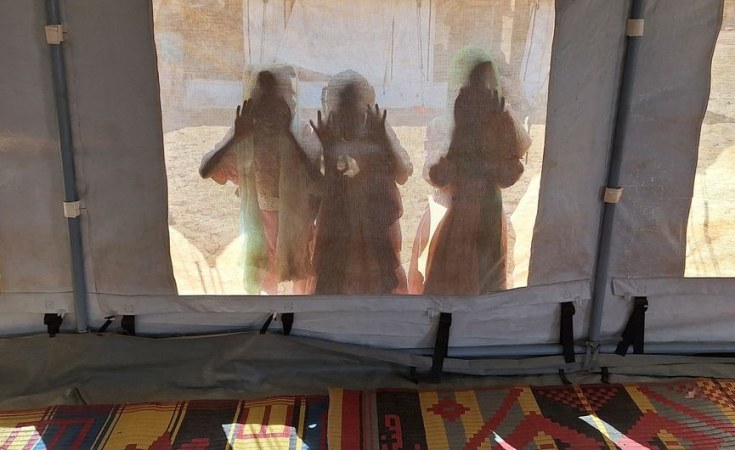
The Emergency Response Room at the Abu Shouk camp near El-Fasher on Sunday said RSF fighters stormed the site, seizing eight unarmed civilians -- six women, a 40-day-old baby and a three-year-old child -- and taking them to an undisclosed location.
More than 20 camp residents were missing, the rescuers said, warning the actual number could be higher.
Keep up with the latest headlines on WhatsApp | LinkedIn
On Saturday, RSF artillery also hit the emergency and trauma unit of a hospital in El-Fasher, wounding seven people, including a staff member, a doctor told AFP.
The bombardment, which continued into Sunday morning, "caused damage to the emergency department, forcing us to suspend operations", said the doctor, requesting anonymity for safety reasons.
The hospital is one of only three still functioning in the city.
Since losing Khartoum in March, the RSF has stepped up attacks on El-Fasher and surrounding camps in a bid to tighten its hold on western Sudan, where it now controls most of the Darfur region.
Abu Shouk, home to tens of thousands of displaced people, has come under repeated attacks this month.
On Thursday, El-Fasher's resistance committee -- one of hundreds of volunteer groups documenting atrocities during the conflict -- said the RSF shelled multiple locations in Abu Shouk, killing five members of the same family in a direct strike on their shelter.
The pro-democracy activists, who also coordinate aid in Sudan, said four other people were injured in the deadly strike.
Abu Shouk is among three camps outside El-Fasher where famine was declared late in 2024.
The United Nations has warned famine could spread to the city, though a lack of data has so far delayed a possible declaration.
The Emergency Response Room at Abu Shouk said on Thursday that hunger and disease were resulting in deaths at a rate of seven each week in the camp.
It added critical infrastructure has also collapsed, with 98 per cent of the camp's water facilities out of service due to security threats and fuel shortages.
The conflict, which has killed tens of thousands, has triggered what the UN calls the world's biggest displacement and hunger crisis.
Rebuild of war-torn Khartoum begins
Meanwhile, on the streets of Sudan's capital Khartoum, builders cleared rubble from houses pockmarked with bullet holes, haul away fallen trees and repair broken power lines, in the city's first reconstruction effort since war began over two years ago.
Fighting had left the capital battered and hollowed out but reconstruction -- led by government agencies and youth-led volunteer groups -- has finally begun to repair hospitals, schools and water and power networks.
"We are working to restore the state's infrastructure," volunteer Mostafa Awad said.
Once a thriving metropolis of nine million people, Khartoum's skyline is now a jagged silhouette of collapsed buildings.
Electrical poles lean precariously or lie snapped on the ground in the streets. Cars, stripped for parts, sit burnt-out and abandoned, their tires melted into the asphalt.
AFP correspondents saw entire residential blocks standing with their exterior walls ripped away in the fighting.
Unexploded ordnance contamination
Danger remains within the soot-stained buildings as authorities slowly work to clear tens of thousands of unexploded bombs left behind by fighters.
The UN warns Khartoum is "heavily contaminated by unexploded ordnance", and this month said landmines have been discovered across the capital.

Sign up for free AllAfrica Newsletters
Get the latest in African news delivered straight to your inbox
Sudan's war has killed tens of thousands, displaced 13 million and plunged the nation into the world's worst hunger and displacement crisis.
Until the army pushed the RSF out of Khartoum in March, the capital -- where four million alone were displaced by fighting -- was a battlefield.
Before they left, paramilitary fighters stripped infrastructure bare, looting everything from medical equipment and water pumps to copper wiring.
"Normally in a war zone, you see massive destruction... but you hardly ever see what happened in Khartoum," the UN's resident and humanitarian coordinator, Luca Renda, said.
"All the cables have been taken away from homes, all the pipes have been destroyed," he told AFP, describing systematic looting of both small and large-scale items.
Today, power and water systems remain among the city's greatest challenges.

