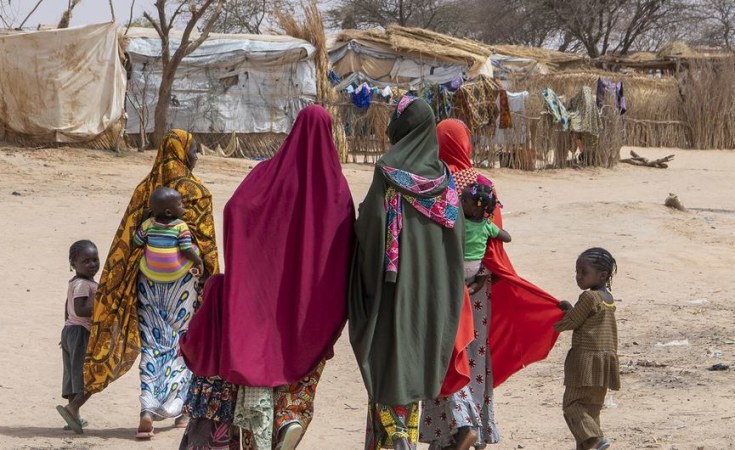
Geneva — About 4 million people are now displaced across Burkina Faso, Mali, Niger, and neighbouring countries – about two-thirds more than five years ago – the UNHCR (UN Refugee Agency) regional head for West and Central Africa, said on Friday.
Abdouraouf Gnon-Konde addressed a UN press conference in Geneva, saying that the increase in displaced people reflects insecurity, limited access to services and livelihoods, and the effects of climate change.
“While most displaced people in the region remain within their countries, cross-border movements are becoming more frequent, putting pressure on host communities and national systems,” said Gnon-Konde.
“These onward movements highlight the urgent need to expand scant assistance and enable people to remain closer to home, avoiding dangerous journeys.”
Keep up with the latest headlines on WhatsApp | LinkedIn
UNHCR said that the insecurity across the region is exposing people to violence, forced recruitment, movement restrictions, and arbitrary detention.
“Women and children represent 80 per cent of forcibly displaced people in the region, and gender-based violence remains a critical and pervasive concern,” said Gnon-Konde.
According to the West and Central Africa inter-agency protection monitoring system, the number of people impacted by such incidents has significantly increased this year.
More than 14,800 schools had closed in the region by mid-2025, leaving 3 million children without access to learning or safe spaces.
Forcibly displaced youth face increased protection and livelihood challenges, including forced recruitment, trafficking, and limited access to job opportunities, increasing the risk of taking dangerous journeys beyond the region.
Across the region, over 900 health facilities have also been forced to close, leaving millions without critical care.
“Food insecurity has become a growing driver of displacement; the share of displaced people and host community members citing it as a cause for their movement has doubled in recent years,” Gnon-Konde explained.
“Climate-related shocks further amplify risks, intensifying competition over scarce natural resources such as land and water, creating additional barriers to peaceful coexistence and social cohesion with host communities.”
In a statement, UNHCR noted that humanitarian needs have risen sharply while resources have declined significantly since 2022.
“Over 212,000 refugees and asylum-seekers in Burkina Faso, Mali, and Niger are not yet registered, limiting their access to essential services and heightening their risks of arbitrary detention and harassment,” said Gnon-Konde.

Sign up for free AllAfrica Newsletters
Get the latest in African news delivered straight to your inbox

