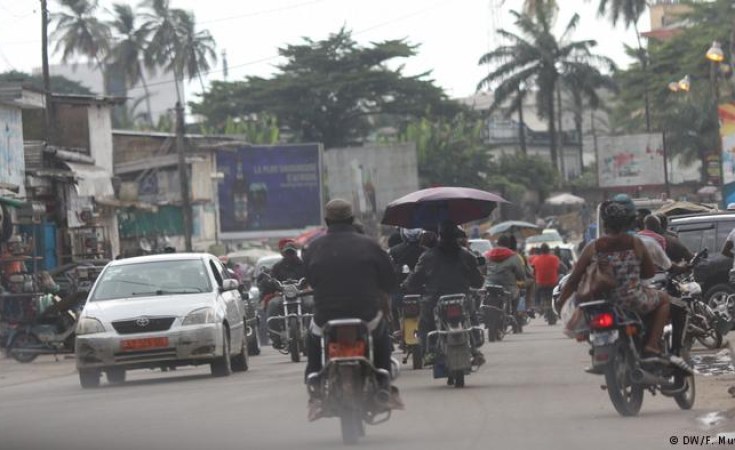
"At the level of programme activity, it was catastrophic."
In a variety of challenging settings around the world, humanitarians are having to deal with the consequences of major aid budget cuts by the United States and other key donors.
Following an examination of the impacts in Mozambique, The New Humanitarian focuses in this article on Cameroon, where some of the most significant institutional cutbacks are being made, including the closure of the international cluster coordination system.
In Cameroon, the international aid system's pullback has been happening amid the tense build-up to 12 October elections (President Paul Biya, 92, is seeking to extend his 43-year rule; the country's constitutional council is expected to announce the final results by 26 October), and the effects of the aid cuts are playing out in dangerous ways.
Keep up with the latest headlines on WhatsApp | LinkedIn
First and foremost, the sector will try to reach 800,000 fewer people with assistance as a direct result of the cuts. And this comes amid an ongoing humanitarian crisis in the Northwest and Southwest regions, where an increasingly fractured anglophone separatist campaign has fought the government since 2017 (Cameroon also faces a jihadist insurgency in its Far North Region, which this article does not examine).
Cameroonian aid workers told The New Humanitarian they fear the conflict could get much worse because of the slashed aid programmes, and they now risk government persecution because of their contact with armed groups on the ground.
While local aid groups are scrambling to fill the gaps left by the UN and international NGOs, they have to grapple with government restrictions on their funding and operations. While some voice concerns that the local aid groups are under-resourced and inexperienced, others see it as yet another example of how the international system doesn't plan for the day it's not needed.
Regardless, calls to fill the gaps left by the cuts are clouded with pessimism: Cameroon rarely gets much attention on the world stage, despite its complex, entrenched crises. The Norwegian Refugee Council declared in June that the country was home to "the world's most neglected displacement crisis", a move that, according to one aid worker at least, incensed the government.
This "neglected status makes it hard for Cameroon to be reconsidered for funding", said another source, the leader of a Cameroonian humanitarian organisation, speaking anonymously for security reasons. Prior to the aid cuts, the country's crisis saw little high-level attention, such as in the UN Security Council. This has become even more unlikely following the country's humanitarian deprioritisation, he predicted.
Immediate impacts on vital aid programmes
The Cameroonian government has pushed back against the characterisation of an ongoing humanitarian crisis in the Northwest and Southwest regions, but the situation is stark and becoming starker.
At the beginning of 2025, prior to the aid cuts, humanitarians planned to help 2.1 million people, out of 3.3 million who needed relief. But after funding cuts pushed the UN-led international system to scale back, that number fell to 1.3 million people in a so-called "hyper-prioritised" response plan. Globally, the number of people the system aims to reach was cut by a third.
In January, US President Donald Trump's suspension of foreign aid forced near-overnight closures of programmes in countries across the globe. In Cameroon, this saw the sudden stoppage of the distribution of cash, hygiene kits, protection services, psychosocial support, and food aid in several conflict-affected areas (some of which had not received aid since 2017), according to a Cameroonian former aid worker for the Danish Refugee Council (DRC) based in Buea, the capital of Southwest Region.
"At the level of programme activity, it was catastrophic," the former aid worker said, speaking anonymously for security reasons. She described how staff were laid off - herself included - simultaneously to programmes closing, leaving limited ability to find less harmful ways to close them down.
The DRC was a "major source of food support for communities" in the Southwest Region, said the Cameroonian humanitarian leader, adding: "But that's almost inexistent now; they have been hard hit by the funding cuts."
US funding contributed to nearly 50% of DRC's budget in Cameroon, "and in some parts of the country, the US was our only funder", said a statement from the charity. The organisation is not alone in troubles stemming from US dependency: The World Food Programme also warned in August that nearly half a million people in Cameroon would lose food aid because of the cuts.
The effects of sexual violence are also believed to have worsened. A Cameroonian aid worker for an international NGO said he expected an increase in rape cases amid the withdrawal of INGOs that previously provided protective services. "Armed groups considered international agencies an eye of the international community: This made them moderate the level of human rights abuse to keep an acceptable reputation at the international level," the person said. In contrast, local NGOs do not have the same level of influence and fear reprisals, so "cannot implement some sensitive programmes or follow-up for punishment of the perpetrators", he added.
Making matters worse, according to the same aid worker, "there are no PEP (post-exposure prophylaxis) kits anymore". These medicines can help prevent HIV infection shortly after exposure - for instance, soon after a victim has been raped.
During DRC's programme closures, teenage survivors of gender-based violence, hospitalised away from their communities, were left stranded, with no funding to pay for their transport home, according to the former DRC worker. Sometimes, they were lent the money for the trip home by aid workers who were also losing their jobs.
DRC's response to the aid cuts was "poorly managed", according to the former employee. "We didn't try to look for alternatives... for how to put the beneficiary in a better state before quitting... It was so painful". She said concerns were raised to managers, but they were told there was no funding as DRC usually prefunded programmes and was later reimbursed by USAID. This was not an unusual practice among INGOs, but one that was especially damaging once the aid cuts hit. It also meant DRC staff were laid off fast and without full pay.
If staff had been kept on for longer, DRC's programmes could have ended less badly, said the former employee. "Most programme targets were already mapped out. We already had the beneficiaries and everything intact. It was just to respond, follow the implementation plan that was in place... but we didn't have the opportunity to do that."
Another former DRC aid worker, Modika Solomon, said the process caused "chaos" and people who were cut off from aid did "not want to believe the reality - they thought it was diverted for other purposes".
"Calls were coming in from beneficiaries, asking about the situation... [it] was a terrible state," said Solomon. "In fact, you who gives people psychosocial support... also need psychosocial support ... knowing that there's going to be some sort of closure or no jobs again."
"USAID was the highest funder of activities in Cameroon," Solomon added. "Them leaving left a gap that hasn't been filled by anyone, [and is unlikely to be] any time soon."
Other aid workers also experienced pressure from desperate communities. The Cameroonian humanitarian leader's NGO was providing food assistance in the Southwest Region until the funding cuts hit.
Beneficiaries "thought they could turn to me for as long as they were in need", he said. "Someone had my number, I had to explain to him: 'Don't expect I'll come back tomorrow.' It didn't sink in, he kept calling me... I had to stop answering those calls, because I couldn't provide what he was asking for."
A DRC statement said the organisation "tried to handle the [cutbacks] process as responsibly as possible", and listed various mitigating measures it had taken. "In Cameroon, we explored every possible alternative to avoid ending programmes and laying off employees, but the financial gap and suddenness of developments left no sustainable options," said the statement. "At the start of the year, DRC Cameroon consisted of 145 employees; at the start of 2026, it will be closer to 50."
How the aid cuts could worsen conflict
Many of the Cameroonian aid experts consulted by The New Humanitarian expressed concerns that the aid cuts would increase insecurity and aggravate the country's conflict dynamics.
The humanitarian leader explained that international aid funding has been an important way of pressuring the government to address human rights violations - particularly arbitrary killings and arrests in conflict-affected rural areas - and allow local NGOs to do more work. That leverage ended after the cuts, he said.
But the government isn't alone in interfering with Cameroonians' human rights and aid.
The separatist groups it is fighting have long enforced lockdown measures and "ghost town Mondays": These shut down all activity and force people to stay home, causing fear and harming both the economy and people who don't obey. Separatist groups are also reported to have attacked humanitarian workers and stolen aid.
The humanitarian leader worried about increasing tensions in Cameroon, and about the "risk of nationwide civil war... if nothing is done". He feared grievances over corruption and mass youth unemployment would be exacerbated by job losses caused by the aid cuts: Local aid workers' salaries often support many people.
"People who don't have their basic needs met will definitely have tensions within their community," echoed the Cameroonian INGO worker. "People don't have jobs, can't feed big families. The funding cuts might cause a lot of instability in the country as a whole."
"It's difficult to build a future in this situation," he added. "You find people seeking other options of survival: [by] picking up arms you can get money easier, you can kidnap, attack. We're heading to something like that."
The INGO worker added that instability could also be caused by the fall in peacebuilding programmes, and cuts on education and protection services could lead to the recruitment of more child soldiers.
The risks facing former aid workers
As the conflict worsens, a different kind of risk is also facing former humanitarian workers laid off as a result of the cuts: persecution from the government because of contact with separatist fighters; for instance, while negotiating access for aid - a standard, albeit risky, part of humanitarian work in conflict zones.
"We worked in hard-to-reach areas... identified by the state as 'red zones'," said the former DRC worker. Following a recent attack in an area she worked in as a humanitarian, she feared the government "might look for evidence, start to look for people who were there".
A situation like this came up previously while she was working for DRC, but the charity intervened, and the "problem was solved". But now she is unsure what will happen if "allegations about us will come up". Upon asking her former bosses at DRC how they might intervene if she was arrested, the ex-employee received no response.
She's not alone in her fears.
"Sometimes you feel [you're] being watched even when you move," said Solomon. "It's not like we did hidden things, illegal things," he added. But now, "you never know... It's a blurry situation to really extricate [yourself] from. Anything can happen tomorrow, and you can be called to answer anything."
Another former aid worker for a different INGO agreed the risk was "very possible". Working for INGOs gives some level of protection from the government, said the Cameroonian INGO worker. But in fact, those charities are often seen by the authorities as "enemies who support non-state armed groups" for their ability to go to a community, negotiate access, and leave. When INGOs are no longer doing it, aid workers "might be targeted by government forces", he said.
"It becomes a very challenging situation, because [humanitarianism] is not a normal job, especially if doing access or leading organisations," the person added. Thinking about it, "I get really worked up, [but] I have to stay positive."
"We are just praying that nothing like this comes up," said the former DRC aid worker. The INGO's statement to The New Humanitarian did not address this issue.
Cameroonian aid workers are not alone in facing increased security risks as a result of the aid cuts. The "localisation of insecurity", caused by the cutbacks, is a key theme of the Aid Worker Security Report 2025, produced by Humanitarian Outcomes.
"We are hearing reports from our information partners in a few different contexts that there is growing fear and greater aversion to reporting security incidents," said Abby Stoddard, partner at Humanitarian Outcomes. "This comes amid a sense of growing hostility toward aid organisations - and authorities emboldened to harass and intimidate them," she told The New Humanitarian.
How is the aid system changing in Cameroon?
Cameroon has seen major changes to its humanitarian architecture, including the planned closure of the cluster system that coordinates aid. Earlier this year, the country was placed in "accelerated transition" - jargon from the UN's emergency aid coordination body, OCHA, for the most severe form of deprioritisation following the aid cuts.
That transition, in practice, has been unclear.
The prospect of planned humanitarian reforms in Cameroon was jarring against the reality of seeing them through, throwing INGOs into confusion, according to one INGO country director. "We were expecting, with this entire transition thing, OCHA and INGOs to rethink the humanitarian architecture, to think about reform of the structure, instead of just adjust it," they said.
The country director described uncertainty about how long the process would take, and whether coordination would be ultimately entrusted to state authorities or local civil society groups, though INGOs - themselves greatly stretched because of the cuts - are expected by OCHA to fill in for coordination in the meantime.
According to aid workers and OCHA documents viewed by The New Humanitarian, the institution is moving to a new flexible structure called Area-Based Coordination (ABC). The finer details are still being determined but, according to a 3 September OCHA presentation, it will likely involve national, regional, and divisional groupings and potentially working with national authorities "when possible/feasible". The presentation highlighted several opportunities in the new coordination model, including fostering a more locally led humanitarian coordination and response.

Sign up for free AllAfrica Newsletters
Get the latest in African news delivered straight to your inbox
Atim Evenye Niger-Thomas, director of Authentique Memorial Empowerment Foundation, told The New Humanitarian she was "happy" about the plan, as it "will give local organisations some autonomy and visibility in showcasing their know-how and abilities".
Niger-Thomas explained how, prior to the outbreak of conflict in 2017, Cameroonian NGOs had mostly never responded to a humanitarian crisis, and how "most have built up capacity over time, and should be open to take up certain roles".
"Humanitarian responses should not last forever," she added.
The move will "require a lot of tact to make it successful", said the Cameroonian humanitarian leader. "Most local NGOs are still learning a lot, particularly around accountability... There were some serious challenges [but this has] improved considerably over time."
Concerns, however, remain about the ability of local civil society to fill the gaps left by the withdrawal of the international system.
According to the INGO country director, local groups have long been treated as junior partners by the UN, whose localisation efforts were "not very effective", and their role has been "quite limited so far", having "never been involved in coordination".
Accountability challenges - more simply called corruption, and also referenced by two Cameroonian sources - are among the risks raised in the OCHA document. It flagged two other major risks: the sustainability of the model was "not guaranteed" because of the funding troubles, and ensuring respect for humanitarian principles.
These concerns were also raised by some of the sources consulted by The New Humanitarian.
"A lot of local NGOs work under control of the government," said the Cameroonian INGO worker. "So you are heading to a situation where the government can influence activities and intervention of local NGOs, because they won't have powers to maintain neutrality and... address needs."
Added to this is an ongoing dispute between Cameroonian civil society and the government's Ministry of Territorial Administrations over restrictions that make it harder to receive funding and operate. These could see thousands of groups forced to stop working, according to an advocacy letter viewed by The New Humanitarian.
Such factors also lead aid workers to worry about "government interventions in directing aid to where they think would favour them, or stopping aid to going to some locations they consider the enemy zone", according to the INGO employee.
Cameroonian aid workers say the global funding cuts - and the international humanitarian system's response to them - could be a pivotal moment for emergency aid in the country.
Some, like Niger-Thomas, see an opportunity for more sustainable community-led responses. Others, however, worry that the UN's quick pullout has created a void that it should have begun planning for years ago.
The Cameroonian INGO worker put it simply: "I fear we are heading towards a bigger disaster."
Edited by Irwin Loy and Andrew Gully.
Will Worley, Staff reporter and editor for policy

