

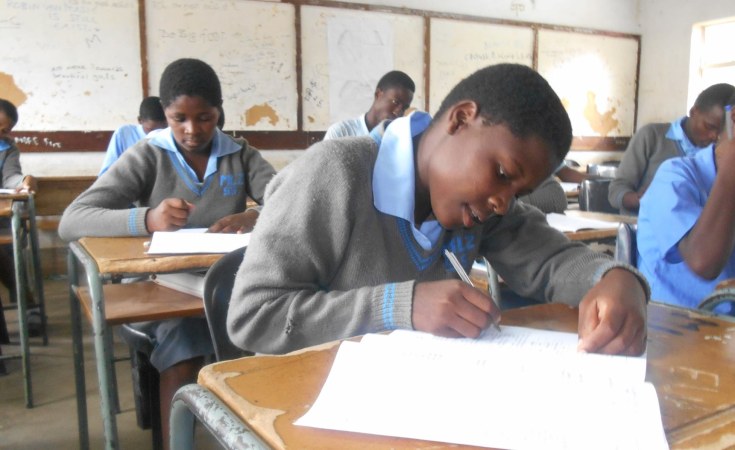
Education has always been seen as the key to a better future. But for many children in Malawi, that dream has been hard to reach.
For years, school fees, overcrowded classrooms, and a shortage of learning materials have made it difficult for children especially those from poor families to stay in school.
Some parents have had to choose which child to educate, while others have watched all their children drop out because they could not afford the fees.
On October 19, 2025, President Peter Mutharika announced that starting in January 2026, both primary and secondary school education in Malawi will be free.
Follow us on WhatsApp | LinkedIn for the latest headlines
The announcement was made during the Mulhakho wa Alhomwe cultural festival in Mulanje and was welcomed with excitement across the country. Many Malawians said it is a great step toward giving every child a chance to learn.
The President said the new policy will remove money problems that stop children from going to school. He said free education will help fight poverty, build skills, and give all children an equal chance to succeed.
However, this promise comes with big challenges. Malawi's education system is already struggling.
According to the Ministry of Education's 2023 EMIS Report, some schools have one teacher for almost 100 learners. In rural areas, many pupils still sit on the floor, learn under trees, or share a single book among several classmates.
Teachers say that without more classrooms, desks, books, and teachers, the quality of learning may go down when free education starts.
Groups like UNESCO and Ripple Africa have also raised similar concerns. They say Malawi's education system has long suffered from poor funding, overcrowded classrooms, and a shortage of qualified teachers.
Free education is a good and powerful idea, but experts warn that quality learning must not be forgotten. If classrooms are too full and teachers overworked, children may go to school but fail to learn what they need.
Still, the policy gives hope to many families who could not afford education. If done well, it can help reduce poverty, increase literacy, and give Malawi a stronger and more educated generation.
As Malawi prepares for the start of free education in 2026, the main question remains: Can the government make free education both accessible and of good quality?
Free education should not only open classroom doors it should open young minds and build a brighter future for Malawi's children.


