Regional and international actors should approach the crisis in Sudan with the urgency it demands.
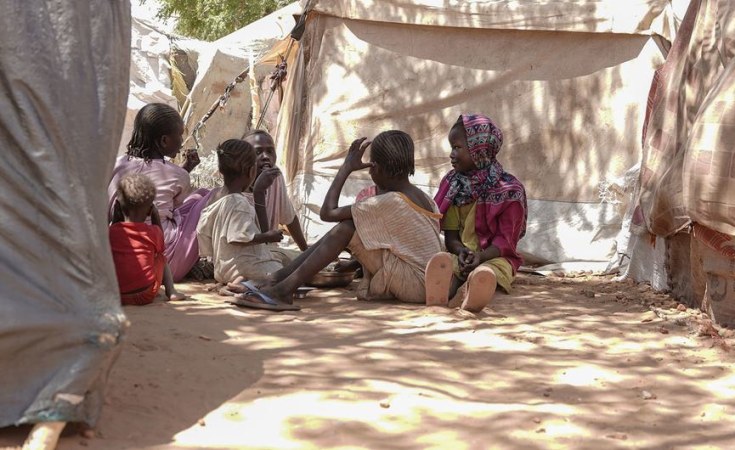
While the world rightly celebrates a tentative peace in Gaza that has enabled humanitarian assistance to flow to Palestinians in desperate need, civilians under siege in another part of the world are dying. The city of El Fasher, in the Darfur region of Sudan, has been surrounded by the Rapid Support Forces (RSF) for a year and a half. Encircling the city, the RSF has built an earthen wall, creating a no-man's-land of destruction around El Fasher in which those trying to flee the city are assaulted or murdered. Food cannot be delivered, and people are quite literally starving to death--first the very young, the very old, and the infirm, and soon, everybody else. Indiscriminate shelling and drone attacks have damaged or destroyed hospitals and mosques, maimed and killed civilians, and forced families into makeshift underground shelters.
Hamas' horrific October 7 attack on Israeli civilians shocked the world's conscience. So too did Israel's unrelenting campaign of destruction in Gaza, which included unlawful denial of humanitarian assistance to civilians. But somehow Sudan's suffering persists without galvanizing the world to demand action and to shame the belligerents and their backers. It's not because the facts are unknown; while it is difficult to report from Sudan, courageous journalists and researchers have been reporting on the atrocities, the famine, and the illicit weapons flows. It's not because "there are no good guys" in Sudan; civilians on the ground have moved mountains to help each other and maintain their humanity in inhuman conditions. It's not because "nothing works" in Sudan; the flow of gold and gum Arabic from Sudan to global markets persists even as food cannot reach the hungry. It's not because the architects of this misery are so very powerful that they cannot be stopped; the RSF is an undisciplined paramilitary force dependent on looting and the support of foreign powers, most notably the United Arab Emirates (UAE), and the other main antagonist in the conflict, the Sudanese Armed Forces, is a hodgepodge of former Sudanese military and political elites and Islamists, so feckless that they were chased out of Khartoum for nearly two years until retaking it in March of this year. These are not forces so mighty the whole world must simply standby while they do as they please. And yet the suffering continues.
Follow us on WhatsApp | LinkedIn for the latest headlines
When it comes to Sudan, the world's worst humanitarian crisis, the failure of regional and international leadership is undeniable. Powerful countries respond to Sudan's emergency by issuing statements. Some, like the United States, impose targeted sanctions on belligerents but still refrain from applying any effective pressure on the countries that arm and finance them. At this point, hope hinges on the latest efforts by the United States, Saudi Arabia, Egypt, and the UAE--the Quad--to find common ground on what needs to happen in Sudan, but after two and a half years of war, atrocities, and total disregard for civilian protection, talk is cheap. The desperate urgency of conditions in El Fasher makes for a brutal contrast with the genteel diplomacy that has focused on finding a face-saving way out of the Sudanese quagmire for the regional powers who have been jockeying for influence at the expense of Sudanese lives. The humanitarian ceasefire envisioned by the Quad cannot come soon enough.

Sign up for free AllAfrica Newsletters
Get the latest in African news delivered straight to your inbox
