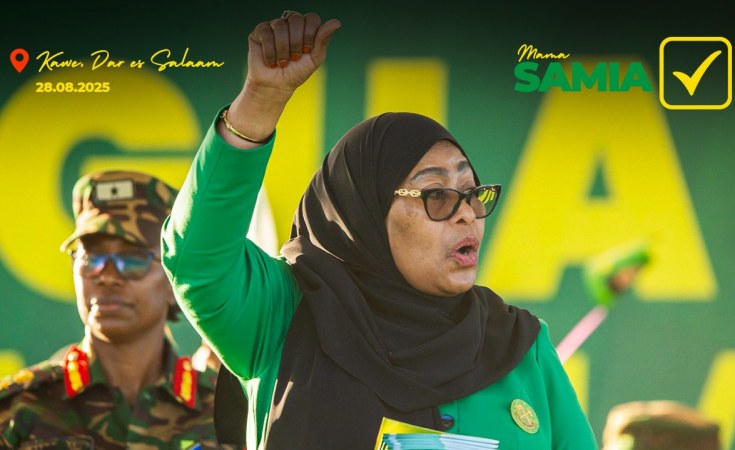
Nairobi — Tanzania's electoral commission has declared President Samia Suluhu Hassan the winner of Wednesday's general election with nearly 98 per cent of the vote, extending her rule for another five years under the Chama Cha Mapinduzi (CCM). But the announcement has been overshadowed by some of the worst political violence the country has seen in years.
The main opposition party, Chadema, says hundreds of people have been killed in a three-day crackdown on protests that broke out during and after the vote. A party spokesperson told AFP that "around 700" people had been shot dead or beaten to death by security forces. A diplomatic source in Dar es Salaam separately told the BBC there was "credible evidence" of at least 500 deaths, but stressed that the nationwide internet blackout and a heavy security presence were making it difficult to verify casualty figures independently.
Authorities have dismissed the figures as exaggerated, extended a night-time curfew and insisted the situation is under control. Foreign Minister Mahmoud Kombo Thabit described the unrest as "a few isolated pockets of incidents here and there", saying security agencies "acted very swiftly and decisively to address the situation". He also defended the internet shutdown, arguing it was necessary to stem vandalism and "save lives".
Protests erupted in Dar es Salaam, Arusha, Mwanza and other urban centres on election day, led mostly by young demonstrators angered by what they saw as a stage-managed contest. They accused the electoral commission of stripping the poll of credibility by knocking out President Samia's two strongest challengers -- one jailed on treason charges, another disqualified on technical grounds -- effectively clearing her path to re-election.
Keep up with the latest headlines on WhatsApp | LinkedIn
Despite a public warning from army chief Gen Jacob John Mkunda to vacate the streets, crowds again rallied in the commercial capital on Friday, pulling down posters, blocking roads and chanting against CCM. Police and soldiers responded with tear gas, live rounds in some areas, and mass arrests. Residents reported door-to-door searches in opposition strongholds and said security forces were moving at night, when the curfew kept witnesses indoors.
Journalists and human rights workers said it was almost impossible to get confirmed casualty lists. Major public hospitals in Dar es Salaam were said to be overwhelmed with the injured and were refusing to release information. A source at one hospital told the BBC that morgues were already full. A Chadema official, John Kitoka, said some opposition leaders had fled the country, claiming "massacres are carried out during night hours when no-one is there to witness them" and that security units were "killing with impunity".
The government, however, is standing by the election outcome and insists the violence does not reflect the national mood, even as curfew, roadblocks and the internet blackout continue to limit what the outside world can see.

Sign up for free AllAfrica Newsletters
Get the latest in African news delivered straight to your inbox
