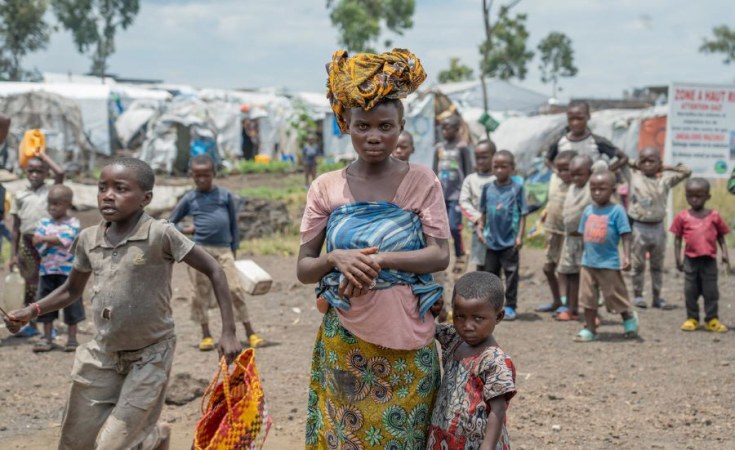
Geneva – Hunger is surging in the eastern part of the Democratic Republic of the Congo (DRC), but the World Food Programme (WFP) said on Friday that it is only able to reach a fraction of those in need due to acute funding shortages and complex access challenges.
Cynthia Jones, WFP Director for the DRC, speaking from Kinshasa at a UN press conference, said that one in three people in DRC's eastern provinces of North Kivu, South Kivu, Ituri, and Tanganyika are facing crisis levels of hunger or worse.
"That's over 10 million people," said Jones. "Of that, an alarming 3 million people are in emergency levels of hunger. This is 75 percent of all those in such conditions nationwide and an increase of 700,000 since March 2025."
Keep up with the latest headlines on WhatsApp | LinkedIn
In the eastern provinces, families have been forced from their homes over and over again: a total of 5.2 million people are displaced, including 1.6 million this year alone.
Eastern Congo has been plagued by violence for decades, and the resurgence of the M23 rebel group in 2021 exacerbated the situation.
Airports shut for months
The rebel group now controls significant territory, including the provincial capitals of Goma and Bukavu, which it seized earlier this year. The two airports there have been shut for months.
The UN, Kinshasa, and others accuse neighbouring Rwanda of supporting M23, which is denied by its authorities.
"The conflict is driving families into urban centres like Ituri," said Jones.
"The displaced families arrive exhausted and hungry. The local communities are themselves struggling to cope and are overwhelmed by the volume of new arrivals.
The WFP official said that millions of subsistence farmers – forced from their homes or too fearful to access their land – have missed the planting season this year.
She explained that families are regularly skipping meals, selling their last goats, and pulling children from school.
"Markets are destroyed and basic services have collapsed under the weight of conflict. On top of this, humanitarian access is collapsing," said Jones.
Since February, repeated bank closures have disrupted the WFP's efforts to provide cash transfers, preventing the injection of cash into local markets and supporting the local people and economy.
Meanwhile, the rainy season is exacerbating road conditions, hindering humanitarian access to some of the most vulnerable communities.
Jones said that the WFP urgently needs $349 million to continue delivering emergency food and nutrition assistance over the next six months.
"Without it, we will be forced to make further cuts – down to 300,000 people," she said.

Sign up for free AllAfrica Newsletters
Get the latest in African news delivered straight to your inbox

