

The medical charity Doctors Without Borders (MSF) has warned that the fate of hundreds of thousands fleeing ethnically targeted violence from Sudan's western city of El-Fasher was unknown, a day after satellite images showed suspected mass graves.
Paramilitary Rapid Support Forces (RSF), at war with the Sudanese army since 2023, last month seized control of the strategic city in the Darfur region, following an 18-month siege.
Reports have emerged of executions, sexual violence and abductions in and around El-Fasher, with new satellite imagery analysed by Yale researchers suggesting mass graves being dug in the city.
"Our main concern is that though we have seen approximately 5,000 people coming out of El-Fasher towards Tawila, we don't know where the other hundreds of thousands have gone," newly elected MSF president Javid Abdelmoneim said.
Keep up with the latest headlines on WhatsApp | LinkedIn
"That is worrying given the ethnic nature of targeting of violence towards civilians by the RSF," he told reporters in Johannesburg.
The town of Tawila is about 70 kilometres (40 miles) to the west of El-Fasher, and communications remain largely cut off in the region.
Survivors had recounted to MSF "harrowing" stories of "ethnically targeted torture, rape and summary executions," Abdelmoneim, a Sudanese-Iranian national, said.
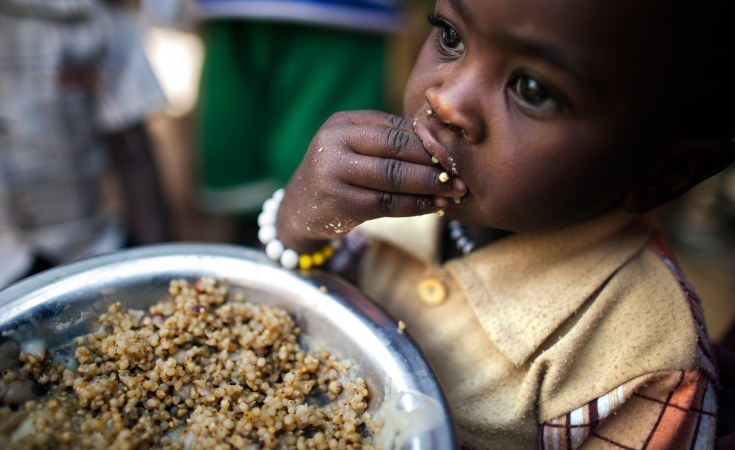
Six out of 10 adults screened had been starved, he said.
"I've never seen anything so shocking in all my 15 years of work," he added. The UK-born doctor joined MSF in 2009 and has done missions in Iraq, Haiti, Ethiopia, Syria, Ukraine, and Sierra Leone during the West Africa Ebola epidemic.
The fall of El-Fasher gave paramilitaries control over all five state capitals in Darfur, raising fears that Sudan would effectively be partitioned along an east-west axis.
Video clips viewed by Daily Trust on social media showed the RSF executing fleeing civilians, with the commander instructing his troops to kill everyone.
In one of the clips, one of the RSF fighters was calling the civilians "sons of prostitutes", while shooting at them repeatedly. The horrific videos were shared online by the RSF fighters.
Yale University's Humanitarian Research Lab (HRL) on Thursday said it found evidence consistent with "body disposal activities".
Satellite imagery has since revealed evidence of door-to-door killings, mass graves, blood-stained areas, and bodies visible along an earthen berm - findings that match eyewitness accounts and videos posted online by the paramilitaries.
The report identified "at least two earth disturbances consistent with mass graves at a mosque and the former Children's Hospital".
It also noted the appearance of metres-long trenches, as well as the disappearance of clusters of objects consistent with bodies near the hospital, the mosque and other parts of the city - indicating that bodies deposited around those areas were later moved.
"Body disposal or removal was also observed at Al-Saudi Hospital in satellite imagery," the report said.
The World Health Organisation had reported the "tragic killing of more than 460 patients and medical staff" at that hospital during the city's takeover.
"It is not possible based on the dimensions of a potential mass grave to indicate the number of bodies that may be interred; this is because those conducting body disposal often lay bodies on top of each other," the report added.
Fresh imagery from around the former children's hospital - which the RSF has since turned into a detention site - indicates the likelihood of "ongoing mass killing" in the area, the report said.
The conflict in Sudan, raging since April 2023, has pitted the armed forces led by Abdel Fattah al-Burhan against the RSF controlled by his former deputy, Mohammed Hamdan Daglo.
Violence has wracked the entire Darfur region, especially since the fall of El-Fasher, the army's last stronghold in the area. Fighting has since spread to the Kordofan region, which remains under army control.
With access blocked and communications severely disrupted, satellite imagery remains one of the only means of monitoring the crisis unfolding across Sudan's isolated regions.
'No sign of de-escalation'
Meanwhile, the United Nations warned on Friday of "intensified hostilities" ahead in Sudan, despite paramilitary forces endorsing a truce proposal from mediators.
"There is no sign of de-escalation," UN human rights chief Volker Turk said in a statement.
"Developments on the ground indicate clear preparations for intensified hostilities, with everything that implies for its long-suffering people."
On Thursday, the paramilitary Rapid Support Forces (RSF) said they had accepted a truce plan put forward by the United States, Saudi Arabia, the United Arab Emirates and Egypt.

Sign up for free AllAfrica Newsletters
Get the latest in African news delivered straight to your inbox
Turk issued a "stark warning" on Friday about escalating violence in Kordofan - a vast semi-arid area between Darfur and army-held Khartoum.
"Since the capture of El-Fasher, the civilian casualties, destruction and mass displacement there have been mounting," Turk said.
In South Kordofan, a medical source told AFP on Friday that the RSF shelled a hospital in besieged Dilling the day before, killing five and injuring five more.
The Sudan Doctors' Union said the attack also destroyed the facility's radiology department.
Dilling, under RSF siege since June 2023, lies about 150 kilometres (90 miles) southwest of army-controlled El-Obeid, a key crossroads linking Darfur to Khartoum. The army broke a two-year siege of El-Obeid in February, but the RSF has regrouped and is mounting a fresh push to seize Sudan's central corridor.
The RSF captured the town of Bara, north of El-Obeid, recently.
Much of the wider Kordofan region, meanwhile, faces a worsening humanitarian crisis.
The Rome-based Integrated Food Security Phase Classification (IPC) said Dilling is now at risk of famine, while South Kordofan's capital, Kadugli, is already facing one.

