

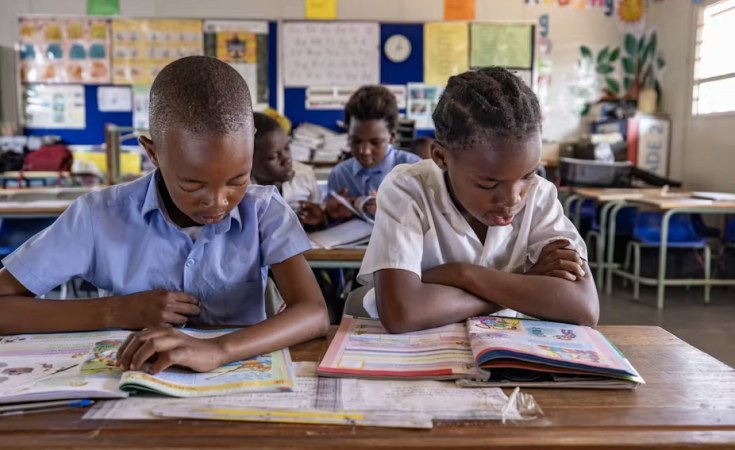
The Federal Government has directed teachers across Nigeria to prioritize English as the primary medium of instruction, officially cancelling the national policy that mandated the use of indigenous languages in schools.
The move is aimed at improving learning outcomes and ensuring uniformity in classroom instruction nationwide.
Minister of Education, Dr. Tunji Alausa, announced the policy shift while speaking with journalists at the Language in Education International Conference 2025, organised by the British Council in Abuja.
The two-day event, themed "Language, Education and Inclusion: Empowering Every Learner," brought together policymakers, educators, researchers, and development partners from Africa, South Asia, and the UK to discuss strategies for advancing equitable, quality education through language.
Keep up with the latest headlines on WhatsApp | LinkedIn
Dr. Alausa stressed that while preserving indigenous languages remains important for cultural identity, English should be the primary language of instruction from pre-primary through tertiary education to enhance comprehension and global competitiveness.
He noted that English serves as a unifying tool across Nigeria's diverse linguistic landscape, giving students broader access to knowledge, technology, and international opportunities.
The minister explained that the cancellation of the mother tongue policy was informed by data and evidence showing that its overuse in some regions had negatively affected learning outcomes, contributing to high failure rates in national examinations such as WAEC, NECO, and JAMB. He emphasized the need for evidence-based governance over emotional attachment to language:
"English language should be used to teach our students at all levels as a means of instruction. Over the years, mother tongues have been used to teach and this has largely been responsible for the failures recorded in exams. The national policy on language has been cancelled. English now stands as the medium of instruction across all levels of education," he said.
In the same vein, the British Council also reaffirmed its commitment to promoting inclusive and equitable education through language-responsive teaching in Sub-Saharan Africa. Julian Parry, Director of English Programmes, Sub-Saharan Africa, noted that language can act as "a bridge to inclusion, identity and opportunity for every learner" and emphasized the importance of sharing evidence, challenges, and successes to improve education outcomes globally.
Chikodi Onyemerela, Director of Programmes, British Council Nigeria, said inclusion remains central to the organisation's work and partnerships. "We are deeply privileged to be hosted in Nigeria... Since 2015, through our Pan-Ethnic Classrooms Programme, we have developed inclusive pedagogy initiatives that enable teachers to embed inclusive practices in the classroom," he said.

Sign up for free AllAfrica Newsletters
Get the latest in African news delivered straight to your inbox

