

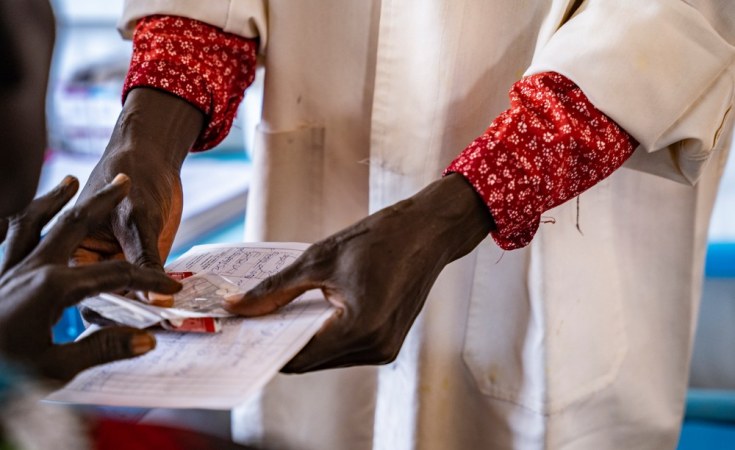
In an era of climate unpredictability and emerging health threats, the ability to respond swiftly to disease outbreaks can be the difference between containment and crisis.
Ethiopia's recent experience with malaria demonstrates exactly why preparedness and agility matter. After years of steady progress in controlling the disease, the country faced an unexpected resurgence in 2024. What had been a success story -- malaria cases and deaths nearly halved between 2016 and 2019 -- was suddenly reversed by a confluence of factors including climate change, insecticide resistance, weakened surveillance, service disruptions and new development corridors.
More than 75 million people found themselves at risk across the country. In 2024, in South Ethiopia alone, 18 districts reported over 308,000 cases in less than a year; numbers unseen for over a decade. This setback underscored a fundamental truth about disease control: progress is never linear, and even the most successful interventions can be undermined by changing conditions.
"Malaria is the most pressing health issue in our district; it's our number one priority in Dasenach," says Solomon Petros, Malaria Focal Person for the Omorate-Dasenach district. In 2024 alone, Ethiopia reported almost 12.5 million malaria cases.
Follow us on WhatsApp | LinkedIn for the latest headlines
A rapid, coordinated response
In response to this emergency, Malaria Consortium partnered with Ethiopia's Ministry of Health, leveraging high-level advocacy, targeted training, rapid community-based surveillance and strong collaboration with local health authorities to stem these numbers. The 18-month initiative, which ran from July 2024 until December 2025, reached more than 1.7 million people, with remarkable results.
"In Wolaita zone, which once bore 64 percent of the region's malaria cases, weekly infections plummeted from 28,000 cases at the epidemic's peak to fewer than 4,000," said Zerihun Desalegn Goa, Regional Malaria Programme Coordinator in South Ethiopia -- "a dramatic reduction".
Much of this progress can be attributed to empowering workers on the ground. Close to 900 health extension workers received epidemic response training, while 259 healthcare workers across 339 health posts and 67 health centers were trained in case management and surveillance. As Agune Ashole, Head of the South Ethiopia Region Public Health Institute, put it: "Malaria Consortium's support to the region's health system went beyond financial and technical assistance - it also included human resource support."
Huge progress was achieved in strengthening critical health system components, particularly in case management and referral pathways.
"After receiving capacity strengthening training, we improved significantly in how we handle, treat and counsel malaria patients," says Gumachew Arba, health officer at Karat Zuriya-Sorobo Health Centre. "We've seen major improvements in our response to malaria outbreaks. We can now clearly differentiate between uncomplicated and severe cases and refer the critical ones quickly."
For Yemisrach, a nurse at Dimeka Health Center in Hamer District, the training was a game-changer: "I updated my knowledge and revised my practices, which led to better case management for my patients," she says.
Our teams are on the ground, supporting children, families and communities affected by malaria.
Meeting communities where they are
Community-level engagement has been equally vital to the initiative's success. Prevention and control messages were broadcast in seven local languages via the radio, which boosted the community's awareness and readiness to use available prevention methods and tools.
Sorry, your browser doesn't support embedded videos.
Marta is a resident in Dimeka town, one of the areas facing a high malaria burden, and she has received close guidance and mentorship from one of the trained health extension workers. As well as learning about the current malaria epidemic, she learned how to properly use the insecticide-treated net provided to protect herself and her family from malaria. "The health extension workers regularly visit us and teach us about sanitation, malaria outbreaks and prevention methods and actions," she says.
Getting to those in the hardest-to-reach areas
Extreme weather events, such as droughts and floods, which are on the rise due to climate change, create ideal conditions for mosquito breeding while simultaneously displacing communities and disrupting health services. Devastating floods in the Dasenach region didn't just cause physical damage. In the aftermath, stagnant water left behind from the flooding became a ripe breeding ground for mosquitoes, which hastened the spread of malaria in the displacement camps.
Sorry, your browser doesn't support embedded videos.
This meant that the work that Malaria Consortium provided in these communities had an added layer of importance. "They treat us well when we get sick," says Ermias, a resident of Dasenech site for internally displaced people. Health workers are also teaching them about prevention methods. "Thanks to the health workers, we haven't experienced malaria-related deaths here."
Surveillance, the pathway to sustainable disease response

Sign up for free AllAfrica Newsletters
Get the latest in African news delivered straight to your inbox
Data systems also saw a leap forward. Malaria Consortium donated epidemic monitoring charts and registration books and provided mentorship that improved real-time reporting and decision-making. "I benefited greatly from the training," says Elisabeth, PHEM Focal at Dimeka Health Center. "It helped me enhance my knowledge and skills in epidemic surveillance."
"Despite the high number of cases during this epidemic, we had relatively few severe cases and deaths. This was due to early detection and prompt treatment and proactive, targeted planning", says Tsegaye Eke, Head of the Wolaita Zonal Health Department. "I sincerely thank Malaria Consortium for helping us minimise severe cases and deaths despite the scale of the epidemic."
Through collaborative efforts and unwavering dedication, Malaria Consortium and local health authorities have laid a strong foundation for sustainable epidemic response and disease control. This initiative has shown that with coordinated action rooted in local collaboration, empowered health workers and engaged communities, even the most daunting health crises can be turned back.
We stand with children, families and communities facing the threat of malaria. Your donations can contribute to positive change in malaria-endemic areas.

