Washington, DC — A decade of constitutional engineering, regional destabilization, and cross-border repression under President Patrice Talon made rupture inevitable. Stability in West Africa now depends on recognizing that the real threat to Benin did not begin in the barracks.
The attempted coup in Benin must be condemned. For those of us who have spent our careers defending democratic governance, the rule of law, and the peaceful transfer of power, there is no ambiguity: military interventions are a violation of constitutional order and an affront to the principles that have guided Benin since its historic 1990 National Conference. I reject them unequivocally.
But condemnation alone is insufficient—and dangerously incomplete—if it fails to confront the deeper reality that produced this crisis. What unfolded in Cotonou was not a spontaneous rupture. It was the foreseeable consequence of a decade-long erosion of democratic institutions, a pattern of constitutional manipulation, and a governance model that increasingly destabilized not only Benin, but the entire Gulf of Guinea and its subregional security architecture. To condemn the coup without condemning the conditions that made it possible would be an act of strategic blindness.
Benin did not slide into instability overnight. Since 2016, the country has undergone a systematic process of political deconstruction.
Benin did not slide into instability overnight. Since 2016, the country has undergone a systematic process of political deconstruction. Judicial independence collapsed with the creation of a special court—CRIET—designed less to prosecute crime than to neutralize opponents. Electoral competition was hollowed out through restrictive certification rules that eliminated opposition parties from the 2019 legislative elections, producing a rubber-stamp parliament and a historically low voter turnout.
The legal arsenal was complemented by the weaponization of digital repression, falsified evidence, and targeted prosecutions of leading figures such as Reckya Madougou and Professor Joël Aïvo. International bodies, including the African Court on Human and Peoples' Rights, condemned these abuses; the Beninese government responded by withdrawing from the Court's jurisdiction entirely.
As this domestic dismantling advanced, the government simultaneously pursued major constitutional and electoral changes without broad national consensus. In March 2024, an amendment to the electoral law raised the sponsorship threshold for presidential candidates to 15% of all elected officials—representatives and mayors—thereby making it nearly impossible for opposition candidates to qualify in a system already engineered to exclude them.
Then, in November 2025, Parliament approved a sweeping constitutional revision extending both presidential and legislative terms from five to seven years and establishing a new bicameral legislature that includes an unelected Senate. Under the reform, the Senate will consist of 25 to 30 members, including appointed officials and former heads of state, empowered to act as a second legislative review chamber with influence that stretches across the executive and judicial domains. These changes—scheduled to take effect beginning with the 2026 general elections—further consolidate political power and expand the avenues through which President Patrice Talon can exert post-presidential influence, reinforcing the perception that the constitutional architecture of the Republic is being reshaped around the ambitions of a single leader rather than the collective will of the nation.
As Benin's domestic space shrank, the government exported its repressive model across borders. In August 2024, prominent activist Steve Amoussou, widely known under the name Frère Hounvi, was kidnapped in Lomé, Togo, by individuals traveling in a Beninese diplomatic vehicle. He was forcibly transported to Cotonou and held incommunicado under CRIET authority—an extraordinary violation of sovereignty that signaled the regime's willingness to pursue its critics beyond national borders.
Months later, in April 2025, another dissident, Hugues Sossoukpè, was abducted in Abidjan, Côte d'Ivoire, under similarly opaque circumstances and transferred to Benin, where he was detained without due process. These extraterritorial abductions were not isolated incidents; they were the natural extension of a governance system that treated dissent as a criminal threat and borders as mere administrative inconveniences.
This was not governance—it was the slow, deliberate remodeling of a democratic system into an autocratic framework under constitutional cover. What scholars call a "constitutional coup" took place in plain sight. It dismantled legitimacy, shrank civic space, and stripped citizens of peaceful mechanisms to influence political outcomes. The surprise is not that a military faction attempted a coup. The surprise is that it took this long.
The internal fracture was compounded by a reckless regional and international posture. President Patrice Talon increasingly governed through exclusion and division, including the instrumentalization of regional identity as a political tool. The result was a fractured military, a polarized society, and a leadership increasingly reliant on external support to compensate for domestic legitimacy deficits.
The December 2025 coup attempt exposed this fragility with unprecedented clarity: the survival of the Beninese presidency required direct and immediate military intervention by Nigeria, a neighboring state acting under the banner of ECOWAS.
This development carries significant geopolitical consequences. For Nigeria, the region's hegemon, deploying armed force inside Benin sets a precedent with long-term implications. Far from stabilizing the situation, it risks aggravating underlying tensions. Beninese military officers will perceive this intervention as an infringement on national sovereignty, while segments of the civilian population will interpret it as foreign imposition.
Nationalism, once dormant in Benin's political culture, may reemerge in response. The resentment generated by this episode could undermine Nigeria's influence over its western border and complicate ECOWAS crisis-management frameworks for years to come.
France, too, must reassess its position. President Emmanuel Macron has embraced Patrice Talon as a modernizing technocrat capable of safeguarding French interests in the Gulf of Guinea. Yet Paris has overlooked the profound contradiction between Talon's domestic governance—marked by repression, judicial capture, and aspirations for a third term—and the stability France seeks to promote. Talon openly declared in Paris that democracy "paralyzes decision-making," and his subsequent constitutional maneuverings confirm that this was not rhetorical excess but political doctrine.
France's willingness to tolerate these tendencies undermines its credibility at a moment when anti-French sentiment is rising across the Sahel and the AES alliance—Niger, Mali, Burkina Faso—views Benin as a potential corridor for French strategic operations. Talon's posture hardens these states' threat perceptions and incentivizes them to destabilize Benin's northern frontier as a buffer. In this sense, he has become a strategic liability for France rather than a reliable partner.
The implications extend to the broader Western alliance. The United States, the European Union, and democratic partners risk misreading Benin as the stable southern anchor of a region increasingly engulfed by insecurity. In reality, the governance model put in place under Talon has weakened institutional resilience, inflamed military grievances, and created the very conditions extremist actors exploit.
U.S. and European support for counterterrorism and coastal security initiatives cannot succeed in a political environment where institutions serve personal power rather than national cohesion. Stability is not achieved through strongmen; it is achieved through legitimacy, inclusion, and accountability. Without these foundations, external support becomes a short-term patch on a widening structural fault line.
ECOWAS confronts an equally consequential test. The organization cannot maintain credibility if it condemns military coups while turning a blind eye to constitutional coups that achieve the same result through legal manipulation. The bloc's legitimacy depends on its willingness to defend democratic norms consistently, not selectively. Aligning its crisis response exclusively with incumbents—regardless of their democratic record—risks alienating populations and militaries across the subregion and accelerates the shift toward alternative security architectures such as the AES alliance.
As someone who has spent my adult life in the United States and who believes in the values that underpin open societies, I recognize my own bias toward democratic governance. But that bias is not ideological; it is pragmatic.
Nations that preserve institutional stability, respect political competition, and honor constitutional limits are more secure, more prosperous, and more reliable partners. Supporting a government against the will of its citizens—particularly one that has dismantled the very institutions that sustain democratic life—will inevitably backfire. It will drive Benin toward illiberal alliances, embolden anti-Western narratives, and reduce the space for constructive engagement.
If the free world truly seeks stability in West Africa, it must begin by listening to the people of Benin,
Benin does not need isolation. It needs a reset. The country requires leadership capable of restoring institutional integrity, rebuilding trust with the population and the military, and reassuring neighbors that Benin will not become a proxy battleground for external powers. No one can dictate who that leader should be. But it is increasingly evident who that leader cannot be. Patrice Talon has become synonymous with exclusion, instability, and strategic miscalculation. His continued presence at the helm endangers the very outcomes Benin's partners claim to support.
The coup attempt is a warning—but not only for Benin. It is a warning for all who engage with West Africa through the lens of short-term partnerships rather than long-term governance realities. Democracies do not collapse in a day. They erode gradually, through incremental violations that the international community often overlooks until the damage becomes irreversible.
If the free world truly seeks stability in West Africa, it must begin by listening to the people of Benin. Their commitment to democracy is not in doubt. The question is whether their partners will finally align themselves with that commitment—or continue supporting a system that has brought the country to the brink.
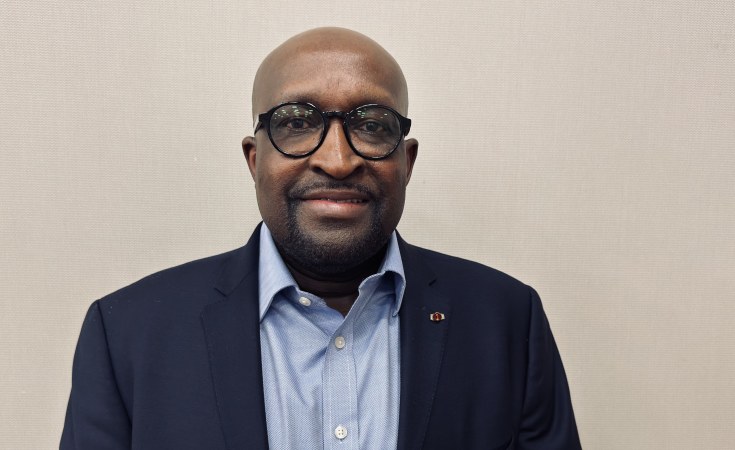
Ambassador Omar Arouna is the former Ambassador of the Republic of Benin to the United States, Mexico, and the country's representative to the World Bank, IMF, and OAS. He is President for Global Public Affairs and Engagement at Gunster Strategies Worldwide. He co-founded the Center for Cyber Diplomacy and Leadership at George Washington University and serves on multiple boards focused on governance, human rights, and African development. A Commander of the National Order of Benin, he holds an MBA in Cybersecurity from The George Washington University.

