

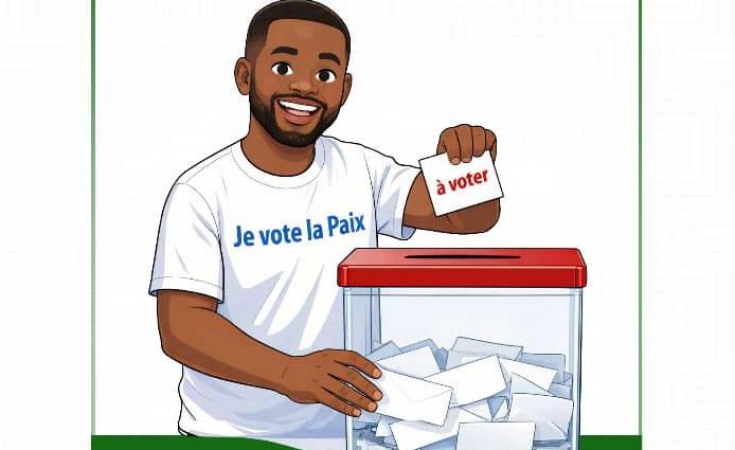
Benin votes on Sunday in legislative and local elections that come just over a month after an attempted coup shook the commercial capital Cotonou. The vote follows weeks of campaigning and comes ahead of a presidential election in April.
About 8 million registered voters are expected to choose 109 MPs along with their local representatives, the election commission said.
This double election precedes a third: the presidential election, scheduled for 12 April, 2026.
These are the first elections since a failed coup attempt in early December against President Patrice Talon. The army said it had foiled the plot by a group of soldiers and later said it had regained control. Authorities said the president was safe.
Follow us on WhatsApp | LinkedIn for the latest headlines
Talon will not run in April. Two candidates are set to contest the presidency. The presidential coalition has nominated Economy Minister Romuald Wadagni, while Paul Hounkpè will stand for the Cauris Forces for an Emerging Benin, known as the FCBE.
Benin authorities say coup attempt foiled, President Talon safe
Revised rules
The vote comes three years after the last legislative elections in January 2023, after Benin revised its election calendar so all elections now take place in a single year.
MPs are now elected for seven-year terms instead of five, following a constitutional change adopted in November. Voters will also elect municipal councillors.
Twenty-four seats in parliament are reserved for women, one in each of Benin's electoral districts.
Five parties are contesting the legislative elections. Three belong to the presidential coalition - the Progressive Union for Renewal, the Republican Bloc and Moele-Benin.
The other two are the Democrats, the main opposition party linked to former president Thomas Boni Yayi, and the FCBE, described as a moderate opposition party.
For the local elections, only three parties are running - the Progressive Union for Renewal, the Republican Bloc and the FCBE. The Democrats are absent after the election commission ruled their candidate lists inadmissible.
The Democrats will also not field a presidential candidate. The withdrawal of an endorsement by one of their elected officials led to their disqualification.
Benin pro-government parties win parliamentary majority
Muted campaign
"The campaign atmosphere was rather dull and lacking in excitement, even if it was peaceful and relatively good-natured," governance expert Joël Atayi Guedegbe said.
"It remains to be seen whether most voters are interested. We are in a festive atmosphere, especially with the Vodun Days festival. What will be the impact of this? It's difficult to know."

Sign up for free AllAfrica Newsletters
Get the latest in African news delivered straight to your inbox
Another specialist on Benin, who asked not to be named, told RFI the campaign took place "without much enthusiasm compared to what we have experienced in the past". He said the local elections did not seem "inclusive" enough to many voters.
Turnout will be closely watched and could be low.
Young voters may be the hardest to mobilise. Work is their priority, one student said, while another added: "Creating jobs, giving value to jobs for young people."
Threshold concerns
New rules require parties to win at least 20 percent of the vote in each of Benin's 24 electoral districts to gain seats.
That threshold drops to 10 percent for parties that reached a parliamentary agreement before the vote. For these elections, only the Democrats did not reach such an agreement.
Experts say many fear Benin could be heading towards a single-party parliament, as in 2019.
This article includes reporting from RFI correspondent Magali Lagrange in Benin

