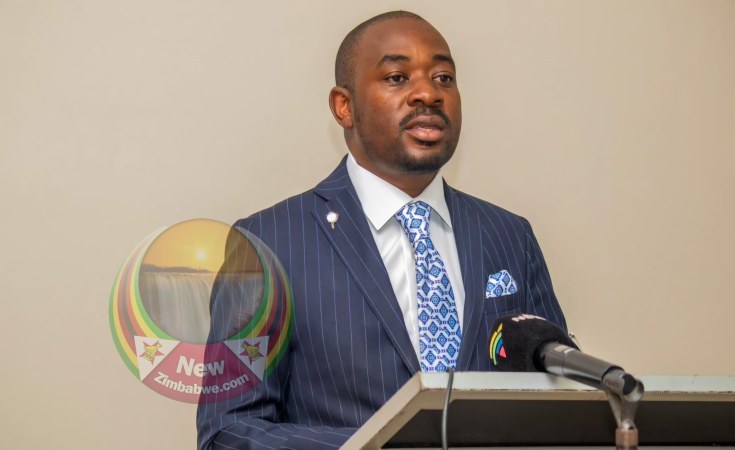
Former opposition leader Nelson Chamisa has announced his return to frontline politics, issuing a sweeping indictment of the country's governance and calling for what he describes as a fresh start to rescue the country from deepening political, economic and social crisis.
In a lengthy statement, the ex-Citizens Coalition for Change (CCC) leader painted a bleak picture of a nation, he says is trapped in a vicious cycle of disputed elections, economic hardship and eroded public trust -- decades after independence.
"Our nation faces a pivotal moment and stands at a critical juncture," Chamisa said arguing that the promise of independence has failed to deliver "shared prosperity, dignity and opportunity for all".
Chamisa accused the government of presiding over what he termed a legitimacy crisis rooted in rigged elections, state capture, endemic corruption and political intolerance.
Follow us on WhatsApp | LinkedIn for the latest headlines
He claimed that state institutions have been scooped out and public services reduced to instruments of partisan loyalty rather than national service.
The country, he said is suffering not only from economic collapse and political uncertainty but from "social collapse and moral decay", with citizens increasingly treated as subjects rather than sovereign holders of power.
His remarks come against a backdrop of persistent economic instability and high unemployment.
Chamisa reserved particular criticism for the treatment of Zimbabweans living abroad, saying many had been forced to leave the country in search of survival rather than opportunity.
"The struggle is real," he said citing immigration challenges, harassment and what he described as unlawful detentions and humiliating treatment faced by Zimbabweans in the diaspora.
At the heart of Chamisa's comeback is what he calls Agenda 2026 -- a political reset aimed at breaking decisively from the past.
"This is about a clean break from the mistakes and missteps of the past," he said rejecting what he described as a rotten, compromised and exhausted political culture that has produced entitlement, corruption and fatigue rather than renewal.
The agenda, he insisted, is not about personalities or political parties but about citizens a national renewal project anchored in democratic values, constitutionalism, ethical leadership and accountability.
"A false fight breeds a false victory," Chamisa said arguing that Zimbabwe's core problem is not simply political competition but a breakdown of national consensus and constitutional order.
Central to his message was a call for unity, reconciliation and healing in a deeply polarised society.
"Zimbabwe cannot move forward while divided against itself," he said, urging citizens to choose dialogue over violence, peace over friction and forgiveness over vengeance.

Sign up for free AllAfrica Newsletters
Get the latest in African news delivered straight to your inbox
Chamisa proposed the rebuilding of what he termed a new national consensus, forged not by political elites but by citizens themselves grounded in shared understanding of the country's problems, the process needed to resolve them and a collective vision of the future.
"There is no separate destiny for a few and another for the many. We fall together, and we rise together," he said.
Chamisa's return is likely to reshape Zimbabwe's already fractured opposition landscape, particularly after months of uncertainty following internal disputes within the CCC and controversial recalls of opposition legislators.
While it remains unclear what political vehicle or structure his renewed push will take, his language suggests a broad-based mobilisation rather than a traditional party-driven campaign.
Whether his call for a "new way" resonates with an electorate weary of repeated cycles of hope and disappointment remains to be seen.

