The Nigerian government has recently engaged the services of a Washington-based lobbying firm to promote its efforts at protecting the lives of Nigerians against terrorists, particularly Christians.
This comes amid Nigeria's security crisis, which has moved from a domestic struggle to a theatre of direct American military intervention. In November 2025, President Trump issued a blunt warning to launch an attack in Nigeria "guns-a-blazing" if the government failed to stop the killing of Christians by Islamist groups. This diplomatic tension culminated in December 2025 with US missile strikes in Sokoto, an action the White House described as a "Christmas gift" to terrorists. Abuja described these attacks as a "joint operation" against armed groups. However, the strikes were presented by Washington as a unilateral move to save the Christian community from persecution.
The lobbying deal reportedly costs US$9 million, approximately 12 billion Naira. Government officials justify this arrangement by arguing that it will help improve Nigeria's international image. They claim it will offer better perspectives on the government's efforts at a time when global attention on the country has intensified.
Yet the more fundamental question remains: what does this deal mean for Nigeria, and what impact does it have on the peace and security of the thousands of people who continue to die in rural communities? Government spokespeople and supporters argue that the lobbying effort is apt given Nigeria's current security realities. They point to the ongoing international debates about Christian genocide in the North, which has led to the designation of the country as a particular concern. For them, US$9 million is not so much to invest in the country's international reputation. With this deal, the US firm is expected to engage with and influence US authorities to position Nigeria more favourably in the eyes of the American government and its stakeholders.
Follow us on WhatsApp | LinkedIn for the latest headlines
While the government's position may seem to make sense on the surface, its actions do not address security or the internal challenges that led to the commissioning of a US firm for what many see as image laundering. Investing 12 billion Naira in a foreign firm confirms a breakdown of trust between the Nigerian government and its citizens. It also indicates a disconnect between Abuja and Washington. It serves as the government's acknowledgement that the US authorities do not trust their stories or their efforts to combat insecurity. More importantly, it shows how the Nigerian government misunderstands the conflict as a discourse issue that can be solved through information and communication strategies.
This pattern reveals what Jean-François Bayart describes as the mirage of extraversion, where external validation is pursued to compensate for fragile domestic legitimacy. African elites have, in recent years, exhibited this tendency, looking outward to global powers for validation because they have failed to secure a genuine mandate or trust at home. By paying 12 billion Naira to a US firm to communicate its efforts, the government trivialises the actual problem. Those who insist on the narratives of Christian genocide did not wake up to sell a story out of the moon. Their story was born out of broken trust and years of frustration. It is the result of killings where victims felt the response of the government was poor or biased.
For years, official responses simplified these agonies as mere communal clashes and called on all parties to give peace a chance. Those who complained of targeted violence were not necessarily ignoring the experiences of others, they were telling their lived experiences based on the patterns of violence they faced. They reacted to the structural challenges they faced in accessing justice. If the government felt their story was not a true reflection of reality, what it needs to win their trust is not an investment in media through a Washington lobby group. Trust must be earned through protection and accountability on the ground.
The limits of discursive governance
One of the defining challenges of the present leadership is the overt prioritisation of discursive governance. This is the reliance on information, media narratives, and propaganda to address citizens' genuine concerns. This lobbying deal reflects a deep administrative challenge where the state seeks to counter narratives and drown out dissent. More troublingly, it involves a form of cancel culture in which dissenting voices are sometimes labelled enemies of the state.
This pattern has its history in the past of the current leadership. During their years as an opposition group, they relied heavily on information and discursive strategies to gain trust and build legitimacy. However, as a government in power, such a pattern creates deep mistrust. It undermines the state's legitimacy among those with genuine reasons for complaint and agitation. Democracy in a complex nation like Nigeria requires the engagement of all parties. Dialogue and substantive action are the best pathways to gaining trust and building the state's legitimacy.
The failure of the social contract
At a time when thousands continue to die in villages across Benue, Plateau, Kwara, and Kaduna, the priority should not be the denial of people's perceived experiences. It should not be the investment in propaganda and American interests. The government owes its citizens a responsibility to protect. This includes protection from fear, protection from death, and protection from want. Paying lobbyists billions of taxpayer money cannot restore peace. It cannot address the structural issues that have continued to transform security challenges into national problems.
Insecurity in Nigeria is not a perception problem held by Washington groups. It is a governance issue. Addressing it requires political will and a deep sense of patriotism that puts the citizen first. Instead of investing huge sums of money in perception management, the sustainable path to peace lies in a sound justice system. It lies in addressing the non-kinetic triggers of insecurity, such as hunger, poverty, climate change, corruption, and political exclusion. These are the material realities that no amount of fancy messaging in the United States can change. When a farmer cannot go to his farm because of fear, a glossy brochure in Washington does nothing to put food on his table or secure his village.
Outcomes over discourse
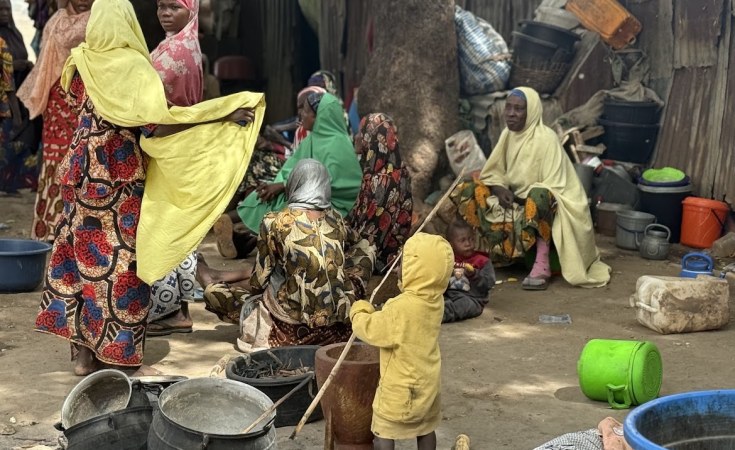
Improving Nigeria's image will not come from Washington lobbyists. It will come from the lived realities of the people and the testimonies that they offer. In Yelwata, a community in Benue State attacked last year, survivors describe violence that left entire families wiped out and hundreds displaced. Tsegba Gbam Ayua, who had fled earlier violence in Nasarawa State and was sheltering in Yelwata, lost his wife and four children in the attack. "I travelled out briefly to find work," he recalled, "and returned to find my entire family gone." For many victims, such experiences mark not just personal tragedy, but a complete collapse of faith in the state's promise of protection.

Sign up for free AllAfrica Newsletters
Get the latest in African news delivered straight to your inbox
What will change the world's perception about our security situation is outcomes, not discourse. What matters to Nigeria and its friends is how people are being saved. The safety of lives and properties is the only metric that counts, not the increase in security budgets or the sophistication of media activities.
The government must realise that its ultimate duty is to protect lives and property. Insecurity undermines the state's legitimacy. When people are killed, kidnapped, and lose their properties, their stake in the government reduces. When bandits attack a community and citizens are forced to surrender to fear and captivity, the government loses its authority.
The Nigerian government must speak to these issues directly at home, rather than in Washington. The path to global respect is paved with local results, not diplomatic PR. You cannot buy a good reputation for a house that is on fire. It is time for the government to stop performing governance for the world and start practising it for Nigerians.
Wealth Dickson Ominabo is a doctoral researcher in the Department of Development Studies at SOAS University of London. His research examines climate politics and the expanding theatre of farmer-herder conflict in Nigeria.
