

The march, which defied an earlier police warning, followed Awolowo Road en route to the Lagos State House of Assembly complex.
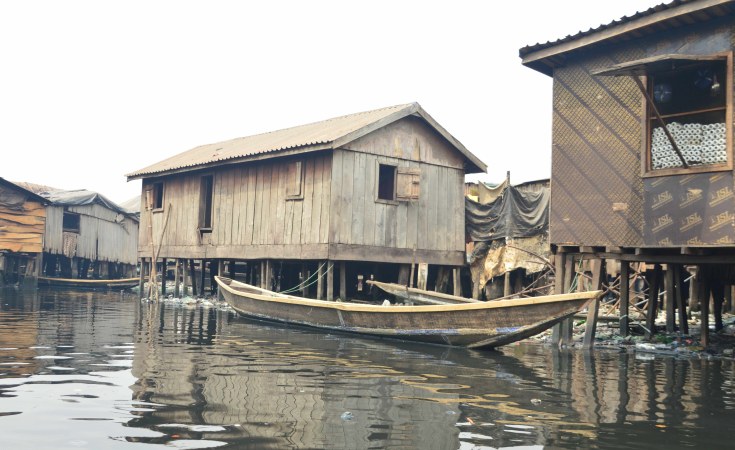
Residents of Lagos waterfront communities on Wednesday marched to the Lagos State House of Assembly in Alausa, protesting ongoing demolitions and forced evictions. The demonstration proceeded despite the Lagos State Police Command rejecting the notification of the rally.
The protest, organised by the Coalition Against Demolition, Forced Eviction, Land Grabbing, and Displacement, began at 7 a.m. at Ikeja Underbridge. Residents carried placards reading: "Save Our Souls" and "Stop the Killings, Stop Demolition of Our Homes."
The march followed Awolowo Road en route to the state assembly.
Follow us on WhatsApp | LinkedIn for the latest headlines
Activist Hassan Soweto, addressing the crowd under the bridge, said the residents were not opposed to development but condemned demolitions aimed at rendering communities homeless.
The Lagos State Police Command had rejected the coalition's notice on Tuesday and has yet to issue a statement explaining its decision.
Organisers and residents remained uncertain about possible police intervention. However, the police have deployed their men to accompany protesters.
Traders at Owode Onirin spare parts market and residents of Ajegunle are among those reportedly facing eviction.
Organisers allege that the demolitions are part of a broader effort by the state government and private interests to acquire land for hotels and luxury residential developments.
Human rights lawyer and Senior Advocate of Nigeria (SAN) Femi Falana had at a different forum accused the Lagos State Government of ignoring multiple court orders protecting residents' homes in waterfront communities.
Mr Falana cited a June 2017 Lagos State High Court ruling that declared previous government-ordered evictions unlawful and awarded N3.5 million in damages to affected families, as well as a Federal High Court ruling from August 2025 stopping demolitions in Makoko, Oko-Agbon, Sogunro, and Iwaya waterfront settlements.
According to him, the state's actions also contravene a 2024 Supreme Court ruling affirming the Federal Government's exclusive authority over navigable inland waters.
The Lagos State Government had also defended the demolitions as necessary to protect lives, public infrastructure, and the environment.
Officials say buildings along critical waterways and under high-tension power lines pose safety risks.
During the Ask Lagos weekly X-space forum, Commissioner for Information and Strategy Gbenga Omotoso also said the law required buildings to maintain prescribed setbacks, warning that accidents involving live cables or waterways could result in large-scale disasters.
Olajide Babatunde, Special Adviser on e-GIS and Urban Development, added that the demolitions were part of a broader urban regeneration plan to enforce planning standards and make Lagos a more resilient city.

Sign up for free AllAfrica Newsletters
Get the latest in African news delivered straight to your inbox
But some civil society organisations and community groups have condemned the demolitions as anti-poor, noting that they were carried out without adequate consultation, compensation, or resettlement.
Details later


