

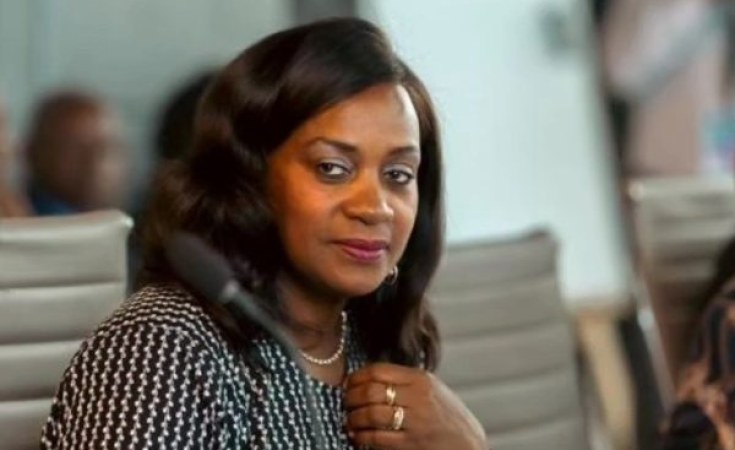
Monrovia — Deputy Information Minister Daniel Sanoe has clarified that the government's asset recovery efforts are not targeting former First Lady Clar Weah personally, but rather her foundation, which authorities suspect may have been established using government resources.
On January 15, 2026, Criminal Court "A" Presiding Judge Roosevelt Z. Willie, acting on a request from the Assets and Property Retrieval Task Force led by Cllr. Edwin K. Martin, issued a subpoena to the management of the Clar Hope Foundation. The court directed the foundation to appear on Friday, January 23, at 10:00 a.m. and present all records of funding received from both individuals and government institutions.
The subpoena specifically demands a breakdown of all contributions to the foundation, including detailed donor information--names, amounts given, and contact details--as well as records related to the construction project.
Keep up with the latest headlines on WhatsApp | LinkedIn
News of the subpoena has spread quickly, generating mixed reactions among political observers. Some have welcomed the court's decision as necessary, while others see it as a politically motivated witch hunt targeting former President George Weah.
Among the critics is Nathaniel F. McGill, who argues that the court's order compels the Clar Weah Foundation to produce evidence against itself, which he considers a travesty of justice. In a Facebook post, he referenced Article 21 of the Liberian Constitution, which states that no person shall be deprived of rights or property without due process of law, nor be compelled to produce evidence against themselves. McGill emphasized that these are constitutional guarantees, not mere suggestions.
Despite the controversy, the Clar Weah Foundation has maintained its willingness to cooperate with the investigation, stating it "has nothing to hide" regarding its funding and construction in Marshall, but insists that the process must adhere to due process.
Responding to public debate, Deputy Minister Sanoe reiterated that the government's action is not aimed at the former First Lady personally.
"There's no targeted action against the former First Lady, but there is an action targeting the foundation, which is believed to have been built from proceeds connected to the Liberian government," he said.
Sanoe used an analogy to explain the government's approach: "If you're driving and the police stop you because you don't have a driver's license, do you ask the police to prove you don't have one? No. You simply present your license. That's how it works."
He stressed that the court is not asking Clar Weah to incriminate herself, but to provide relevant evidence.
Sanoe further emphasized that the ongoing proceedings reflect a responsible government allowing the judiciary to fulfill its constitutional mandate.

Sign up for free AllAfrica Newsletters
Get the latest in African news delivered straight to your inbox
"As we push for reforms in anti-corruption laws, including the removal of the statute of limitations, the courts have a critical job to do. We must not circumvent that role in any way," he said.
He added that the government is looking forward to the courts reviewing numerous longstanding cases, particularly those involving officials who entered government service, accumulated unexplained wealth, and have yet to be held accountable.

