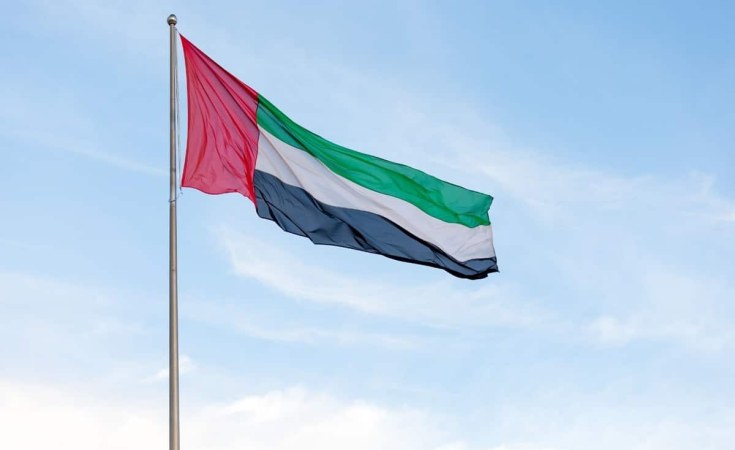
From macroeconomic stability to urban competitiveness and entrepreneurial dynamism, the United Arab Emirates has accumulated a series of high-profile international rankings in 2025. Beyond the headlines, these indicators offer a composite picture of a country seeking to anchor its global status in resilience, diversification and institutional credibility, while still facing structural challenges typical of fast-growing economies.
Over the past year, the UAE has featured prominently across major international benchmarks measuring stability, competitiveness, innovation and urban resilience. The accumulation of such rankings is not incidental. It reflects a long-term strategy aimed at positioning the country as a predictable, business-friendly and technologically advanced hub at the crossroads of Europe, Asia and Africa.
Yet global recognition is not only about communication. It rests on measurable shifts in economic structure, regulatory frameworks and urban governance. A closer reading of the 2025 data suggests that the UAE’s performance is underpinned by genuine diversification and institutional reforms, even as questions remain about affordability, exposure to external shocks and the sustainability of growth in a volatile global environment.
Stability and macroeconomic resilience
In the 2025 Best Countries report by US News & World Report, the UAE was ranked as the world’s most economically stable country, an assessment highlighted by Middle East Online. The ranking emphasises the country’s ability to maintain growth while containing inflation and managing risk in an uncertain global climate.
With GDP exceeding $500 billion and projected growth of around 5 percent in 2026, supported by continued non-oil expansion, the UAE’s macroeconomic profile stands out in a region historically exposed to hydrocarbon volatility. Inflation is expected to remain relatively contained at approximately 1.8 percent, while unemployment hovers around 1.9 percent, pointing to a tight labour market and sustained demand for skilled workers.
Security has also been a core pillar of the country’s international positioning. According to Seetao’s 2025 overview, the UAE scored 85.2 on the Numbeo Security Index and was named the safest country globally. While such indices rely partly on perception-based surveys, they reinforce the country’s branding as a stable environment for residents, investors and multinational firms.
Taken together, these indicators have translated into sustained soft power performance. The UAE maintained its position among the top ten countries in the Global Soft Power Index, reflecting the link between economic management, perceived stability and international reputation.
Competitiveness, cities and the infrastructure model
Beyond macroeconomic aggregates, the UAE’s international recognition in 2025 has been strongly linked to competitiveness and urban governance. The country ranked among the top five globally in the IMD World Competitiveness Ranking 2025, reflecting strong performance across economic performance, government efficiency, business efficiency and infrastructure. This positioning aligns with the UAE’s continued regulatory liberalisation, including expanded foreign ownership provisions and digitised government services.
At the city level, the 2025 IMD Smart City Index placed Abu Dhabi fifth globally, up from 14th in 2020. According to the Abu Dhabi Media Office, this progress was associated with high satisfaction rates for public transport, green spaces and digital connectivity, including widespread access to free public Wi-Fi and significant investment in mobility infrastructure.
The index is based on residents’ perceptions across 146 cities, offering insight into lived urban experience rather than purely statistical metrics.
In parallel, the Kearney and FII Institute Global Cities Resilience Index ranked Dubai fourth and Abu Dhabi thirteenth out of 31 global cities assessed. The report highlighted institutional governance, sustainable finance and social and human capital as areas of strength for Abu Dhabi. Such rankings underscore the UAE’s ambition to build future-ready cities capable of adapting to technological and climate-related disruptions.
Oxford Economics’ Global Cities Index further reinforced this narrative, placing Dubai as the top-ranking Gulf city with a score of 77.1 and Abu Dhabi second in the region at 73.0. Both cities scored highly on human capital, education and quality of life, although the report also pointed to housing affordability constraints in prime districts, an issue that could shape long-term inclusiveness and competitiveness.
Entrepreneurship, investment and corporate headquarters
Another pillar of the UAE’s global positioning lies in entrepreneurship and investment attraction.
The Global Entrepreneurship Monitor 2024/2025 ranked the UAE first globally for the fourth consecutive year, describing it as the best environment among 56 economies for entrepreneurship and SME development. The country led in 11 out of 13 key indicators among high-income economies, including access to finance, supportive government policies and ease of market entry. The report also noted a US$8.7 billion investment under the “Projects of the 50” initiative to support innovation and SMEs.
On the corporate front, the UAE was ranked second after China among emerging markets in the 2025 Kearney FDI Confidence Index, as reported by The Arab Weekly. High-profile moves, including PayPal opening its first regional headquarters in Dubai and Partners Group establishing a regional office in Abu Dhabi, illustrate the country’s appeal as a base for operations spanning the Middle East and Africa.
Official data cited by Gulf Today shows that the number of businesses operating in the UAE rose to over 1.3 million by the end of the first half of 2025, up from around 400,000 in 2020, following legislative reforms allowing 100 percent foreign ownership in many sectors. The same report points to 402,311 trademarks registered by September 2025, a proxy for commercial dynamism and intellectual property activity.
Tourism has also reinforced the country’s international standing. Sheikh Zayed Grand Mosque in Abu Dhabi recorded 6.8 million visitors in 2025, a 4 percent year-on-year increase, with 82 percent of guests being international travellers. Such figures highlight the growing weight of cultural and religious tourism within a broader diversification strategy.
Between recognition and structural constraints
The convergence of high rankings across stability, competitiveness, urban resilience and entrepreneurship suggests a coherent policy direction: institutional reform, regulatory agility and infrastructure investment as tools of global positioning.
However, the same reports that praise competitiveness also signal constraints. Housing affordability pressures in prime urban districts, dependence on expatriate labour, and exposure to global capital flows remain structural features of the UAE’s growth model. Sustaining momentum will depend on deepening economic complexity, managing social inclusion and maintaining fiscal discipline in the face of external shocks.
The UAE’s 2025 performance illustrates a broader shift from oil-based legitimacy to performance-based recognition in global indices. Whether this accumulation of accolades translates into durable, innovation-led growth over the next decade will hinge less on rankings themselves than on the country’s capacity to continuously adapt its governance and economic model to a changing global order.


