

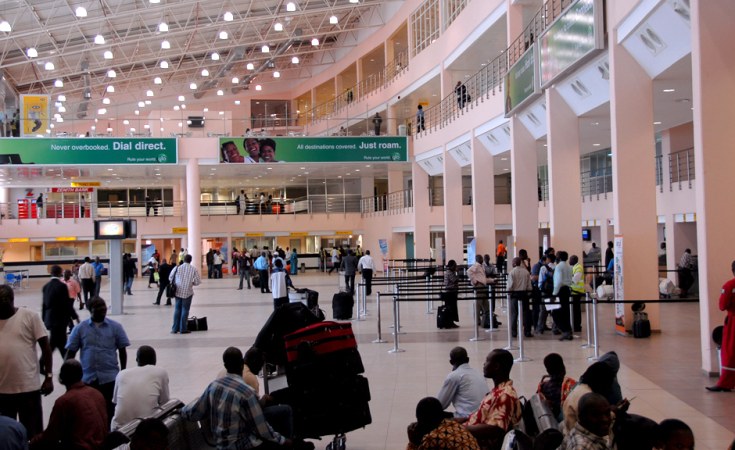
Vehicular traffic around the tollgate of the Murtala Muhammed International Airport (MMIA), Lagos, worsened on Monday as the enforcement of the Federal Airports Authority of Nigeria's (FAAN) cashless payment policy continued to generate delays and frustration among air travellers and airport users.
The congestion, which stretched several kilometres along the airport access road, left hundreds of passengers stranded in traffic for hours, with many scrambling for alternative means to catch their flights.
Some travellers were seen abandoning their vehicles to board commercial motorcycles in a bid to beat departure times.
The gridlock followed FAAN's full implementation of its "Operation Go Cashless" initiative, which mandates motorists to pay toll and access fees electronically rather than with cash at the airport gates.
Follow us on WhatsApp | LinkedIn for the latest headlines
Under the new system, drivers are required to obtain and preload designated access cards before arriving at the toll plaza.
The policy started at MMIA and the Nnamdi Azikiwe International Airport, Abuja on Sunday March 1, 2026 with gridlock and anger from frustrated passengers.
However, at the MMIA access gates yesterday, many motorists and airport users arrived without the required cards, forcing on-the-spot registrations and electronic transactions which significantly slowed processing time.
It was further observed that Network glitches and slow point-of-sale (POS) transactions further compounded the situation, creating long queues at entry points.
Our correspondent who was at the airport yesterday observed the gridlock from the domestic terminal to the tollgate stretching beyond the popular Concord Bus-Stop while the Oshodi-bound traffic extending towards 7&8 bus stop.
Airport users expressed frustration over what they described as inadequate public sensitisation and insufficient preparation for the transition.
Some argued that the sudden enforcement did not take into account the heavy daily traffic volume at Nigeria's busiest airport even as some experts said the implementation should have been phased.
A passenger, who identified himself as Kunle Adeyemi, said he spent over two hours navigating the traffic before reaching the departure terminal. "This policy may be good in the long run, but the implementation has been chaotic. People are missing flights," he lamented.
An industry player called for a slower implementation process, but with consequences.
"Cash payments at the toll gate should, at the beginning of this cashless implementation, attract a higher ticket fee than card payments.
"People would have been forewarned, and it would have created the urgency needed to drive implementation. This way, people know that they're individually responsible for paying higher fees if they choose to still pay cash.

Sign up for free AllAfrica Newsletters
Get the latest in African news delivered straight to your inbox
Then eventually, cash payments would be phased out altogether," the expert said.
Speaking with our correspondent, Vice-President of the Aviation Roundtable, Capt. Alex Nwuba in a chat with our correspondent insisted that a phased implementation would have been a better way to avoid the gridlock and the delays being experienced by passengers.
FAAN officials, however, appealed for patience, describing the current challenges as temporary "teething problems."
The authority through its Director, Public Affairs and Consumer Protection , Henry Agbebire maintained that the cashless policy is aimed at improving efficiency, enhancing transparency and reducing revenue leakages.
FAAN added that additional staff and support systems have been deployed to ease the congestion and assist motorists with card registration and payment processes.

