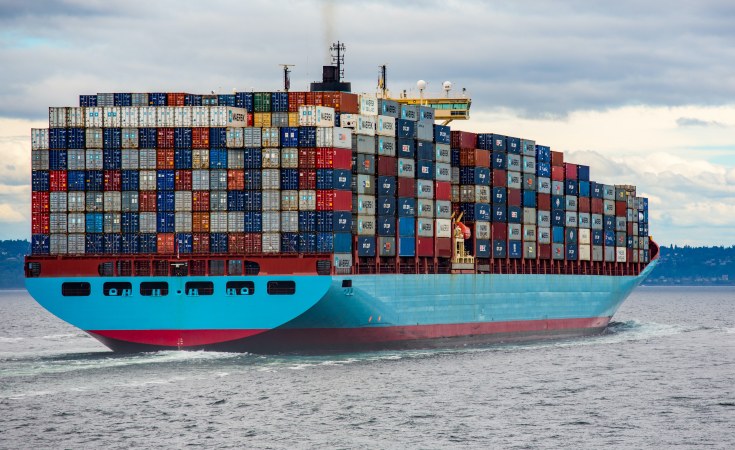
Shipping companies, freight forwarders and other port users have raised concerns over the potential impact of the ongoing crisis in the Middle East on cargo throughput into Nigerian ports.
They warned that the situation could also worsen Nigeria's inflation if the conflict in the region persists.
Speaking with Vanguard on the development, Chairman of the Shipping Association of Nigeria (SAN), Boma Alabi, said the crisis in the Middle East has already begun to affect the shipping industry and is likely to continue doing so.
Alabi noted that the situation is driving up operational costs as insurance premiums and other related expenses rise, largely due to the closure of the Strait of Hormuz and heightened security concerns around the Red Sea and the Suez Canal.
Follow us on WhatsApp | LinkedIn for the latest headlines
She said: "It has definitely impacted already and will continue to impact. There are increased costs as insurance and other expenses escalate due to the closure of the Strait of Hormuz and the heightened security issues around the Red Sea and the Suez Canal.
"Operational costs include more expenses on bunkers because ships have to pass through a longer route to Europe. War Risk Insurance has also been imposed."
Also commenting, former Vice President of the Association of Nigerian Licensed Customs Agents (ANLCA), Dr. Kayode Farinto, said that France has declared force majeure in its shipping industry due to the escalating crisis in the region.
Farinto also said that many shipping companies will soon start charging War Risk Insurance charges on cargo on vessels coming to Nigeria, which will lead to additional cargo costs.
Farinto said: "These charges could be as much as $3,000-$4,000 per container, and you know what that means to an economy like ours."
Similarly, Daniel Odibe, a maritime consultant, said shipping companies may abandon Nigerian markets for European markets where shipping charges are higher.
"Shipping firms will naturally go to a higher-paying route than the African market if the war persists.
"Most of the European shipments come from China and do not necessarily have to pass through the Strait of Hormuz. They can go through South Africa, through West Africa, to Europe."
Some importers who spoke with our correspondent said they are reviewing their business plans in light of the ongoing uncertainty in the region.

