

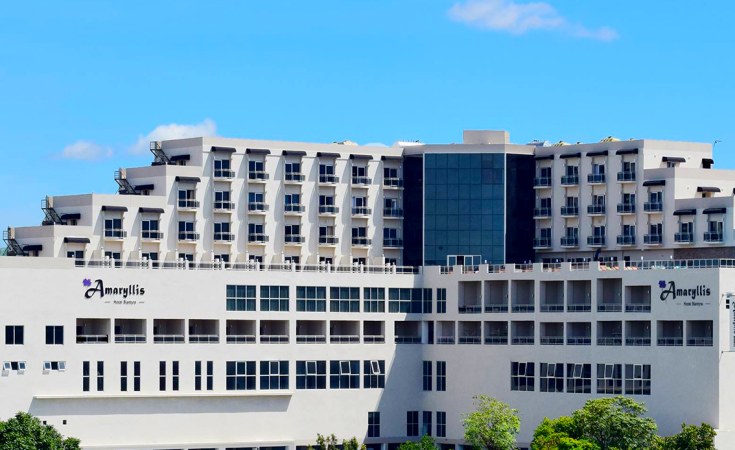
Governance and political commentators have raised serious concerns over a lakeside meeting between the Public Accounts Committee of Parliament (PAC) and the Reserve Bank of Malawi (RBM), warning that the timing threatens to cast doubt on the credibility of Parliament's ongoing inquiry into the controversial K128.7 billion acquisition of Amaryllis Hotel.
Critics say the optics of the meeting--held in Salima on Saturday--are troubling because it occurred just days before RBM Governor George Partridge is due to appear before PAC to answer questions about the deal.
Several governance experts argue that when a regulator expected to testify in a high-profile parliamentary inquiry meets privately with the very committee investigating the matter, it inevitably raises questions about the independence and integrity of the oversight process.
Keep up with the latest headlines on WhatsApp | LinkedIn
Executive Director of the Centre for Human Rights and Rehabilitation, Michael Kaiyatsa, said the timing is difficult to defend from a governance perspective.
"Even if nothing improper occurred, the timing creates a perception problem," Kaiyatsa said. "When a regulator facing scrutiny meets privately with the oversight body shortly before a formal hearing, questions inevitably arise about whether the process could be influenced. Oversight institutions must not only be independent--they must also be seen to be independent."
Similar concerns were echoed by Moses Mkandawire, Executive Director of the Nyika Institute, who warned that the meeting raises procedural questions at a time when the parliamentary inquiry is still active.
Mkandawire said while parliamentary committees are allowed to hold meetings outside Parliament if standing orders permit, doing so during an ongoing investigation involving the same institution risks undermining public confidence.
Executive Director of the Centre for Social Accountability and Transparency, Willy Kambwandira, was even more blunt in his criticism, questioning the necessity of holding the engagement outside Lilongwe, where both institutions are headquartered.
"Why hold a meeting in Salima when both parties are based in Lilongwe?" Kambwandira asked. "The optics are deeply problematic given the timing and the significant public interest surrounding the matters before PAC and RBM."
For Benedicto Kondowe, Executive Director of the Civil Society Education Coalition, the issue is not necessarily that the two institutions met, but that the engagement took place while PAC is actively investigating the Amaryllis transaction.
"Consultations between institutions are not unusual," Kondowe said. "However, oversight processes benefit from clear procedural separation. The timing in this case may understandably raise questions because the PAC inquiry is still ongoing."
The controversy comes as PAC prepares to question George Partridge on Wednesday in his capacity as Registrar of Pension Funds--a role that places him at the centre of the investigation into how the Public Service Pension Trust Fund acquired the Blantyre-based hotel.
PAC chairperson Steve Baba Malondera, however, dismissed suggestions that the lakeside engagement was connected to the ongoing inquiry.
In an interview, Malondera said the meeting was part of a routine quarterly session where RBM briefs lawmakers on broader economic developments and monetary policy trends.
He also warned that intense media scrutiny surrounding the meeting could undermine the committee's work.
Malondera declined to provide further details, referring additional questions to the PAC clerk, who could not immediately be reached for comment.
Meanwhile, RBM spokesperson Boston Maliketi Banda confirmed that the central bank met members of PAC and the Parliamentary Budget and Finance Committee on March 14, 2026 in Salima.
According to Banda, the governor regularly engages parliamentary committees as part of the bank's stakeholder outreach programme.
"The purpose of these meetings is to appraise members of recent economic and financial developments in the country, including the prevailing monetary policy stance," Banda said in a written response.
He explained that the central bank also uses the platform to explain decisions made by the Monetary Policy Committee and their implications for the economy.

Sign up for free AllAfrica Newsletters
Get the latest in African news delivered straight to your inbox
"The bank considers these engagements important because they provide an opportunity to keep members of Parliament informed about developments in the economy and the policy measures being implemented to maintain macroeconomic stability," Banda said.
He added that such meetings are often held outside Parliament premises for logistical and scheduling convenience, with RBM covering the associated logistical costs.
Despite the explanations, analysts say the issue now goes beyond the content of the meeting and into the realm of public perception.
With PAC currently investigating the K128.7 billion Amaryllis Hotel transaction--one of the most contentious public finance deals in recent years--critics warn that even the appearance of close interaction between investigators and a key figure expected to testify could weaken public confidence in the outcome of the inquiry.
PAC is expected to continue its hearings this week, with Frank Mbeta, the Attorney General of Malawi, and RBM Governor George Partridge among the high-profile figures scheduled to appear before the committee.

