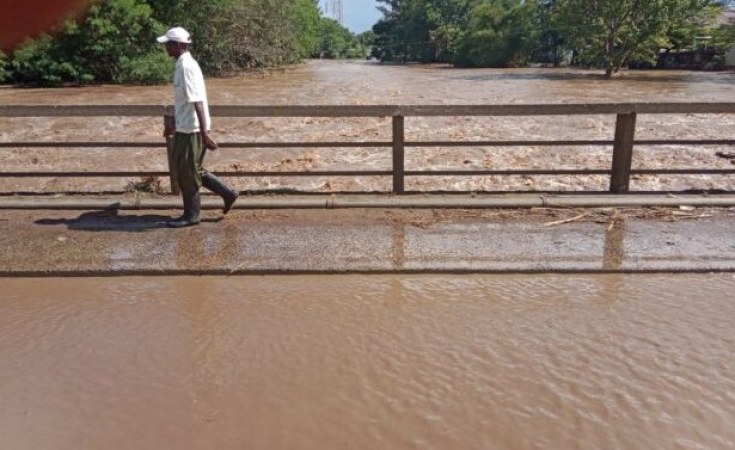
Nairobi — The Implementation Committee on the Cooperation Agreement between the National Government and Nairobi City County has directed an immediate, coordinated response to the ongoing flooding in the capital.
The committee on Monday ordered key agencies to develop a comprehensive 48-hour action plan to address damaged infrastructure and blocked drainage systems.
Speaking after the meeting, Nairobi Governor Johnson Sakaja said the plan will take effect immediately.
"Under the immediate response plan, infrastructure agencies have been tasked with conducting a joint assessment of flood damage and submitting a costed recovery plan within 48 hours, focusing on heavily affected road corridors and drainage systems across the city," Sakaja said.
Follow us on WhatsApp | LinkedIn for the latest headlines
The meeting brought together Principal Secretaries and senior officials from national and county agencies, including KURA, KeNHA, KeRRA, NEMA, the Water Resources Authority, and the National Treasury.
Technical teams were also instructed to map flood-prone areas across Nairobi's 17 sub-counties, identify blocked drainage systems, and prioritise de-silting and road repairs to reduce further flooding during the ongoing rainy season.
"In addition, a multi-agency taskforce has been ordered to intensify enforcement and recovery of riparian and floodplain areas to restore the natural flow of rivers and reduce recurrent flooding in vulnerable neighbourhoods," Sakaja added.
Damaged water lines
Authorities also reported that the major water transmission pipeline along Outer Ring Road, which was damaged by floods, has been repaired, restoring water supply to Buruburu, Kariobangi, Dandora, and parts of Mathare.
Repairs on distribution lines serving Kiambiu and Korogocho are ongoing.
Meanwhile, county public health teams have been deployed to prevent disease outbreaks.
Over 300 households and sanitation facilities have been disinfected, more than 4,000 household water treatment supplies distributed, and 30 schools in flood-affected areas sanitized, safeguarding around 3,800 students.
Governor Sakaja emphasised that the single-window implementation approach between national and county governments will accelerate recovery efforts and streamline resource mobilisation.
The committee is scheduled to reconvene on March 19 to review progress on the 48-hour implementation report and ensure that the resolutions translate into tangible action on the ground.

